


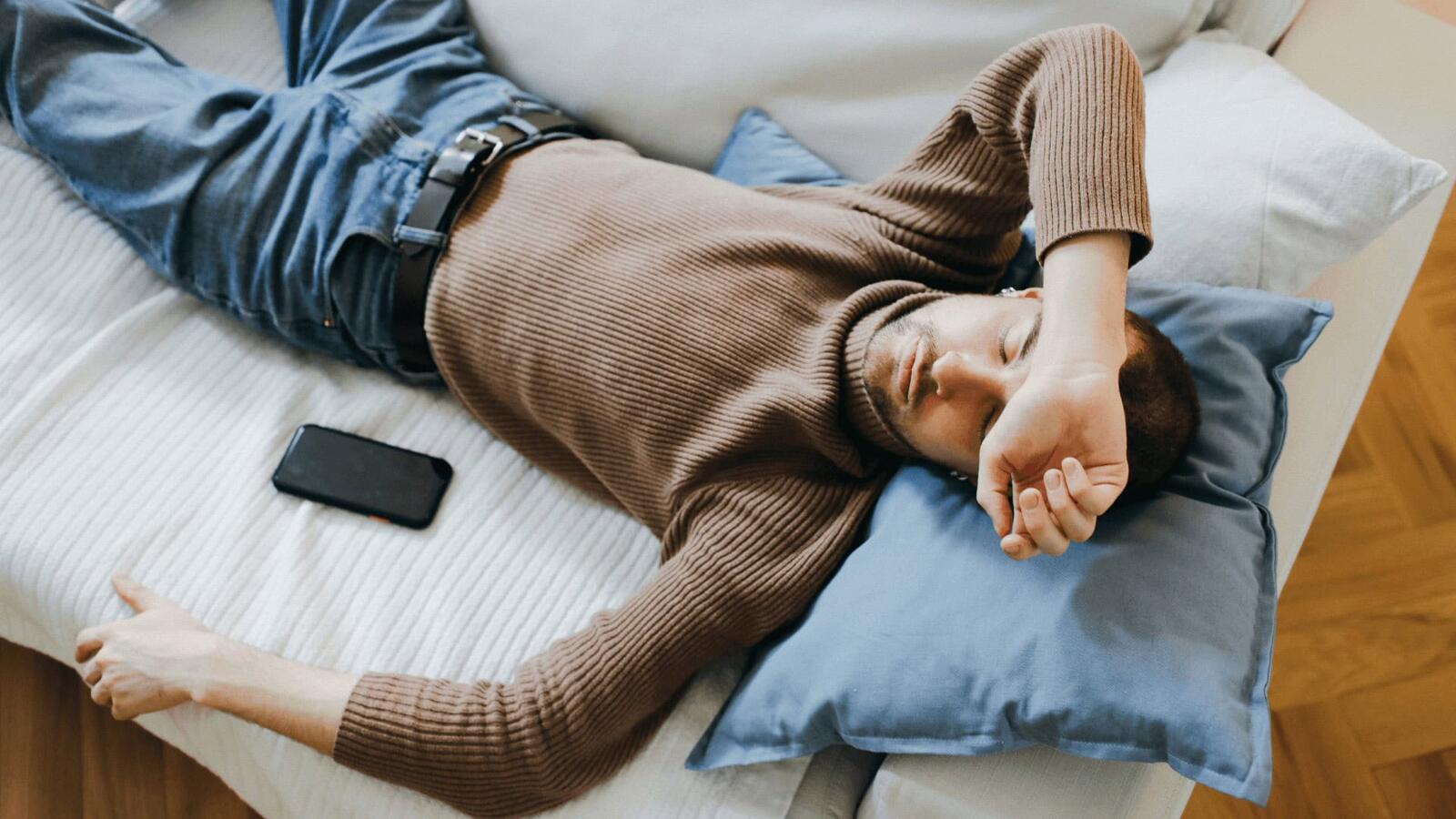
Today, 13 March, is International Sleep Day. If you happen to be reading this while drinking your third cup of coffee, it’s probably aimed squarely at you. Surveys have shown that millions of UK adults regularly get less than seven hours of sleep per night. Researchers consider this the bare minimum for good health, so it’s safe to say that Britain has has a sleep problem.
People will blame work stress, a busy home life, the weather, the news. And honestly? Those are all very valid reasons for not getting enough sleep.
But International Sleep Day, observed in over 70 countries and now in its 18th year, is as good as any moment to take stock of your sleeping situation – or lack thereof. It was created by the World Sleep Society to highlight the growing global sleep crisis.
This year’s theme is ‘Sleep Well, Live Better’ and it’s deliberately simple. Sleep is not a luxury to squeeze in when you can. It’s just as important for your health as is what you eat and how much you move. And it’s something that technology is now genuinely getting better at helping with.
Why Sleep Isn’t Just About Feeling Tired
While you sleep, your brain activates its glymphatic system. It’s a biological process which flushes out metabolic waste, including proteins directly linked to Alzheimer’s disease.
At the University of Rochester, researchers found that this process runs twice as efficiently when you sleep compared to when you are awake. Think of it as your brain taking out the rubbish every evening. If that’s not happening regularly, the waste starts to pile up.
Sleep is also responsible for regulating hormones that control your appetite, stress levels, immune function and your heart. A bad night’s sleep throws all of this out which is why you likely feel more hungry and irritable. So no, sleep is not optional. It’s a biological necessity.
Brits Are Knackered, And Have Been For A While
Research from King’s College London found that one in three British adults suffer from insomnia, making it one of the most common sleep disorders in the country.
Things like long work commutes, financial anxiety, precarious working hours and the inability to put screens away before bed are all contributing factors.
The NHS has acknowledged chronic sleep deprivation as a massive public health issue, linked to higher rates of depression, type 2 diabetes, obesity and heart disease. People are quick to say “I’ll sleep when I’m dead”, missing the irony that not sleeping enough hastens that outcome.
Five Tech Products Designed To Help You Sleep Better
The good news is that a new generation of technology is making it harder to ignore the problem and easier to do something about it. Here are five tech products that you shouldn’t be sleeping on (pun intended).
1. Oura Ring 4

The Oura Ring 4 is rated as one of the best consumer sleep trackers in the world. It’s a titanium ring worn on your finger and has up to eight days of battery life.
While you sleep, it tracks your heart rate, blood oxygen, body temperature and movement to give you a detailed overview of your time in light, deep and REM sleep.
Every morning, you get a Sleep Score and Readiness Score which tells you how recovered your body is. It can also detect early signs of illness, often flagging an elevated temperature before you start to feel unwell.
More from Tech
- Women In Tech Week: AI Has Become A Career Skill – So Why Are Fewer Women Using It?
- Same Car, Different Driver: The Tech Behind F1’s Custom Set-Ups
- From Web3 Hype To Commercial Advantage: How The Next Phase Of Emerging Technology Will Be Won
- Who Controls The Thermal Skies? The Security And Privacy Questions Behind SatVu’s New Satellite
- The Drone Technology Helping Farmers Cover More Ground In Less Time
- F1’s Pitlane Has Its Own Race, And Technology Is Driving It
- Top Deep-Tech Startups In Finland To Watch In 2027
- Are VoIP Calls Secure? Let’s Talk About Who Could Be Listening
2. Withings Sleep Analyser

The Withings Sleep Analyser is a slim mat which slides under your mattress. It measures your heart rate, breathing and snoring throughout the night using a pneumatic sensor.
It can detect even the smallest physical changes caused by each heartbeat, particularly useful for detecting sleep apnea. One in five UK adults have obstructive sleep apnea and most don’t even know it.
But this analyser flags breathing interruptions and gives you a report which you can share with your GP who can assess it accordingly.
3. Lumie Bodyclock Shine 300

Lumie’s Bodyclock Shine 300 is a wake-up light. Most people set an alarm in the mornings, but waking up to a jarring noise in the dark (think British winters) sends your body a confusing message.
Instead, the Shine 300 mimics a sunrise over 15-90 minutes which gradually brightens from red and orange to warm white. This increases your cortisol and reduces melatonin in your body so that you are actually ready to wake up when your alarm goes off.
At night time, it does the opposite, showing you a slow sunset when it’s time to wind down.
4. Samsung Galaxy Ring

The Samsung Galaxy Ring integrates with Samsung Health and and Android phones, and tracks your sleep as well as your heart rate. It also has a feature called vascular load, which evaluates the health of your circulatory system overnight.
Unlike Oura, it doesn’t require an ongoing subscription so you don’t need to pay a monthly fee in order to access your full data history. However, it does work best within the Samsung ecosystem so it’s not always appealing for iPhone users.
But for Android users, it’s a discreet ring to wear day and night to get detailed, actionable sleep data about your patterns.
5. Headspace App

Headspace is a meditation and mindfulness app to tackle the challenge of not being able to switch off, something that most of us struggle with. It has a sleep library containing meditations and breathing exercises to help you fall asleep and ‘sleepcasts’ which are long, narrated audio experiences to occupy the busiest parts of your brain.
Most practically, it has a ‘nighttime SOS’ section for those times when you wake up at 3am and your brain wants to remind you of every awkward conversation you’ve had since 2009.
It’s the perfect tool to help those whose main obstacle to sleep is an overactive mind.


