

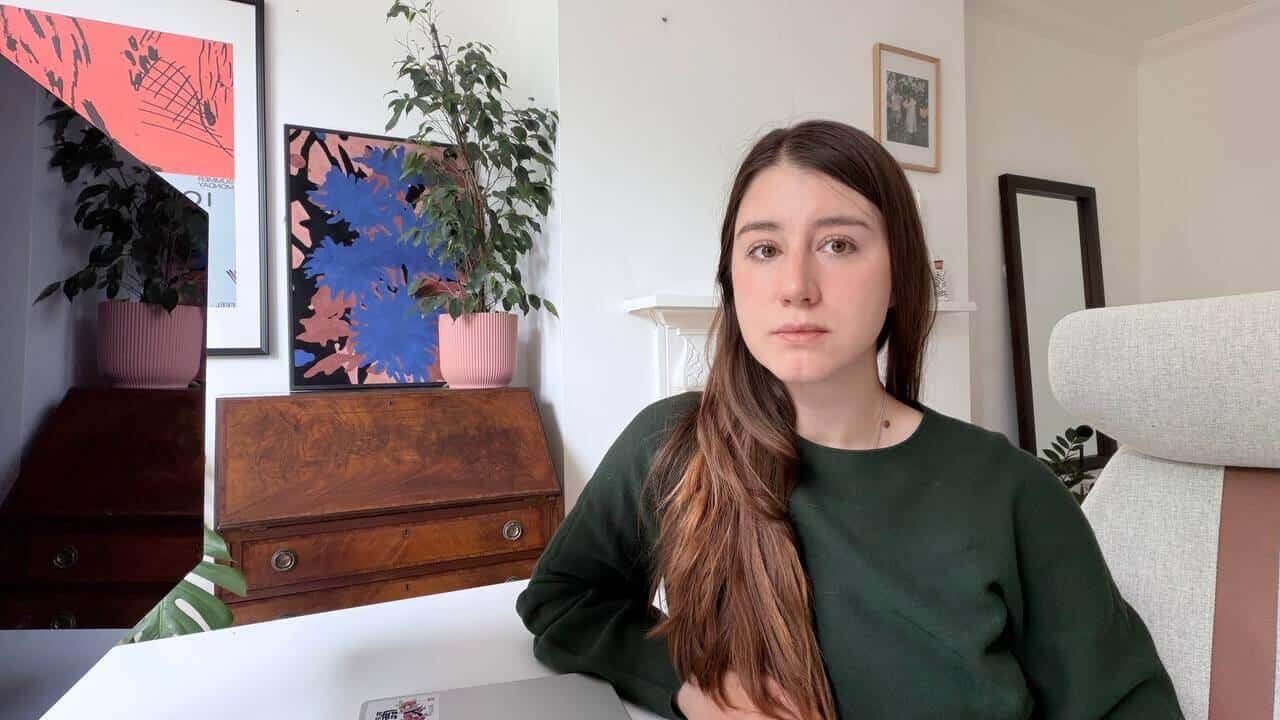
Uliana Salo approaches design less as visual craft, and more as systems architecture. Having worked on creator ecosystems, large-scale consumer platforms and Telegram-native Web3 products with users in the tens of millions, she focuses on building scalable user systems that reduce complexity rather than add to it.
You Started Out As A Software Engineer And Then Moved Into Design. How Does Your Engineering Background Help You In The Work You Do Today?
My engineering background has profoundly changed how I approach design. When you’re writing code, you’re always holding in your mind that it needs to be easy to extend, reusable in different places, and that everything has to be logical. Over time, I came to understand that the same rules apply to the interfaces we build.
When you’re designing a platform, the key thing isn’t just making something work on a single screen. What matters is that all the elements and actions behave consistently and clearly across the entire system. This applies not only to how things look, but to how the product behaves as a whole.
That’s probably why I still look at design as though it’s architecture. I’ve always been more interested in how a platform’s logic works, how a person moves through it, and how to make that as easy as possible for them.
You’ve Worked Both In Large Companies And In Startups. Is There A Difference In How They Approach Design?
The most important difference is how quickly decisions get made and how unpredictable everything is.
In large companies, you have access to research, analytics, testing and big teams of specialists. This helps you make very well-informed decisions, but it consequently makes the processes heavier and slower.
In startups, it’s a different story. Constraints are just part of their nature: less money, less time, less structure, and much more uncertainty. Often, you are working on things that do not have a clear existing pattern yet, or solving problems that other teams have not solved before you. At some point I realised that not every task needs to be studied for months; sometimes the team already understands things well enough. And in those moments, it’s more important to validate your idea quickly than to execute it perfectly.
I think working in a startup really teaches you to see the difference between what genuinely helps the product and what only makes life harder.
More from Interviews
- Meet Ahmed Hessam, CEO And Founder Of OSAA Innovation
- A Chat With François Bitouzet, Managing Director On The Importance Of Global Tech Events Like VivaTech
- Interview With Arthur Azizov, Founder Of B2BROKER Group And B2BINPAY On AI Models On Trading Platforms
- From Basement Build To 1.5 Million Users: A Chat With Elston Baretto, Founder And CEO Of Tiiny Host
- Interview With Juliette Savage, Commercial Director At Little Starts Gift Cards On Creating Gifting Experiences For Kids
- A Chat With Adonis Celestine, Senior Director And Automation Practice Lead At Applause And AI45 Judge
- A Chat With Angela Bishop, UK CEO at Zühlke On Global Innovation
- A Conversation With Tony Odiba, Co-Founder And Chief Product Officer At Risevest And FinTech50 Judge
What Does The Designer’s Role Become In A Small Product Team?
It becomes much broader than just designing interfaces. You start thinking not only about user experience, but also about how the team can best allocate its efforts. For example, in one team I had to create simple design systems for marketing materials myself and teach colleagues how to use basic tools. All of that was to avoid having to hire more people onto the team at the start.
But most importantly, a designer begins to understand much more deeply how the product is structured and how it works technically. You’re constantly discussing with engineers what can and can’t be done, where you can compromise, and how to ship things faster without losing what matters most in the product.
In that kind of environment, design is no longer so much about perfect interfaces. It’s more about how to simplify everything and make decisions faster.
You’ve Worked A Lot With Creator Platforms. What Matters Most When Designing Them?
When working on creator platforms, it is important to keep the connection between the creator and their motivation in mind. This is what helps make the product understandable and useful for creators, and therefore valuable for the business as well.
Some people publish for a small circle of friends. Professional bloggers may work with millions of followers, a content plan, monetisation goals and sometimes a whole team.
For many creators, the main reason to invest time in a platform is the possibility of reaching an audience. So the product should make the growth logic more understandable: what the platform supports, which actions matter, and how creators can improve their results.
This means working closely with the teams responsible for content distribution, recommendation algorithms and creator reward programs. The interface should translate the platform logic clearly: not expose all internal complexity, but show enough for creators to make better decisions.
At the same time, the experience should stay simple without becoming primitive. Creators should be able to start easily, and then gradually discover more advanced tools: analytics, monetisation, audience engagement, promotion mechanics and professional workflows.
You’ve Also Worked With Platforms Where Users Interact With Digital Objects And Asset Systems. What Changes In Design In Those Cases?
In this case, design shifts from designing one product experience to designing a system that many products can use. It is creating a shared logic that can work across many different games, partner products and external developers.
This meant defining the basic rules for how items exist inside the platform: what metadata they have, what states they can be in, how they move between inventories, games and marketplaces and what should never happen, for example duplication or unclear ownership.
The important part is to keep the core rules as minimal as possible. If the system is too specific, every new game or new type of item forces you to add exceptions. But if the foundation is clear and flexible enough, a new skin, card, case, ticket, reward or any other game item can fit into the existing structure without changing the whole system.
At the same time, this system still has to feel simple for players. Even if many games and products are involved, the main actions should stay consistent: receiving an item, opening it, using it, transferring it, or trading it should work in a predictable way. Moving between a game, the platform inventory and a marketplace should feel seamless and logical, not like switching between separate systems.
How Closely Connected Are Design And Systems Thinking Today?
It seems to me that today design is increasingly about managing complexity. Many people still associate design mostly with how things look, but for product designers it has never really been only about that.
When millions of people use a product, any decision you make immediately affects various processes. So a designer has to think about keeping everything in the system connected, predictable, and not overwhelming for the user. In essence, the task of a modern platform designer is to make a complex system easily understandable for an everyday person, without breaking its internal workings in the process.
With AI, this role is changing even more. Design is moving further away from pure craft as a separate stage and becoming more technical and operational. Designers can now build working prototypes faster, test logic, explore edge cases, and sometimes even contribute small parts of real product features alongside developers. So systems thinking becomes even more important.
You Live In London And Take Part In Various International Projects. How Do You See The UK’s Role In The Evolution Of Platform Design?
I think the UK has an interesting mix of strong visual culture and a very practical approach to digital products.
There is already a lot of good visual language here, and historically the UK has a strong design craft tradition. You can see it in typography, editorial design, branding, cultural institutions and digital services. There is already a lot of good visual language in the culture, so digital product design often grows from a strong base.
I find it particularly interesting to observe how young designers are increasingly asking not just about visuals, but about how a platform behaves, about systems thinking, and about how to build products for millions of people. It seems to me that this direction is where the future of our entire field lies.