


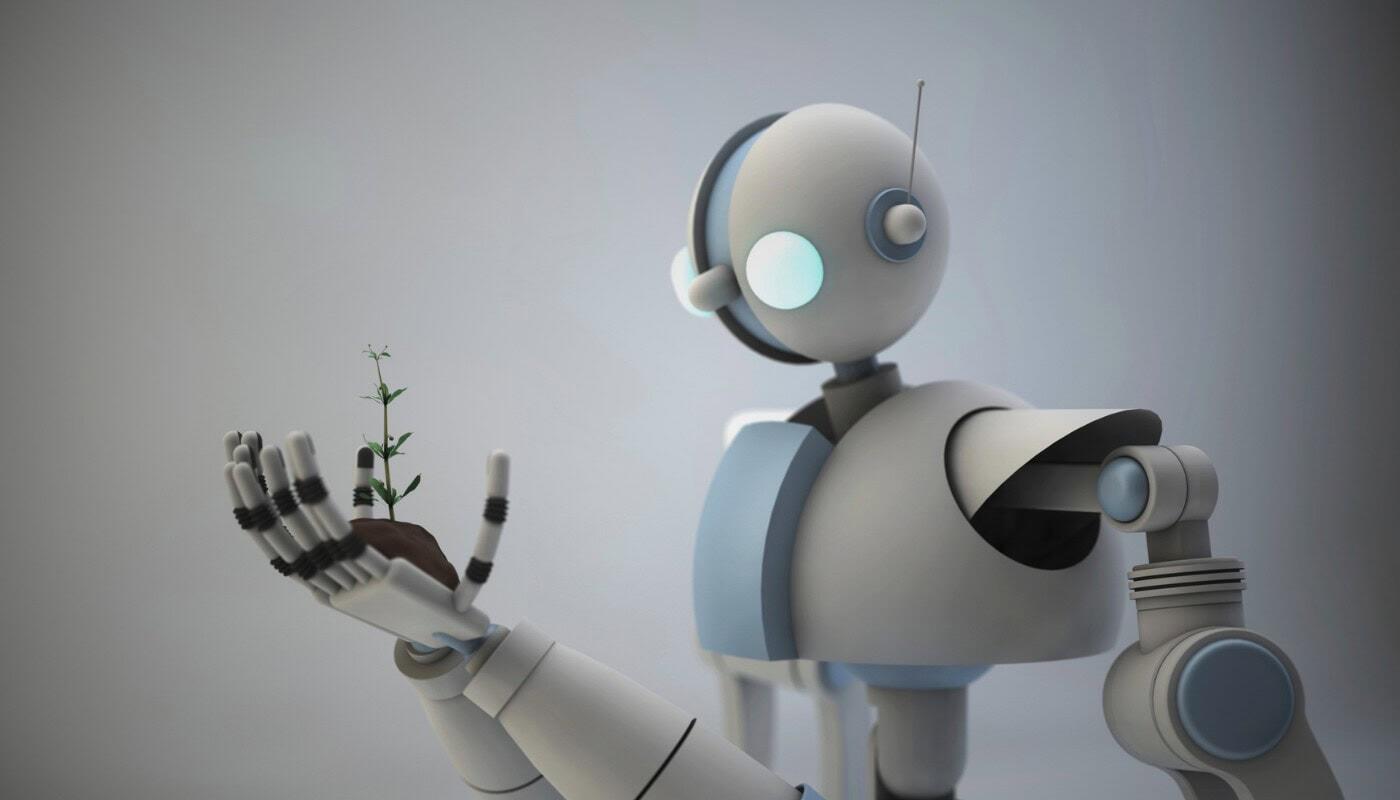
What if a robot could learn to do a job just by watching a ten-second video clip? Skild AI reckons its new S1 foundation model can pull off exactly that, tackling unfamiliar physical tasks without needing a single round of fine-tuning. Built on a large manipulation dataset, S1 adapts on the fly with no retraining, no tedious data collection and no post-deployment calibration required.
If these claims survive the real world, it would conquer one of the biggest challenges in commercial robotics. Reprogramming hardware for every new task is slow, eye-wateringly expensive and requires a room full of specialists. A machine that learns simply by watching changes the economics math of it all.
What S1 Can Do (And What Still Needs Proving)
At its heart, Skild is showing off one-shot imitation learning straight from video. S1 studies a brief clip of a human or robot doing a task, then builds a custom execution policy without needing any extra training. By pairing visual inputs with natural language context, its video-language architecture figures out what is happening on screen and turns it into real-world robotic movement.
Skild released benchmarks showing S1 beating current state-of-the-art models on generalisation tasks, even when faced with workflows completely excluded from its training. The company’s demonstrations include manipulation tasks across different object types, lighting conditions and surface textures. CEO Deepak Pathak, who previously led robotics research at Carnegie Mellon and Meta AI, has framed S1 as a step toward robots that can be launched in any environment a human can describe or demonstrate.
These results come from Skild’s internal testing, which is standard for an early launch, but it does mean independent labs haven’t verified the claims just yet. The robotics research community has seen confident one-shot learning announcements before that performed well in curated demonstrations, but less so in the full range of real-world conditions.
Transitioning from controlled manipulation benchmarks to active implementations in warehouses, hospital wards or construction sites involves real-world friction. Benchmarks intentionally strip away the unpredictability these real environments require would.
More from Tech
- Who Controls The Thermal Skies? The Security And Privacy Questions Behind SatVu’s New Satellite
- The Drone Technology Helping Farmers Cover More Ground In Less Time
- F1’s Pitlane Has Its Own Race, And Technology Is Driving It
- Top Deep-Tech Startups In Finland To Watch In 2027
- Are VoIP Calls Secure? Let’s Talk About Who Could Be Listening
- The Tech That Shapes F1 Car Performance From Circuit to Circuit
- From Alton Towers To Thorpe Park: The Technology Bringing Theme Parks To Life
- Women In Tech: Top 10 Women In EdTech In 2026
Why One-Shot Learning Is A Big Deal
Traditionally, teaching a robot means gathering hyper-specific data, running heavy supervised or reinforcement learning and locking in a model that only works in one set of conditions. Want to switch tasks? You are starting back at square one. That’s why factory robots stick to one assembly line, logistics hardware stays on fixed paths and dynamic automation is wildly expensive for most operators.
Large foundation models have shifted the trajectory for language and image processing. By training one large model on varied datasets, it learns broad representations that easily adapt to tasks it wasn’t explicitly taught. Skild is now bringing this play to physical robotics: feed S1 enough varied interaction data so that it develops transferable skills, letting it master new workflows through simple demonstrations instead of costly retraining.
Dataset scale is everything here. Skild’s claim of having the largest manipulation dataset is important, because foundation model generalisation lives and dies by data diversity. Train on a narrow set of tasks, the robot stays narrow. Expose it to a wide spread of hardware types, objects, environments and movement structures – and it actually has something to draw on when facing something new.
The real question is whether Skild’s dataset is truly rich enough to deliver the seamless adaptability they have promised.
The Market Impact
Reliable one-shot video learning radically lowers both the cost and complexity of hardware implementation. An operator who can teach a machine a new workflow just by filming a quick demonstration opens the door to environments that couldn’t previously justify the high setup costs. Small-batch manufacturing, flexible warehouse setups, commercial kitchens and physical retail are all spaces where traditional robotics economics fell flat.
The robotics startup space has been building toward this. Physical Intelligence, acquired by Google in late 2024, was working on similar generalisation problems. Figure AI, 1X Technologies and Agility Robotics are all investing heavily in manipulation capabilities. Skild’s approach of publishing a foundation model instead of building a specific hardware product positions it differently – as infrastructure for the robotics industry, not just a robotics company itself.
For now, S1 is an impressive research showcase. The road from a solid benchmark to a rock-solid industrial release is notoriously long, and the robotics sector is infamous for overpromising on timelines. What makes S1 worth tracking is whether scaling foundation models is the right blueprint for how the problem ultimately gets solved.


