


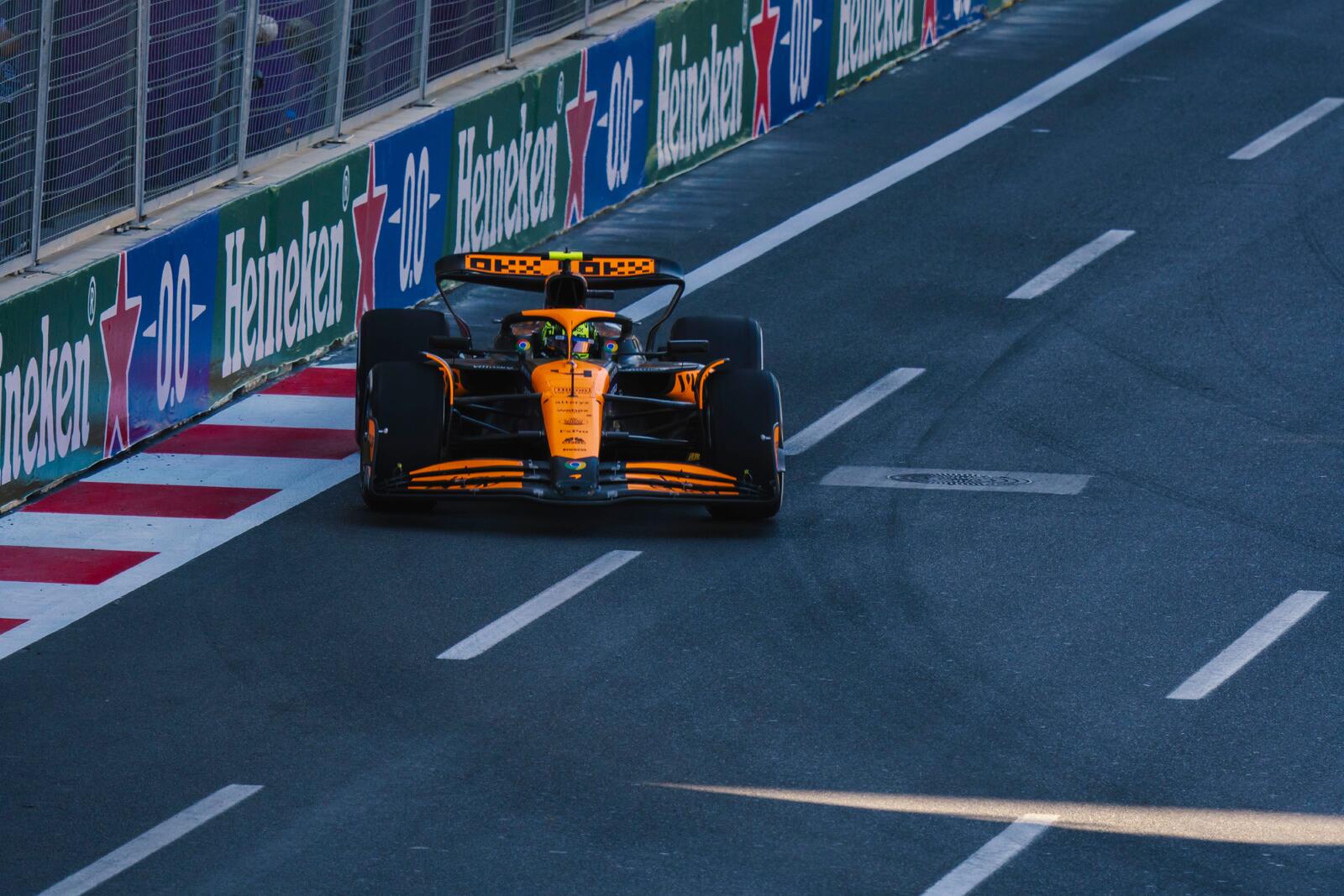
Watching Formula 1 used to mean sitting on your couch and accepting whatever the broadcast director decided you were going to see. If your favourite driver was having a brilliant battle for 14th place, you could forget about it. You were probably watching the leader drive around in clear air while the commentators tried to make tyre management sound like the most exciting thing on Earth.
Today, technology gives fans a lot more control over what they see. F1’s broadcast has become its own digital experience, with live timing, onboard cameras, team radio, data visualisation and interactive viewing platforms all sitting alongside the main race feed.
How Technology Is Changing The Way We Watch F1
The modern F1 broadcast is no longer just a camera pointed at a circuit; it now pulls together huge amounts of information and turns it into something fans can actually use while the race is happening.
Some technologies bring us closer to the drivers, others make the strategy easier to follow and a few exist for the simple joy of seeing just how ridiculous an F1 car looks when you’re sitting inside it.
More from Tech
- AI Can Now Build A Free Adobe Rival – So Why Can’t It Open Files?
- How Modern Rendering Solutions Fit Into Creative Pipelines
- Women In Tech Week: AI Has Become A Career Skill – So Why Are Fewer Women Using It?
- Same Car, Different Driver: The Tech Behind F1’s Custom Set-Ups
- From Web3 Hype To Commercial Advantage: How The Next Phase Of Emerging Technology Will Be Won
- Who Controls The Thermal Skies? The Security And Privacy Questions Behind SatVu’s New Satellite
- The Drone Technology Helping Farmers Cover More Ground In Less Time
- F1’s Pitlane Has Its Own Race, And Technology Is Driving It
1. Multi-Camera Viewing
Platforms such as F1 TV let fans choose how they watch a race instead of sticking entirely to the main broadcast. You can follow a driver’s POV, switch between different camera feeds and keep timing information open alongside the action.
It basically lets you build your own little race control room from the couch. If you want to watch Lando Norris’s onboard while checking the gaps and ignoring the main feed entirely, you can, nobody is stopping you.
2. Onboard Cameras
Onboard cameras completely change how an F1 car looks in motion. From outside the car, a driver can make a lap look almost effortless but from the cockpit, it’s not quite the same.
You can see the constant steering corrections, the movement of the car underneath the driver and just how quickly corners arrive. These cameras also give fans a much better sense of speed, especially when these cars are flying through corners at a bazillion miles per hour.
3. Live Timing
Live timing gives fans access to the numbers behind the race as they happen, with lap times, sector times, tyre compounds, gaps and speed traps all available without having to wait for the broadcast to explain what is going on. It has also turned plenty of fans into extremely confident amateur strategists. Give someone three laps of tyre data and suddenly they’re wondering why the team hasn’t called them for the pit wall.
Having all that real-time data available can make strategy battles much easier to follow, particularly when you can spot a change developing on the timing screen before it becomes obvious on the television feed.
4. Augmented Reality
Augmented reality and advanced broadcast graphics are making some of F1’s harder-to-follow information much easier to see while the race is happening. Formula 1 has introduced graphics that use live timing and telemetry to show things such as tyre performance, braking performance and the developing advantage between cars, giving viewers more context around what they are watching.
This can be really useful during a close battle, when a car might look faster without it being immediately obvious why. Seeing information about braking, tyre performance or the difference between two cars adds more depth to the broadcast, so you’re not just watching a driver gain time but getting a better idea of where that advantage is coming from.
5. Ghost Car
F1 TV’s Ghost Car feature gives fans another way to compare drivers by placing one driver’s lap against another, allowing you to see where time is being gained or lost around the circuit. Rather than relying solely on the timing screen, you can actually watch the difference develop corner by corner.
This is quite helpful when two drivers are separated by tiny margins, because a few hundredths of a second can come from the smallest differences in braking, acceleration or corner speed.
6. 360-Degree Camera
360-degree cameras give fans a wider view of action, capturing what’s happening around the car rather than locking viewers into one direction. That extra perspective can make close racing feel even more intense, especially when several cars are fighting over the same piece of track with very little room between them.
It also gives us a better sense of what the drivers are dealing with at 200 mph, with other cars, barriers and corners all coming at them incredibly quickly.
7. Unfiltered Radio Feeds
Team radio has become one of the most entertaining parts of F1 coverage, giving fans access to conversations between drivers and engineers as they deal with tyres, traffic and strategy. F1 TV lets fans listen in during races, turning what would once have been private pit-wall conversations into part of the show.
It gives fans something a timing screen can’t: personality. A driver can explain a problem one moment and question a strategy call with considerably less patience the next.
8. GPS Tracking
F1 can use GPS technology to track each car’s position around the circuit, giving teams and broadcasters a constant stream of information about where each car is and how it’s moving. That data helps build a much clearer picture of what is happening across the entire field, even when several battles are unfolding at different points around the track.
For fans, this helps bring some hidden information into the race, particularly when a driver is closing in on another car or several battles are happening at once. You might only see one fight on the main broadcast, but the data knows where there are probably another three happening somewhere else.
9. AI-Powered Race Analysis
F1 is using predictive technology to help fans understand the strategy decisions happening during the race. According to Formula 1, its new Strategy Insight graphic, powered by AWS, uses live race data, telemetry and historical information to assess factors such as tyre performance, pit-stop windows, Safety Car risk and rival behaviour.
It gives viewers a better idea of why a team might make a particular call, turning some of the calculations happening behind the pit wall into something fans can actually follow, which helps when you’re sitting at home wondering why the team has just made a decision that looks completely insane.
10. F1 Fantasy
F1 Fantasy lets fans build their own teams using real F1 drivers and constructors, with their choices earning points based on what happens during actual race weekends. All of a sudden, weekends aren’t just about whether your favourite driver wins; you’re also desperately hoping the driver you picked as your wildcard doesn’t decide to bin it into Turn 1.
This brings a more competitive side to F1 amongst fans, with players able to manage their teams, make strategic choices and compete against friends or other players. It gives fans another reason to pay attention to every qualifying session, pit stop and race result, even when their actual team has given them very little to celebrate.
F1 Is Changing How Fans Experience The Sport
Technology has made being an F1 Fan far more interactive, giving people more ways to follow the sport than just watching cars cross the finish line. Whether you’re analysing a race, competing in F1 Fantasy or choosing exactly how you want to watch, there’s now much more to get involved with beyond the two hours on race day.


