


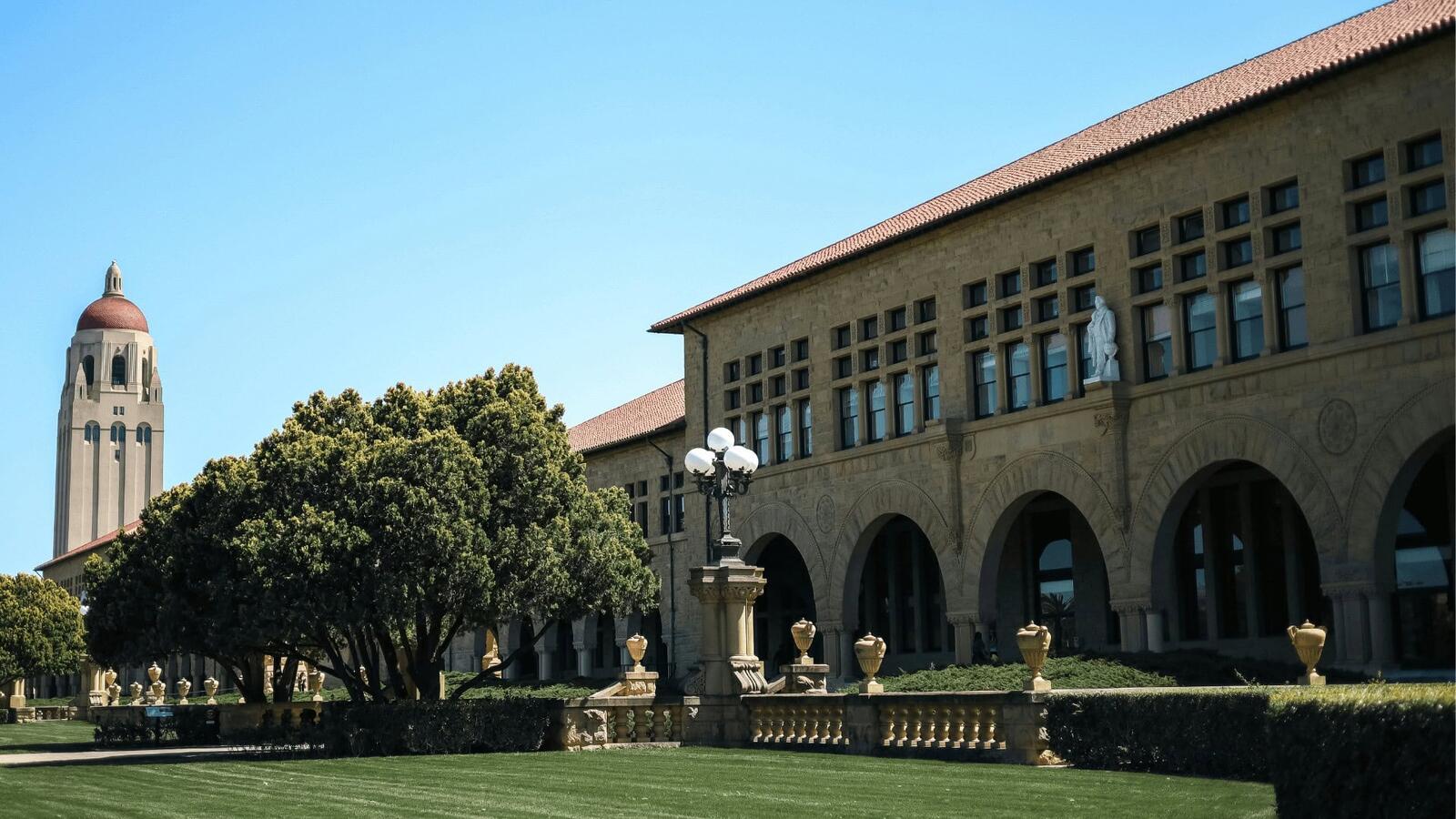
Stanford University has produced more successful founders than almost any other university in the world. Some companies have shaped entire industries while newer startups are still finding their feet but one thing is for sure – there’s no shortage of innovation.
The institution’s alumni have built businesses across just about every sector that you can think of, spanning tech, healthcare, retail, energy and media. We’re taking a look at a handful of the mix of billion-dollar giants and newbies that have their roots at the prestigious university.
But first things first, what seems to be in the water over at Stanford?
How Is Stanford Producing So Many Founders?
There’s not really anything in the water or a magic formula that’s churning out founder after founder. There are, however, a good number of contributing factors.
You’ve got StartX, which is Stanford’s own accelerator, that has backed hundreds of companies since 2011. Then there’s the Graduate School of Business that runs its Impact Founder programme annually, funding student ventures across climate, health and social good. The proximity to Sand Hill Road certainly also helps when investor meetings are basically just a bike ride away.
And then there’s the culture. It’s one where putting your degree on hold to actually build something meaningful is admired rather than just finishing on time. When that happens, you’ve got an environment that behaves a little less like a university with startups nearby and more like a startup network but with lecture halls.
It’s the reason why every year, so many graduates are walking out the door with a company that’s already trading.
10 Successful Stanford Alumni That Founded Startups
From graphics chips and genetic testing to AI sales tools and scam protection, these alumni entrepreneurs are showing what “Stanford-founded” looks like in 2026.
1. Phil Knight, Co-founder of Nike

Way before Air Jordans and the famous swoosh, Phil Knight wrote a paper at Stanford about Japanese running shoes disrupting the German-dominated athletics market. He eventually teamed up with his old track coach, Bill Bowerman, and started Blue Ribbon Sports in 1964 which later became Nike in 1971, the household brand we all know.
Today, Nike is undoubtedly one of the biggest companies in the world. Knight’s original thesis, which included a good product, a decent story and a route to market, is basically the same recipe that half of the companies mentioned here are following now.
Six decades later, Nike is still turning over more than $50 billion a year.
2. Jensen Huang, Co-founder & CEO of NVIDIA
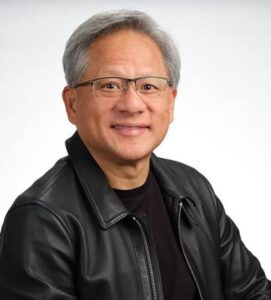
Jensen Huang completed his Master’s in Electrical Engineering at Stanford in 1992 and co-founded NVIDIA a year later – reportedly in a Denny’s diner in San Jose. For almost two decades, the company was mostly known by gamers, dominating the graphics-card market and building its GPU infrastructure.
But then, AI happened. Researchers came to the realisation that the parallel processing NVIDIA had built for rendering was almost perfectly suited to training neural networks. After that, demand went through the roof.
Just about every serious AI model is now trained on NVIDIA chips, with the company crossing a trillion dollars in market cap in 2023.
3. Mike Tung, CEO of Diffbot

Mike Tung studied artificial intelligence at Stanford before founding Diffbot in 2012. The company’s goal is to turn the entire internet into a structured, queryable knowledge graph.
Put simply, it means using computer vision and machine learning to read arbitrary web pages the way a human would and then convert what’s there into structured data.
Diffbot was StartX’s very first company investment and while some of the flashier LLM startups have chased headlines and billion-dollar valuations, Diffbot has built a profitable AI infrastructure with a lean team of about thirty people.
More from Startups
- £180m Gets UK AI Startups Started, Who Pays to Keep Them Here?
- How Is Austria Attracting Entrepreneurs?
- How a Fuel Card Became The Go-To Cost-Control Tool For UK Startups
- 5 Startups Crowdfunding w/c 19.10.2026
- Quite Contrary: The Fastest Way To Scale A Business Is To Slow Down, Says John Messer
- Founder Of The Week: Matt McLuckie
- Top Climate Tech Startups In The UAE To Watch In 2027
- Startup of the Week: SnoreLab
4. Sharath Keshava Narayana, CEO & Co-founder of Sanas

Sanas came out of Stanford’s AI lab in 2020. The team spent the next two years working on real-time speech AI namely noise cancellation, speech enhancement and, most notably, accent harmonisation.
The product does real-time accent translation between speakers on a call and is now used across BPOs in the Philippines, India and beyond.
Sharath Keshava Narayana, a serial entrepreneur joined as a co-founder and the CEO in 2022 with Sanas being ranked in the top 10 in Inc. Magazine’s AI and Data category this year and achieved a listing on the New York Stock Exchange.
5. Ann Wu & Akash Levy, Co-founders of Silimate
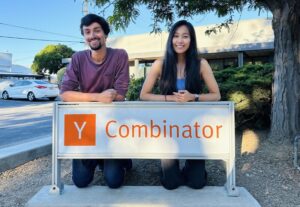
Ann Wu and Akash Levy met as electrical engineering graduate students while at Stanford. They both believed that chip design is broken and launched Silimate in 2023, an AI copilot for chip designers that finds functional bugs, predicts performance issues and recommends real fixes in real time.
It’s the first electronic design automation company that Y Combinator has ever backed and they’ve worked across the board with smaller startups to Fortune 500 chip teams.
Some of the team includes ex-Apple and ex-NVIDIA engineers – not bad for a company that’s only about eighteen months old.
6. Josh Payne, Founder & CEO of Coframe

Josh Payne launched Coframe in 2023, which uses AI to run continuous conversion experiments on websites. Think A/B testing but at ten times the speed, with AI both suggesting variants and analysing what actually converts.
The company’s customers include OpenAI and The Economist, and they’ve raised $9 million to date.
Josh has three Stanford degrees – BS, MS and MBA – and now guest-lectures on generative AI at the university. He’s also the brains behind GPT-Migrate, one of the first widely-used autonomous coding agents and co-founded Autograph, the digital collectibles company.
7. Tanuj Thapliyal, Rish Gupta & Sud Bhatija, Co-founders of Spot AI
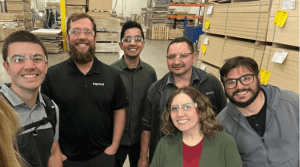
These three Stanford friends founded Spot AI in 2018 with the simple question: why aren’t businesses doing more with all of the video footage their cameras are already recording? They raised $93 million to built AI-powered camera systems that turn CCTV into a proper business intelligence tool.
The platform now serves 1,100 customers across manufacturing floors, retail stores and security perimeters, spotting operational issues, standardising procedures and coaching teams in real time. In 2021, they were listed on the Forbes Cloud 100 Rising Stars.
Rish Gupta leads as CEO, Tanuj Thapliyal sits as Executive Chairman and Sud Bhatija runs operations and growth.
8. Rohan Suri, Co-founder of Nooks

Rohan Suri met Dan Lee and Nikhil Cheerla studying computer science at Stanford and launched Nooks in 2020 as a virtual office tool for remote classrooms during Covid. Today, Nooks is an AI sales platform that helps reps prospect, dial and coach more effectively.
The company has raised $70 million to date with all three founders making the Forbes 30 Under 30 list in 2024. The platform has expanded well beyond its original auto-dialler into AI-driven prospecting, live coaching and account research.
9. Francis Appiah, Founder of Cetera Energy

Francis Appiah, an MS Chemical Engineering student, was named a 2026 Stanford Impact Founder Awaredee for Cetera Energy, a programme the Graduate School of Business runs specifically to back climate and social ventures with technical depth.
Cetera’s pitch is turning wastewater into low-carbon lithium. The battery industry is predicted to run into some serious lithium shortages by the end of the decade and existing extraction methods are slow, expensive and environmentally costly.
Cetera is aiming to build a much cleaner supply chain from the outset by pulling lithium out of industrial wastewater streams that would otherwise just be discarded.
10. Abhinav Kejriwal & Nickhil Jakatdar, Co-founders of PreventiveHealth.ai
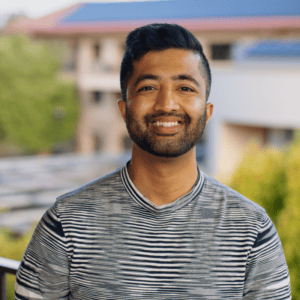
Abhinav Kejriwal is the CEO of PreventiveHealth.ai while Nickhil Jakatar is a veteran entrepreneur who chairs the company. Their flagship product is Mira One, a service that pulls together advanced biomarkers, genetic testing and wearable data into a single health report.
The pitch is preventative rather than reactive medicine, to catch chronic disease before it starts, using the kind of combined data that most doctors don’t have the time or tools to look at together.
The company is powered by GenePath Diagnostics, a NABL-accredited clinical lab with deep experience in molecular diagnostics and geonomics. In other words, their reports are made to stand up in a clinical setting.


