


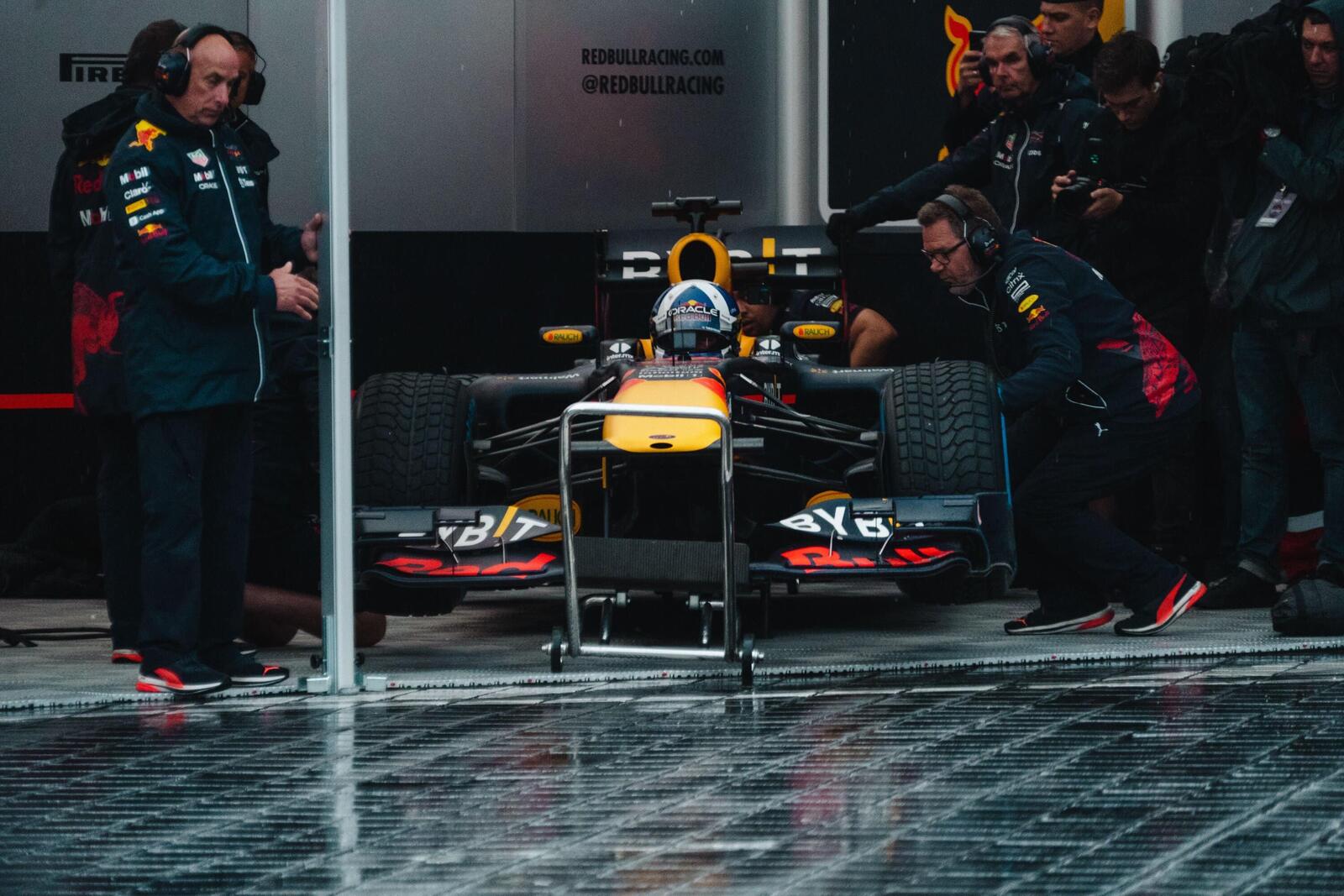
While millions of people watch cars fight over a corner, another contest is going on in the pitlane, and it can be over in about two seconds. According to Formula 1, a solid 2.2-second stop has the front jack fully engaged at 0.3 seconds, leaving the crew very little time to waste.
Behind those two seconds is a lot of equipment working away out of sight: wheel guns, jacks, cables, lights and cameras, all of which have to work together.
The Pitlane Is A Race Within A Race
A pit stop can affect a race result, especially when two cars are close enough that their teams are basically competing against each other in the pitlane. A quicker stop can help a driver gain a position, while a delay gives other teams the chance to get ahead.
Speed Depends On More Than The Crew
The crew rehearses the same movements repeatedly, but practice alone can’t make a stop faster if the equipment fails to do its job. Wheel guns need to remove and fasten wheel nuts quickly, while the jacks must lift and lower the car without getting in the way of the mechanics working around it.
The equipment also has to communicate – teams use control systems to help confirm when wheel changes are complete and signal when the driver can leave. The quickest stops depend on these different parts working together, not on one clever tool doing everything.
More from Tech
- The Drone Technology Helping Farmers Cover More Ground In Less Time
- Top Deep-Tech Startups In Finland To Watch In 2027
- Are VoIP Calls Secure? Let’s Talk About Who Could Be Listening
- The Tech That Shapes F1 Car Performance From Circuit to Circuit
- From Alton Towers To Thorpe Park: The Technology Bringing Theme Parks To Life
- Women In Tech: Top 10 Women In EdTech In 2026
- Why Is It So Hard To Put Tech Down? The Design Choices Behind Our Attention
- Can A Trading App Truly Be Risk-Free When Real Financial Habits Are On The Line?
1. Wheel Guns
Each wheel is secured by a single central nut, and the wheel gun is designed to remove and fasten it as quickly as possible. Formula 1 teams use pneumatic or electrically powered impact wrenches, with the equipment designed to withstand the demands of repeated stops.
Some teams also use sensors to check whether the nut has reached the required torque and whether it has moved correctly. These checks can help identify a problem such as a cross-threaded nut, which could appear secure even when it’s not. The gunner can then signal that the wheel is ready, feeding into the team’s pit-stop release system.
2. Front and Rear Jacks
The jacks are among the most important pieces of equipment in the pit box. The front jack lifts the nose of the car while the rear jack raises the back, allowing the mechanics to remove the old tyres and fit new ones.
Formula 1 has documented the use of lightweight carbon-fibre front jacks with a quick-release swivel mechanism. The operator can move out of the car’s path before releasing the jack, which allows the car to drop back onto its wheels and leave the pit box. The timing has to be precise, since the jack operator can’t obstruct the car’s departure.
3. The Overhead Gantry
The pit box has an overhead gantry carrying equipment such as pneumatic air lines, electrical supplies and the cables used by the pit-stop control system.
These connections supply the tools and link parts of the control system, helping the crew keep its equipment ready for the car’s arrival. The gantry also keeps cables and air lines organised above the working area, leaving mechanics with more room to move around the car without getting caught up in loose equipment.
4. Traffic Lights
F1 teams use electronic traffic-light systems to help manage the release, reducing reliance on a single person’s judgement on when the wheel changes are complete.
The system is connected to the pit-stop operation. Wheel-gun operators can signal when their work is finished, and the system can indicate when all four wheels have been dealt with. The lights help coordinate the process, but the crew still needs to watch what is happening around the car.
5. Sensors and Cameras
Formula 1’s technical regulations list sensors, cameras, traffic lights, cabling and software among the components that can form part of pit-stop control equipment.
These systems help teams coordinate the operation and monitor what’s happening as the stop unfolds. Sensors can provide information about the wheel-fastening process, while the control system brings together the signals used to indicate when the crew has completed its work.
The aim is to make sure the crew has the information it needs to complete the stop and release the car safely. The technology supports the mechanics; it doesn’t remove their responsibility for doing the job correctly.
6. Timing Systems
A pit stop can only be improved if teams know how long it takes and where time is being lost. Formula 1 records stationary pit-stop times, and the DHL Fastest Pit Stop Award recognises the teams delivering the quickest stops across the season.
The record shows how much performance can come down to fractions of a second. McLaren changed Lando Norris’s tyres in 1.80 seconds at the 2023 Qatar Grand Prix, beating Red Bull’s previous record of 1.82 seconds at the 2019 Brazilian Grand Prix.
Teams also practise stops and review their performance to identify delays and improve coordination. Timing provides a measurable result, but the work behind it involves getting the driver into the right position, preparing the equipment and ensuring each mechanic completes their task at the right moment.
Two Seconds Of Tech, A Lifetime Of Practice
Every team wants to get its driver back into the race before its rivals can react, and the equipment in the pit box plays a part in making that happen. A wheel gun that secures a nut correctly, a jack that clears the car in time and a release system that works as intended can all influence those crucial seconds. The fight in the pitlane may be quieter than the one on track, but the stopwatch is just as unforgiving.


