


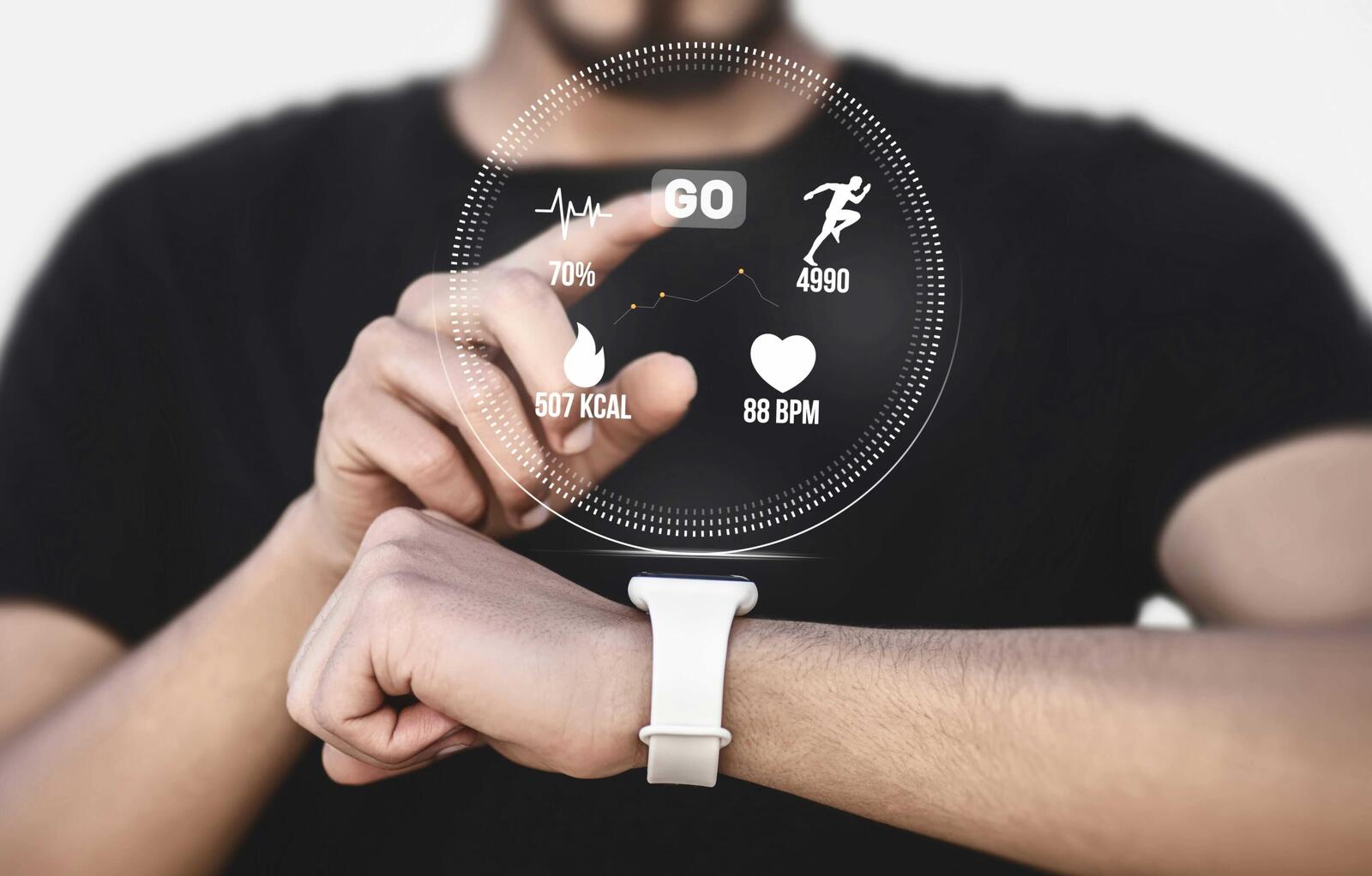
Plenty of us now wear something that checks our heart rate all day. Some watches and rings can even take an ECG reading from your wrist or fingertip. So it’s tempting to assume your wearable would be first to know if your heart went badly wrong.
It probably wouldn’t. Older women often feel a heart attack as breathlessness, nausea or jaw pain. A guide to heart attack signs in women over 60 can be more useful than any notification. Spotting those symptoms is still a human job.
What Is Your Wearable Actually Measuring?
Most wrist-worn devices use an optical sensor on the underside. It shines light into the skin and measures how much comes back as blood pulses through the vessels. This is called photoplethysmography, or PPG, and it gives a heart rate and a rough picture of rhythm.
Some devices add an electrical sensor. Touch a finger to the watch and it records a single-lead ECG, a short trace of the heart’s electrical activity. That’s genuinely clever for something that also tells you the time.
TechRound has already looked at how wearables turn body data into scores and advice. The same idea applies to heart features. The sensor collects a signal, and the software makes an educated guess about what that signal means.
What Can Wrist-Worn Heart Features Detect?
The thing consumer heart features do best is spot atrial fibrillation, or AF. This is an irregular heart rhythm that raises the risk of stroke. It can come and go without obvious symptoms, which is exactly why passive monitoring helps.
The evidence here is fairly strong. A 2025 systematic review in JACC: Advances pooled 26 studies covering 17,349 patients. Across them, smartwatches identified AF with a sensitivity of 95% and a specificity of 97%.
In practice, wrist-based heart features tend to cover:
- Irregular rhythm alerts that may point to AF
- Warnings when your heart rate stays unusually high or low
- A single-lead ECG you can share with a GP or cardiologist
- Trends in resting heart rate over weeks and months
Those figures come from studies, though, not from everyday life. A reading taken while you’re moving, or with a loose strap, can come back inconclusive. An alert is a reason to book an appointment, not a diagnosis.
Why Can’t a Watch Spot a Heart Attack?
A heart attack is a plumbing problem rather than a rhythm problem. It happens when blood supply to part of the heart muscle is blocked, usually by a clot. The rhythm can look completely ordinary while that’s going on.
Hospitals confirm a heart attack with a 12-lead ECG, which views the heart from 12 angles. They pair it with blood tests for troponin, a protein released when heart muscle is damaged. A wrist sensor gives one view. At least one maker of portable ECG devices states plainly that its product does not check for heart attacks.
Here’s how the main types of consumer heart tech compare:
| Technology | What it can flag | What it can’t confirm |
| Optical heart rate (PPG) | High or low heart rate, irregular pulse | A blocked artery or damaged heart muscle |
| Single-lead ECG | Possible AF and some rhythm changes | Most heart attacks |
| Fall detection | A hard fall followed by stillness | Chest pain, nausea or breathlessness |
| Symptom checker apps | Prompts to get help, based on your answers | Anything you don’t think to mention |
So a normal reading proves very little. If you have symptoms, NHS and British Heart Foundation advice is the same. Call 999, whatever your watch says.
More from Tech
- Flying Cars Are Now A Reality, But Is There Really A Market for Them?
- Women In Tech: Top 10 Women In Quantum Computing In 2026
- Self-Reliance By Design: The Best Health Tech Makes You Need It Less
- Volvo Wants To Take Your Hands Off The Wheel By 2030 – What Is Level 2++?
- What Businesses Should Know Before Collecting Public Web Data At Scale
- Top Physical AI And Industrial Robotics Startups In Japan To Watch In 2027
- From Pit Lanes To Cargo Planes: The Logistics Behind Moving Formula 1 Around The World
- AI Can Now Build A Free Adobe Rival – So Why Can’t It Open Files?
Why Are Women’s Heart Attacks So Easy to Miss?
Heart disease is often framed as a men’s problem, and the numbers don’t support that. According to the British Heart Foundation, more than 800,000 women in the UK live with coronary heart disease. Around half of them are estimated to have survived a heart attack. The charity also says coronary heart disease kills twice as many women as breast cancer in the UK each year.
The BHF guide to heart attack symptoms in women says men and women mostly share the same symptoms. Women may still notice signs that don’t match the film version, such as:
- Pain that spreads to the arm, neck, jaw, upper back or stomach
- Feeling sick, sweaty, light-headed or short of breath
- Sudden anxiety that feels like a panic attack
- Severe tummy pain, or lots of coughing or wheezing
Photo by Joshua Chehov on Unsplash
Alt text: A green heart rhythm trace on a black background
Doctors miss these too. A University of Leeds study followed nearly 600,000 heart attack patients in England and Wales. Women had a 50% higher chance than men of a wrong initial diagnosis. For the more severe STEMI type, the gap rose to 59%. Patients who were misdiagnosed had about a 70% higher risk of death within 30 days.
That history feeds straight into technology. TechRound’s piece on big data in women’s health notes how often women were left out of clinical research. Any algorithm trained on those records can inherit the same blind spots.
What Should Health Tech Companies Get Right?
None of this makes heart features pointless. AF detection is a real win. The problem starts when a product implies more certainty than it can deliver.
For anyone building in this space, a few principles stand out:
- Report accuracy separately for women and men, and across age bands, not just as one headline figure
- Test with older users, since they carry the most heart risk and are rarely early adopters
- Never show an “all clear” message after someone reports chest, jaw or arm symptoms
- Put the emergency step first, so calling 999 comes before any form, score or login
- Say clearly in marketing what a feature does not detect
Buyers can use the same list in reverse. If you’re choosing tech for an older parent, look for honest claims, then make sure they know the symptoms too.
Sensors Help But People Still Spot The Signs
Wearables have made heart data easy to collect, and AF detection shows what they do well. A heart attack is a different event, and the person wearing the device is still the best early warning system.
That’s especially true for older women, whose symptoms are the easiest to brush off. Knowing what those signs feel like, and calling 999 when they appear, beats waiting for a notification.


