


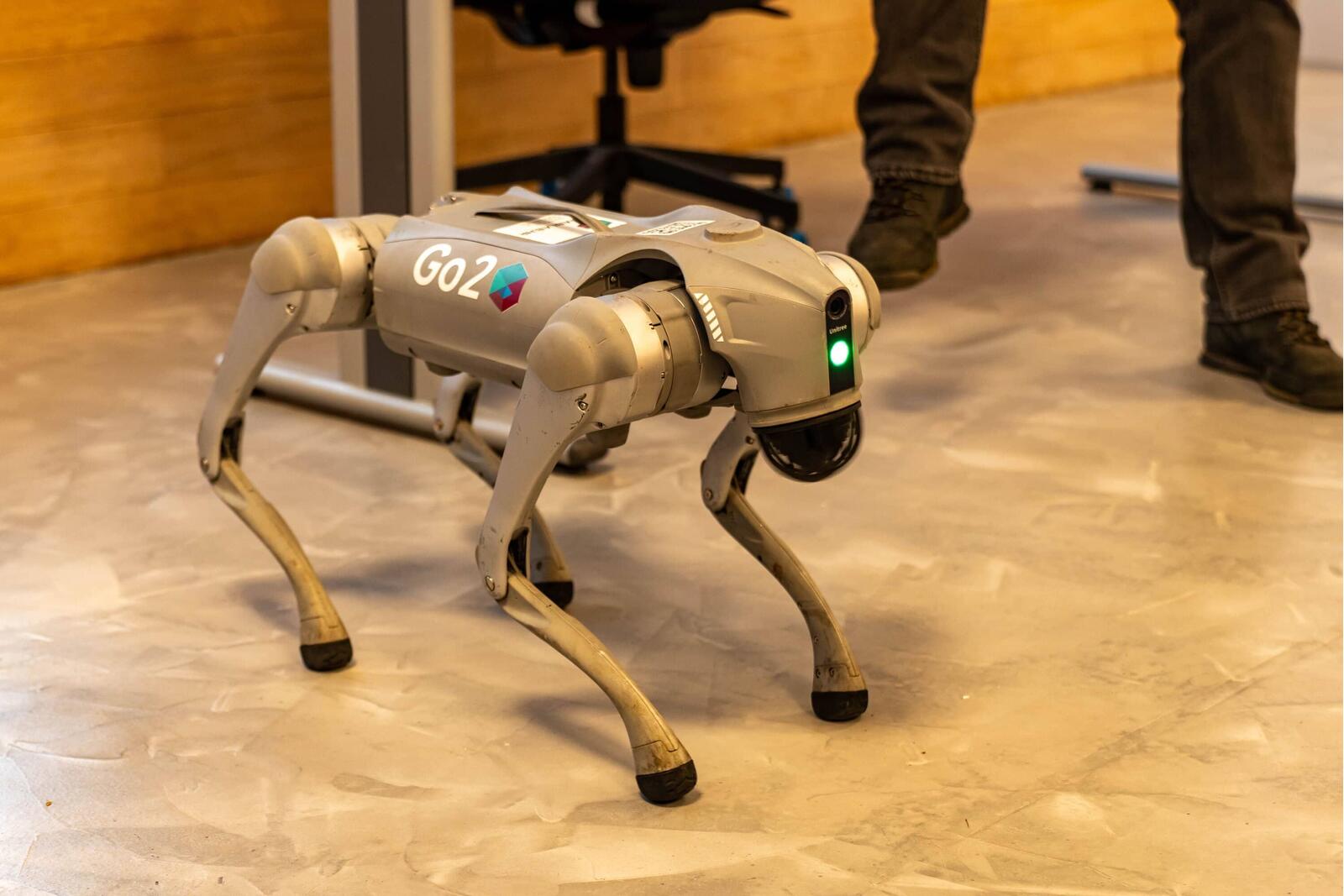
Network Rail has a robot dog called Eric, and he has been helping inspect railway culverts that can be difficult for people to access. Since 2024, Network Rail has been working with robotics company Unitree to use Eric inside brick and concrete tunnels beneath the tracks, where cameras and lights capture images and video for engineers to review without having to enter the culvert themselves. It might not be the most glamorous job for a robot dog, but it’s definitely a useful one.
Drones are also being used to inspect power lines, bridges and other railway infrastructure, while ground-based robots can move through confined spaces. The machines may look very different, but the idea is fairly simple: get a camera or sensor into a place that can be difficult for a person to reach and bring the information back to the people responsible for maintaining it.
Why Some Infrastructure Is Difficult To Inspect
The location of infrastructure can make inspections more complicated, especially when engineers need to work at height, close to railway lines or inside confined spaces. Network Rail uses drones to inspect roofs, bridges, coastal areas, overhead wires and communication masts, which allows its teams to collect images and other data without sending engineers onto the track unnecessarily.
Culverts can be quite difficult to inspect because of their size and location. Network Rail says some are around 50 to 60 metres long and between 400mm and 1,200mm wide, with many more than 150 years old and since they run underneath railway tracks, the tracks above usually need to be closed when staff enter the culvert for an inspection.
Power infrastructure has a different set of access requirements, with engineers dealing with tall pylons and long stretches of overhead equipment. National Grid owns 21,900 steel lattice pylons in England and Wales that require regular inspection for corrosion, and its VICAP project uses autonomous drones to capture high-definition images of the steelwork.
More from Tech
- Flying Cars Are Now A Reality, But Is There Really A Market for Them?
- Women In Tech: Top 10 Women In Quantum Computing In 2026
- Self-Reliance By Design: The Best Health Tech Makes You Need It Less
- Volvo Wants To Take Your Hands Off The Wheel By 2030 – What Is Level 2++?
- What Businesses Should Know Before Collecting Public Web Data At Scale
- What Wearable Tech Can’t Tell You About Heart Attacks
- Top Physical AI And Industrial Robotics Startups In Japan To Watch In 2027
- From Pit Lanes To Cargo Planes: The Logistics Behind Moving Formula 1 Around The World
How Robots Can Reach Difficult Areas
Drones can cover infrastructure that stretches across large areas or sits high above the ground without requiring inspectors to physically reach every part of it. National Grid’s autonomous drones can fly beyond the pilot’s visual line of sight to collect close-up images of pylons, with the data then processed to assess the condition of the steelwork.
When there isn’t enough room for a person to work comfortably, a ground robot can take on the inspection instead. Eric’s small body allows him to move through railway culverts while cameras and lights record what’s around him – Network Rail says his first culvert inspection took place in Essex on 7 February 2025.
The machines can also be fitted with different equipment depending on what engineers need to see; Network Rail’s drones, for example, use visual and thermal imaging equipment and are used to identify faults across parts of the railway, including overhead line equipment and structures.
What Can Robots Look For?
Cameras give engineers a close view of surfaces, equipment and other parts of a structure, which is why they feature heavily in robotic inspection systems. National Grid’s VICAP drones capture high-definition close-up images of pylon steelwork, with AI then used to process the images and assess corrosion.
LiDAR can provide another type of information by measuring the surrounding environment and producing 3D data. Network Rail has used drones for 3D mapping as well as inspections, giving teams another way to record the condition and layout of railway infrastructure.
The robot doesn’t have to diagnose a problem by itself either; its job can be to get a camera or sensor into position and collect the information, leaving engineers to review the results and decide whether anything needs further investigation or repair.
Where Robotics Could Make Inspections Easier
Using robots for inspections can reduce the amount of time staff need to spend inside confined spaces or close to infrastructure such as railway tracks and overhead power lines. Network Rail says Eric means staff no longer need to enter the culverts during these inspections and can help reduce the need for line closures, while also providing more detailed information about their condition.
Drones can also reduce the need for some traditional access methods. National Grid says its drone and AI system can collect condition data at lower cost than its previous approach, while freeing up time for teams that would otherwise have to manually assess thousands of infrastructure images.
There’s also value in being able to repeat an inspection and compare the results – if a robot captures images or measurements in a similar way each time, engineers can use the records to monitor changes in an asset and decide when something needs closer attention.
Robotics As Another Tool For Infrastructure Maintenance
Robots aren’t replacing the engineers and inspectors responsible for maintaining infrastructure. They’re just giving those teams another way to reach certain locations and collect information, while the decisions about repairs and further inspections still sit with the people responsible for the infrastructure.
For Eric, that means walking into a railway culvert with a camera strapped to his back and for a drone, it might mean flying close to a pylon and taking thousands of images from the air. The technology is different, but the job is much the same: get where people don’t necessarily want to go, have a good look around and bring the information back.
From railway culverts to electricity pylons, robots are already being used to make some infrastructure inspections easier to carry out. And, honestly, if someone can send a robot dog into a 60-metre culvert instead of asking an engineer to squeeze in there, Eric has probably earned his biscuits.


