


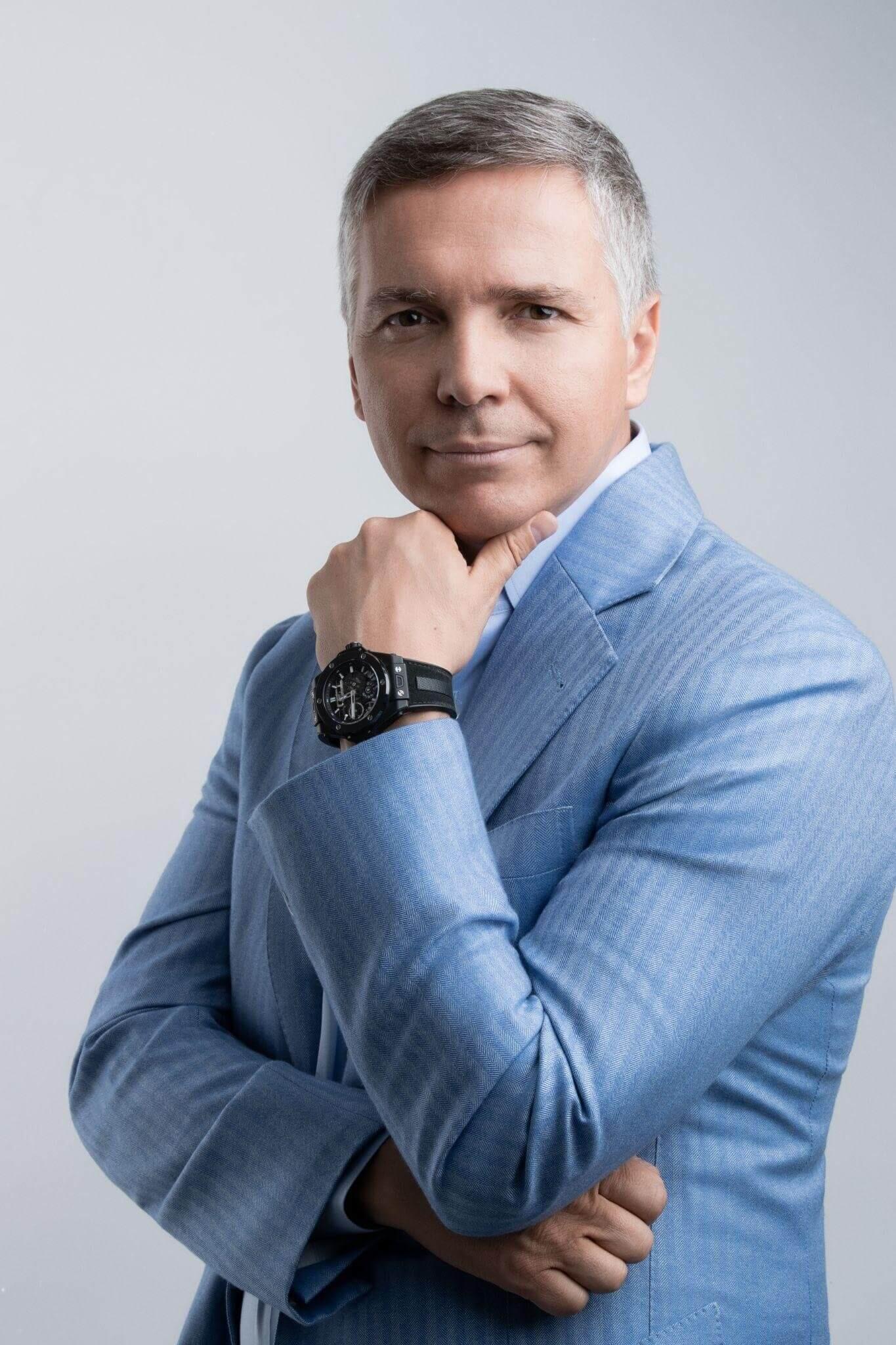
Alexey Gubarev, a Limassol-based investor who spent almost twenty years building hosting and infrastructure businesses, explains what he checks before backing an early-stage technology company.
According to the British Business Bank, UK smaller businesses raised £12.3 billion across 2,002 equity deals in 2025, with deal numbers down 17%. Seed rounds also took longer to close. For founders that means more meetings, more due diligence and more questions about how the product actually works.
Gubarev has worked in hosting and infrastructure since 2005. In 2013 he co-founded Servers.com, which was sold to CloudOne Digital in July 2023, and he is also a co-founder of Palta, a portfolio of preventative digital health brands. That background shapes how he reads a startup. Before he looks at the growth chart, he wants to see how the product is built and how the team behaves when something goes wrong.
Seed Deals Fell By More Than A Quarter Last Year. Does That Change How You Invest?
A little. When rounds close in two weeks, nobody reads the technical documentation. In a slower market both sides have time to look properly, and I use that time. A founder who has three conversations with me instead of one usually tells me more about the product than any deck could.
What I like less is how concentrated the money has become. The ten largest UK rounds last year took 23% of everything invested, the highest share since 2020. In a market like that, plenty of sound companies with unexciting ideas get overlooked. Some of the best infrastructure businesses I’ve known looked dull at seed stage, because they sold something customers used every day and preferred not to think about.
What’s The First Thing You Look At?
The last few incidents. I ask what went down, how long it took the team to notice and what they changed afterwards. If a company says it has never had an incident, it either has very few customers or it isn’t keeping records.
In my experience outages rarely come from exotic bugs. Much more often someone skips a step at two in the morning because the step was never written down. So I look for a runbook and a named person on call. I also like to see a short written review after each incident, done without looking for someone to blame. A team of five that works this way is in better shape than many teams of fifty I’ve met.
Most Startups Run On Someone Else’s Cloud. Why Does That Concern You?
It doesn’t concern me as such. I just want founders to know what they rely on. The Uptime Institute has found that third-party providers such as cloud, telecoms and colocation companies account for about two-thirds of publicly reported outages over the nine years it has been tracking them.
So your uptime partly depends on suppliers who have never heard of you. That is no reason to build your own data centre at seed stage, and I’d advise against it.
What I ask instead is for a list of every outside service the product can’t work without: hosting, payments, login, email, whichever AI model it calls. Then we go through what happens if each one disappears for a day. Most teams have never done this. The good ones can tell me straight away which failures their customers would notice and which they could ride out. They don’t need a plan for every case, but they should have thought about it before a customer asks.
More from Interviews
- A Chat With Aler Rab, Deputy CEO At Cloudzy And Cybersecurity40 Judge: What Makes Businesses Trust A Cybersecurity Product
- Trinity Rental Owner Aleksandr Matiashov On Dubai Car Culture And The End Of The Petrol Engine
- A Chat With Lucy Kemp, Chief Marketing Officer At La Fosse
- A Chat With Janet Gourand, Founder Of Tribe Sober: Building An AI Sobriety Coach At 75
- Interview With Joe Gillam, Co-Founder Of Soul Spaces
- A Chat With Alexander Kihm, Founder And CEO Of POMA AI
- A Chat With Jason Day, Head Of EMEA At Luma: How Agentic AI Is Rewriting The Rules Of Creative Production
- A Chat With Yahya Hmida, XWorld: Building An Enterprise AI Company With No Outside Funding
How Do You Judge A Technical Team This Early?
I ask them to draw the system on a whiteboard and then ask why. Why this database, why this provider, why this language. There’s rarely a single right answer. I want to hear whether the choices were made on purpose or copied from a tutorial and never revisited.
I also want to know who wrote the core of the product and whether they’re still there. If the only person who understands the billing logic left last month, that’s a risk, and the valuation should reflect it. And I look at whether the team writes things down. Documentation is dull work, but it’s how knowledge survives when a team grows from five people to fifty. I’ve watched very good engineers turn into a bottleneck as their company grew, simply because everything important lived in their heads.
AI Companies Took 44% Of UK Small-Business Investment Last Year. How Do You Tell A Real AI Business From A Thin Layer On Someone Else’s Model?
I ask what they own that a competitor couldn’t copy in a month. Sometimes it’s data nobody else has. Sometimes the product sits so deep in a customer’s daily operations that switching away would be painful. And sometimes there’s nothing much beyond a good prompt and a clean interface, which can still be a business, just a fragile one.
Then I ask about the cost of serving one customer. Every time someone uses an AI product, it costs real money to run, which wasn’t true of most traditional software. I don’t expect a perfect model at seed stage.
I do expect founders to know roughly what a heavy user costs them, and what happens to that figure if their model provider changes its prices. If nobody on the team can give me that number, the company doesn’t really control its margin.
What Did Hosting Teach You About How Tech Companies Make Money?
Mostly that the costs nobody mentions decide the outcome. In hosting everyone watches the price of servers. The businesses that last also watch support, bandwidth, compliance and the engineering hours that go into one-off customer requests, because those grow quietly with every new client.
So I don’t only look at revenue growth. I want to see whether serving the hundredth customer costs less than serving the tenth. If every new client needs custom work, a special contract or a dedicated engineer, the company is closer to a services firm with software attached. That can be a perfectly good business, as long as the founders and their investors describe it honestly.
Are There Red Flags That End The Conversation For You?
A few. Treating security as something to sort out later, once there are customers, is one. By then it’s expensive, and promises have usually been made that the product can’t keep. Another is one customer providing most of the revenue on a month-to-month contract. I’m also wary of founders who can’t name a single thing they’ve decided not to build.
And founders who hide bad news. Every company I’ve been part of since 2005 has had difficult weeks. I’d much rather hear about them from the founder than from someone else.
Founders Sometimes Worry About Investors Who Used To Be Operators. What Do You Do After You Invest?
As much as they ask for, and no more. A former operator who tries to run the company again through the founder does more harm than good. The founders are closer to their customers than I’ll ever be.
Where I can help is with situations a first-time founder hasn’t met before, like negotiating a data centre or bandwidth contract, hiring a first head of infrastructure or getting through a large customer’s security audit. Introductions help too. Through TechIsland, where I sit on the board, I’ve seen problems get solved far faster when a founder can phone someone who dealt with the same thing two years earlier.
What Should A Founder Bring To A First Meeting With You?
A one-page diagram of how the product works and a list of the services it depends on. Some notes on the last few incidents, and rough figures for what it costs to serve a typical customer. None of it has to be polished. An honest spreadsheet tells me more than a well-designed deck.
If a founder can explain what breaks and who fixes it, the rest of the conversation is usually easy, whatever the market is doing that month.
Alexey Gubarev (also spelled Aleksey Gubarev and Aleksej Gubarev), a co-founder of Palta and one of the founders of TechIsland, where he serves on the Board of Directors, is a Limassol-based technology entrepreneur and investor. He co-founded Servers.com in 2013, having worked in hosting and infrastructure since 2005; the company was sold to CloudOne Digital in July 2023. More at gubarev.com.


