


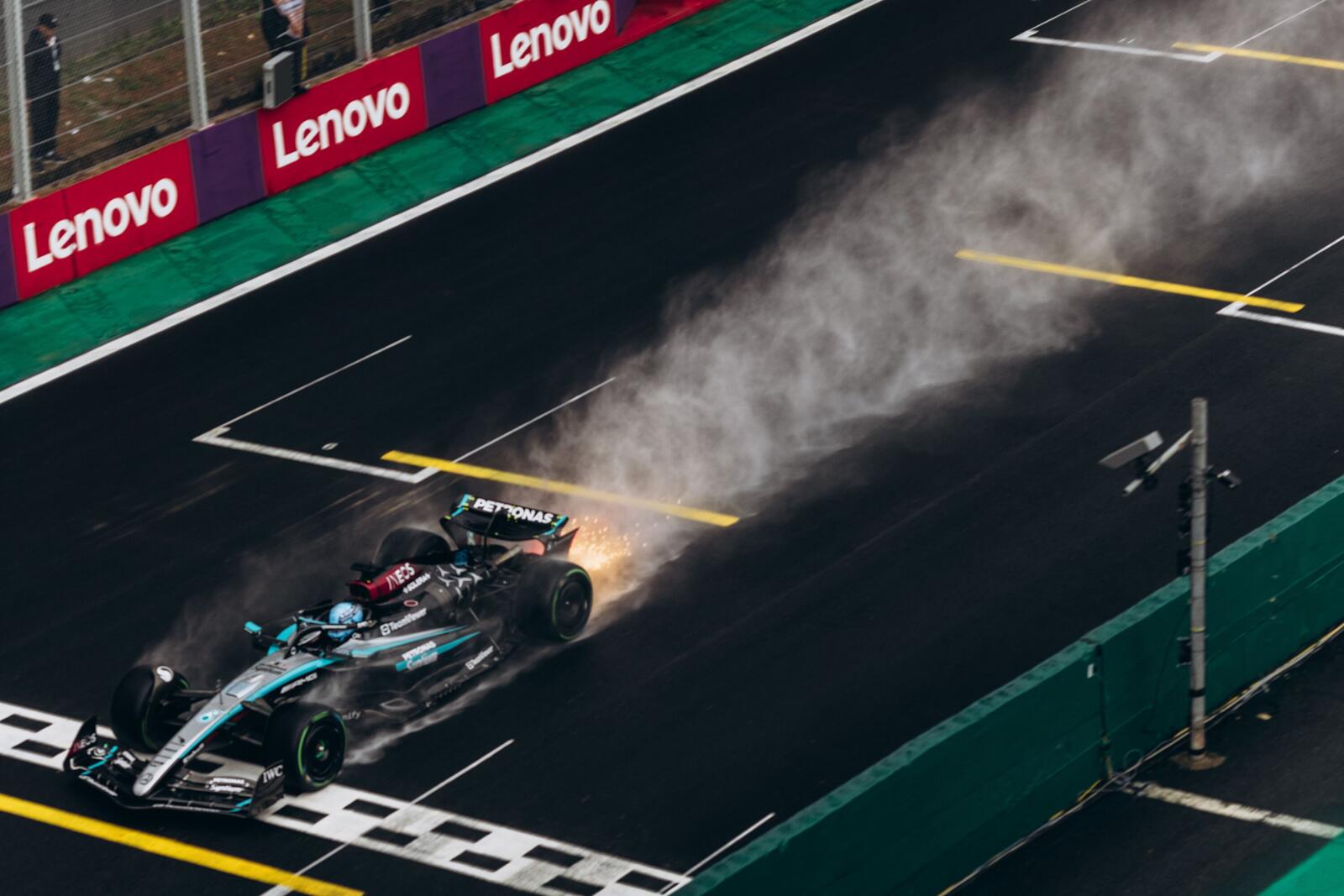
Somewhere in every Formula 1 garage there is an engineer who can tell you what a single winglet is worth to the thousandth of a second; nobody in that garage has ever managed to negotiate with a cloud. Weather turns up uninvited, ignores the timetable and rewrites the plan without a word of apology, whether it arrives as rain, heat, cold or a gust nobody ordered.
That is why the sport now treats weather as a data problem instead of a matter of squinting at the sky and hoping. Knowing when the first drops will land is one thing; predicting how changing conditions will affect tyre performance, driver endurance and the way the cars behave is definitely another.
Predicting The Unpredictable With Satellites And AI
The FIA announced an official partnership with Tomorrow.io on 19 February 2026, bringing the company’s AI-driven forecasting, satellite data and real-time hazard detection into Race Control and event workflows. The FIA claims it is the first international sports governing body to adopt a fully commercial, space-powered weather intelligence platform. According to Raceteq, teams also have their own weather portals on the pit wall this season.
Tomorrow.io co-founder Itai Zlotnik says around 70% of the globe previously went unobserved or relied on readings that could be one to three days old. The company’s satellite network now provides sub-hourly observations, giving the FIA access to more frequently updated information about changing weather conditions.
A forecast for an entire circuit only goes so far, so the system also incorporates trackside cameras and rain sensors at marshal posts, which help identify when the first drops arrive. According to Raceteq, the FIA has also fed years of its own weather records into the system, including data from typhoon-hit weekends in Japan and wet races at Spa-Francorchamps. None of it removes the guesswork; Zlotnik himself admits that when predicting Mother Nature, “you need to be humble”.
More from Tech
- AI Is Meant To Cut Healthcare Costs – So Why Do Its Care Plans Cost 3.2 Times As Much?
- Pinterest Meets E-Commerce: How Technology Is Making Every Image Shoppable
- Singapore Wants 1.3GW Of Imported Clean Power By 2035 – How Secure Would It Be?
- Hidden Ship Activity In The Strait Of Hormuz Dodged Standard Tracking – How Did Satellite Radio Data Catch It?
- Women In Tech: Top 8 Women In Biotech In 2026
- The F1 Technology Gold Rush: The Growing Value Of Motorsport Partnerships
- Designed for Every Mind, Or Just the Average User? How Technology Is Rethinking Cognitive Accessibility
- Top Agtech Startups In Ireland To Watch In 2027
Rain, Tyres And The Race Strategy Behind Every Forecast
Pirelli supplies slicks for dry running and intermediates for damp tracks; for heavier rain and standing water, there are full wets. According to the tyre manufacturer, an intermediate can disperse around 35 to 40 litres of water per second at 300km/h (186mph), while a full wet can handle roughly twice that amount.
Full wets still spend most of their time unused, partly because the amount of water they shift creates considerable spray, making visibility a problem alongside grip. At the 2022 Japanese Grand Prix, all 20 cars initially lined up on intermediates before worsening rain forced a suspension and a restart on full wets. It was a bit like owning an excellent umbrella and leaving it in the car.
Choosing between the compounds requires teams to consider how much rain is expected and how long it’s likely to last. That information can influence whether a team pits immediately or stays out for another lap, while drivers radio in what the water on the track is actually doing.
The FIA introduced the Rain Hazard rule in 2026, allowing teams to make certain adjustments to their cars when the official weather service predicts a greater than 40% chance of rain during a race or sprint. According to The Race, the rule also allows teams to make specific adjustments to their active front aerodynamics and ride height, giving them more flexibility to prepare the cars for wet conditions. The first Rain Hazard declaration came at the Miami Grand Prix in May 2026.
Too Hot To Handle: Managing Extreme Temperatures
The Heat Hazard exists because of the 2023 Qatar Grand Prix, where NPR reported drivers vomiting and passing out, Logan Sargeant retiring with severe dehydration and George Russell describing cockpit temperatures above 50°C – if you watched that season of Drive To Survive, you’d know exactly how unpleasant it actually was.
Under the 2026 regulations, a Heat Hazard can be declared when the official weather service forecasts a heat index above 31°C during a Sprint or Race. Once declared, teams must fit a driver cooling system and make it available for use. Drivers can choose not to wear the cooling vest itself, but must accept an additional 0.5kg of ballast in the cockpit to account for the difference in weight between their usual personal equipment and the cooling clothing.
The system was first used at the 2025 Singapore Grand Prix and reached Europe at the Austrian Grand Prix in June 2026. According to the Associated Press, Sergio Perez joked that European drivers were worrying about 32°C temperatures, which felt quite ordinary to him as a Mexican, although he still planned to wear the cooling vest. Track temperature also influences how quickly tyres degrade, so the same weather conditions affecting driver comfort can change pit-stop strategy too.
Cold, Wind And The Occasional Pair Of Mittens
Cold conditions make it harder for tyres to reach and maintain their operating temperatures, which can reduce grip. Teams use tyre blankets to bring them towards the right temperature before fitting, although the FIA and Pirelli set limits on how long and how hot different compounds can be preheated. Red Bull’s Las Vegas Grand Prix preview explains how teams also use car set-up to help generate tyre temperature, with additional rear wing downforce increasing the load placed through the tyres. Lando Norris, meanwhile, was weighing up mittens.
Wind creates a different set of problems as Formula 1 highlights how a headwind increases aerodynamic load, while a tailwind reduces it, changing how a car behaves under braking and through corners.
Humidity also feeds into the heat index used to determine whether a Heat Hazard is declared, while teams monitor other changing conditions through car sensors and live weather data.
Race Control, Driver Safety And Making The Final Call
Race Control uses weather information to help determine whether conditions are suitable for sessions to continue. Chris Bentley, the FIA’s Head of Information Systems Strategy for Single Seaters, told Raceteq that Tomorrow.io supplies information before and during sessions, with forecasts continually updated as conditions change. The data can help officials assess whether a delay or restart is likely to coincide with improving conditions, rather than relying on an earlier forecast that may no longer reflect what’s happening around the circuit.
Heavy rain, storms and extreme heat all feed into those decisions, as does longer-term climate data. Bentley also explained that the FIA moved Japan to a different part of the calendar because of climate change. Teams use weather information for their own competitive strategies, while the FIA handles governance and safety decisions. The same technology supports both sides of the sport, although the final calls still rest with the people responsible for making them.
Forecasts Come With Odds Rather Than Guarantees
Formula 1 can’t control the weather; it can only get better at predicting what’s coming and what it will do to everything on the track. Satellites, AI models and sensors give officials and teams earlier warnings and a clearer picture of changing conditions, but the output is still a probability that gets revised as the sky changes its mind.
A forecast is a well-informed opinion from a great height, now delivered earlier than before; whether the sky agrees remains a decision it keeps to itself.


