


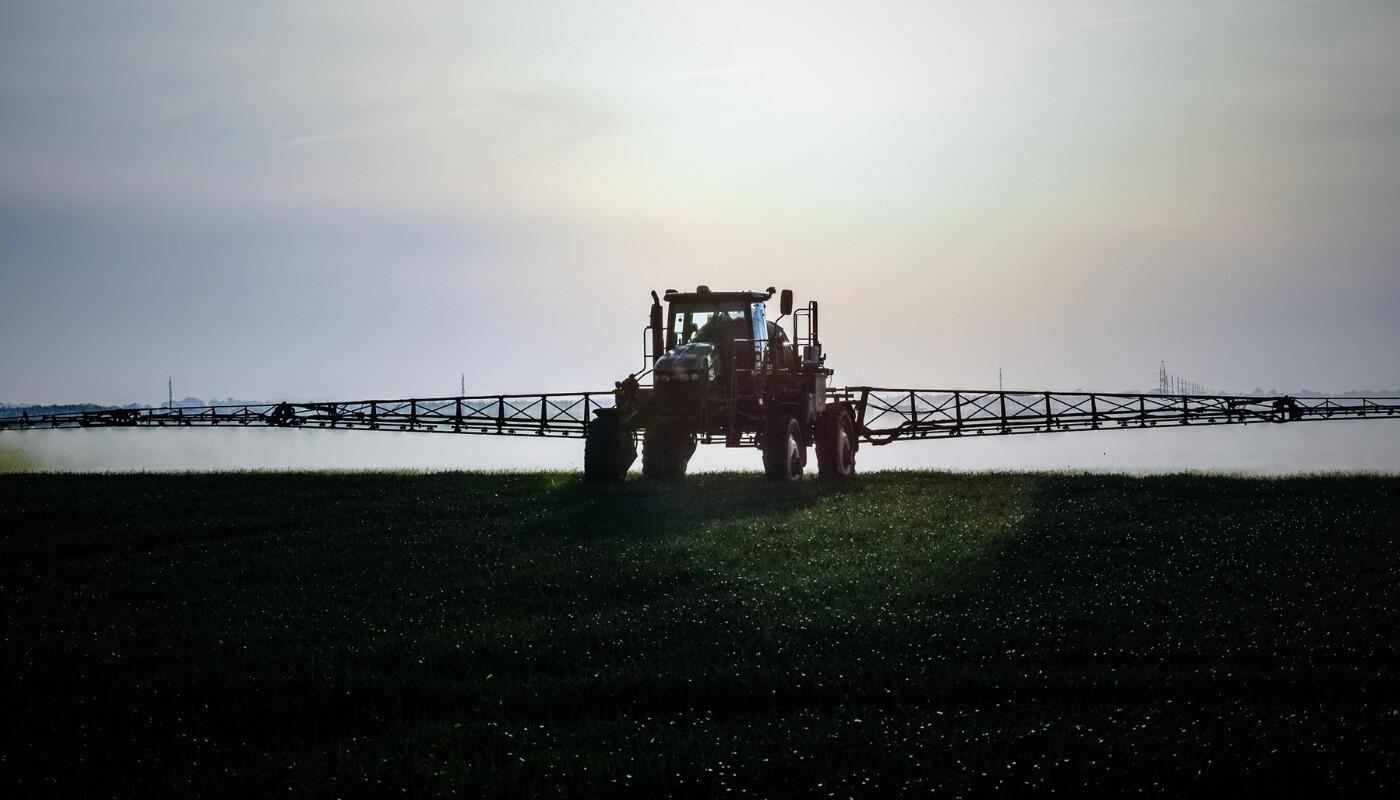
Spraying an entire field to kill a handful of weeds is the agricultural equivalent of repainting the whole house over a single scuff on the skirting board. It works, nobody’s arguing with the result, but it consumes an awful lot of paint. Two machines launched within a fortnight of each other suggest farming is finally reaching for the fine paintbrush.
UK-based Earth Rover has started shipping CLAWS, a robot that uses intense light pulses to eradicate weeds. Meanwhile, Niqo Robotics has debuted the RoboWeeder F50, a tractor-towed sprayer built to target weeds and skip everything else.
The execution varies, but both platforms have the same goal in mind: stop treating farmland as a uniform canvas and start treating every plant in it as an individual.
Micro-Targeting Weeds Meets Real-Time AI
Blanket spraying has always had one great advantage, which is that nobody has to decide anything. Plant-level targeting hands the decision to a machine, so every weed now gets a verdict before anything is fired at it, and that’s more due process than weeds have ever been offered.
The ingredient that makes all this possible is fast computer vision. The F50 pairs 14 cameras with 350 nozzles, and only the nozzles positioned over a weed switch on, while CLAWS uses cameras and AI to tell crop from weed before sending a pulse of light to the weed’s growing point. Both rely on a model that can make that call in real time while the machine keeps moving.
Both perform the same task at very different operational sizes, and both rely on a model capable of making that live assessment while hardware rolls across the field.
One Route Cuts Chemicals Out, The Other Turns Them Down
The interesting split is what happens after the weed is spotted.
CLAWS takes herbicide out of the equation for the vegetable crops it covers, while the F50 keeps the sprayer and shrinks what goes through it. That gives farmers a choice between dropping chemistry altogether or simply using less of it, and the answer will probably depend on the crop, the field and the size of the operation.
The hardware divides the same way. CLAWS is a self-driving robot that, according to Earth Rover, runs for up to 16 hours without a battery swap, with solar power topping it up. The F50 is an implement towed behind a tractor of 135 hp or more, and Niqo says it covers up to 25 acres an hour.
One appeals to farm operators eager to introduce standalone robotic hardware to their land, while the other integrates into existing machinery fleets.
More from Tech
- AI Is Meant To Cut Healthcare Costs – So Why Do Its Care Plans Cost 3.2 Times As Much?
- The Technology Helping F1 Manage Unpredictable Weather
- Pinterest Meets E-Commerce: How Technology Is Making Every Image Shoppable
- Singapore Wants 1.3GW Of Imported Clean Power By 2035 – How Secure Would It Be?
- Hidden Ship Activity In The Strait Of Hormuz Dodged Standard Tracking – How Did Satellite Radio Data Catch It?
- Women In Tech: Top 8 Women In Biotech In 2026
- The F1 Technology Gold Rush: The Growing Value Of Motorsport Partnerships
- Designed for Every Mind, Or Just the Average User? How Technology Is Rethinking Cognitive Accessibility
Who Can Afford To Play
Early CLAWS units cost about £150,000, with a pioneer discount, which is a hefty sum for a machine whose whole job is evicting weeds.
Earth Rover says customers are looking at a payback of one to three years, though that’s the company’s own expectation as opposed to an audited result. Niqo’s claim of better than 99% accuracy carries the same asterisk, since it’s a company figure until independent field tests back it up.
Both machines are also still early in their commercial lives. Earth Rover has sold its first 10 pilot units, with 15 more under construction, and Niqo is taking orders for the 2027 season in the US and Australia, with no subscription fee. Results from real fields are only starting to build up, and they’ll decide how quickly this approach spreads.
The Whole-House Repaint Is Going Out Of Style
Earth Rover plans a Series A next year to take its design from vegetables towards cereals and oilseeds, which would put plant-level targeting in far bigger fields. If that works, farms could start treating herbicide the way a good decorator treats paint, applying it only where it’s needed.
The era of treating an entire field as one vast target is yielding to intelligent machinery that sees a collection of distinct plants. Over the next few harvests, verified performance data will show how effectively this concept grows beyond specialty row crops and into expansive grain fields.


