


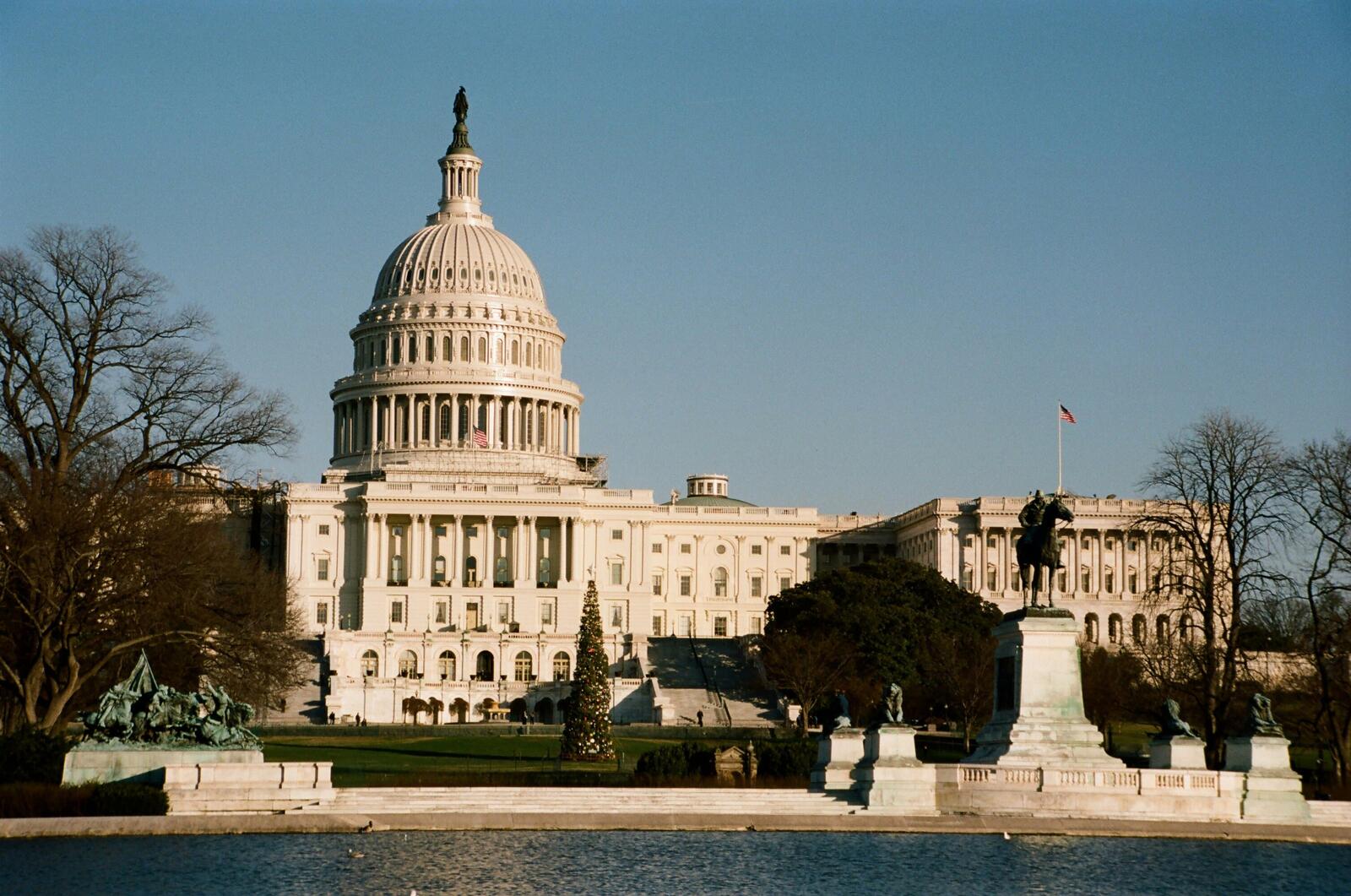
In the wake of the results of the 2026 US midterms yesterday, many people from around the world breathed a collective sigh of relief, supporting the idea that “balance has been restored to the Force”, in one way or another (or at least, the process has begun). Of course, there are also many folks (probably mostly American) who will adamantly disagree with this and assert that the outcome of the election has been disappointing.
Regardless of your personal political affiliation, I think we can all agree that what is most likely coming down the line is some very big changes in the political landscape in Washington. And whether you welcome the result or are less than thrilled about it, there’s no doubt about the fact that the implications for businesses are a lot more complicated than a simple change of political fortunes or one “side” being victorious or not.
For America’s startups and small and medium-sized businesses (SMEs), the issue is less about who won and more about what happens next. A different Congress could bring fresh scrutiny of technology companies, renewed debate around healthcare and tax policy and a completely different approach to federal spending. However, it could also bring something businesses are often desperate for: a little more predictability.
That may not sound like much, but for young companies counting every penny, predictability could be the pot of gold they’ve been yearning for.
First Things First: Change Won’t Happen Overnight
The Democrats have won control of both the House of Representatives and the Senate, which marks a significant and historic reversal in Washington. The Associated Press called the Senate for the Democrats on election night and the House in the early hours of the following morning; both calls were quite remarkable in terms of how confident authorities were to make those announcements so quickly. The results also brought a remarkable number of historic firsts, from the first Black woman elected governor to the first Muslim elected to the Senate.
But, as much as some of us may be keen to see big changes happen immediately, these things take time, and it’s important to remember that there’s a notable difference between winning an election and taking power. Firstly, the new Congress isn’t even due to begin its work until January 2027, which means that businesses have a transition period before the new balance of power takes effect. And even then, Democrats won’t have a free hand to rewrite policy. As explained by Reuters, President Trump remains in the White House, with the power to veto legislation, while the Senate’s rules make it difficult to pass major bills without broader support.
As Akshay Ruparelia, Co-Founder and CEO of Brdge, puts it: “For American founders, the headline isn’t which party won. It’s that Washington now has divided government for the next two years, and divided government tends to mean fewer sweeping changes and more negotiation.”
That could be a relief for businesses that have spent the past few years trying to keep up with shifting policy priorities, but it doesn’t mean the next two years will be free of uncertainty.
Which Issues Are Likely To Hit Businesses First?
One of the most immediate pressure points is likely to be federal spending. Congress has to agree on funding for the 2027 fiscal year, with the current continuing resolution due to expire on 11 December. If lawmakers fail to agree on a longer-term funding arrangement, another temporary extension or a government shutdown could follow.
That matters for both businesses that rely directly on government contracts and beyond that too. Federal spending supports customers, suppliers and entire industries, while uncertainty over budgets can affect investment decisions and demand. Adrienne Ramsay, Founder of Delphi Strategies and author of A Field Guide to Congress, says that “All businesses want predictability from Congress. The difference is how long they can survive without it.”
She points out that large companies can absorb delays and shift resources relatively easily, whereas startups and small businesses have fewer options, because they tend to have less financial cushioning and breathing room. “Their financial runway may be measured in weeks or months, and every delay burns cash,” Ramsay says. It’s like the business equivalent of living hand to mouth. Ramsay argues that Congress needs to pass the FY27 appropriations bills and provide a predictable funding environment. It’s a fairly unglamorous political task, perhaps, but one with very real consequences for businesses trying to plan their next few months.
Healthcare costs are another concern that many people are discussing, particularly for founders and small businesses that simply can’tt offer the same benefits packages as larger employers. Amit Yadav, Head of Business Development at Vyansa Intelligence, says the lapse of enhanced Affordable Care Act (ACA) premium tax credits has already pushed up costs for millions of people, including self-employed founders. “The most immediate impact will be on healthcare costs,” he says. Yadav believes a Democratic Congress is more likely to push for restoring these credits, which could make a meaningful difference to early-stage founders managing already tight margins. The enhanced credits expired at the end of 2025, but the underlying ACA tax credits remain in place.
Tax policy has been a hot topic in US politics in recent months and years, and now, it’s another issue startups and American businessses are keeping an eye on. Yadav points to research and development incentives, including the restoration of immediate deductions for qualifying domestic R&D spending under Section 174A. Startups will be interested in whether lawmakers go further and expand the support available to smaller businesses, as that could actually be quite beneficial.
More from News
- Say No To AI, Lose Google Search – Is That A Fair Choice For Schools To Face?
- Where Does $6.4 Billion In Stolen Crypto Go And What Does It Take To Track Down The Money?
- Experts Comment: Did The Autumn Budget Give UK Startups And Scale-Ups What They Asked For?
- Microsoft Is Reportedly Offering To Pay Staff To Leave While Pouring Billions Into AI – What Does It Say About Big Tech’s Priorities?
- Tairex Launches Multidisciplinary Human-Agent Collaboration Ecosystem To Advance AI Adoption in Real-World Clinical Settings
- I Woke Up To A Meta Account. When Did I Agree To That?
- Vidoser Launches AI-Powered Platform To Streamline Creator Marketing For Brands And Agencies
- Office Freedom Named Agency Of The Year And Deal Of The Year 2026
The AI-Shaped Elephant In The Room: Regulation, Accessibility And The Cost Of Compliance
The tech industry may also experience different changes to other businesses, both big and small. A Democratic-controlled Congress is likely to place greater emphasis on scrutiny of large technology companies, competition and AI safety. That could create more compliance work for smaller firms, but it may also open opportunities for businesses offering alternatives to dominant platforms.
As Akshay Ruparelia puts it, “A Democratic Congress is likely to push harder on AI safety and data rules, which could add compliance work for early-stage companies but also create real demand for trusted, well-governed products.” For David LoPresti, Founder and CEO of CompliCorp, one particularly practical issue is accessibility. He argues that smaller businesses need clearer guidance on website accessibility requirements, rather than having to work out what compliance means through the threat of legal action. “Congress could point to WCAG 2.1 AA, give businesses a reasonable window to fix issues, and still keep real enforcement for people with disabilities who get shut out,” he says.
LoPresti’s point is that regulation doesn’t have to mean letting businesses off the hook. Rather, clear standards and reasonable implementation periods can help smaller companies meet their responsibilities without being left guessing.
Opportunity, Not Just Uncertainty
Of course, not every business leader sees a change in Congress as a reason to be cautious. Edwin Mata, CEO and Co-Founder of Brickken, remains optimistic about the US market and says the election hasn’t changed the company’s plans to expand its presence there: “What I would like to see is more clarity around regulation, particularly for businesses working with emerging technologies,” he says. For companies working in areas like digital assets, knowing where the regulatory boundaries lie can make a significant difference to decisions around investment, hiring and expansion.
Anne-Sophie de Gabriac, Professor of Management Practice in Entrepreneurship at ESSEC Business School, also sees an opportunity for stronger cooperation between the US and Europe in AI, cybersecurity, advanced manufacturing, clean technologies and energy storage. She argues that both markets could benefit from more resilient supply chains, joint research and development and reciprocal market access.
Meanwhile, Amy Hacker, Partner at AEH Advisory and Logros Advisory, spoke to us about a broader challenge she sees facing technology businesses: that is, AI is changing how buyers assess the value and resilience of companies. “Strong recurring revenues, profitable growth and scalability remain important, but buyers are placing a greater emphasis on resilience,” she says.
It’s worth remembering that Congress is only one part of the picture. Startups still need to build businesses that can withstand shifts in technology, customer demand and the investment market.
Washington Can Get a Facelift, But Business Still Has To Keep Moving
A Democratic Congress could bring renewed attention to healthcare affordability, competition, technology regulation and federal funding, but lest we forget: Trump is still in the White House. Thus, major legislative changes are likely to involve negotiation, political resistance and potentially plenty of delay. In fact, we’d be remiss to expect anything less.
For founders, that means keeping an eye on Washington without putting their businesses on hold. As Ruparelia advises, “Build for the customer, keep your burn sensible, and treat regulation as a design constraint rather than a reason to pause.”
Whether or not you think balance has been restored to the Force, the practical reality is that a change in Congress can create a period of adjustment for businesses on the ground. And even founders who welcome the election result may find that the short-term consequences aren’t quite what they hoped for. The real question will be about who can hold on while the world witnesses the inevitable push and pull between the incoming House, Senate and Trump, his administration, and the outgoing members of Congress.
Our Experts
- Edwin Mata: CEO and Co-Founder at Brickken
- Amy Hacker: Partner at AEH Advisory and Logros Advisory
- Anne-Sophie de Gabriac: Professor of Management Practice in Entrepreneurship at ESSEC Business School
- Adrienne Ramsay: Founder of Delphi Strategies and Author of “A Field Guide to Congress”
- David LoPresti: Founder and CEO at CompliCorp
- Amit Yadav: Head of Business Development at Vyansa Intelligence
- Akshay Ruparelia: Co-Founder and CEO at Brdge
Edwin Mata, CEO and Co-Founder at Brickken

“I remain very optimistic about the American startup market over the next two years. There’s still a huge appetite for innovation, and I don’t see that disappearing because Congress has changed hands.
“What I would like to see is more clarity around regulation, particularly for businesses working with emerging technologies. Startups need to know where they stand before committing capital, hiring people or entering new markets. Constant uncertainty makes those decisions harder than they need to be.
“We’re looking at expanding Brickken’s presence in the US, and the election hasn’t changed our thinking. There’s a tremendous amount of opportunity there, especially as businesses look at new ways to raise capital and bring assets onchain.
I expect the US to remain a major market for technology investment and entrepreneurship. Companies will continue building, and I think there’s every reason to be confident about the next two years.”
Amy Hacker, Partner at AEH Advisory and Logros Advisory

“AI has fundamentally changed how buyers assess technology businesses. SaaS valuations have come under pressure as investors question how defensible many software businesses will be in a market where AI is making it quicker and cheaper to build competing products.
“Strong recurring revenues, profitable growth and scalability remain important, but buyers are placing a greater emphasis on resilience. They are looking for businesses with sustainable financial performance, robust customer relationships and business models that are difficult to disrupt, including those in traditional sectors such as industrial and manufacturing businesses, infrastructure and environmental services, and specialist support services.
“We’re also seeing a much stronger appetite for businesses that combine technology with physical operations and critical infrastructure. These companies benefit from barriers to entry that are difficult to replicate, and when technology or AI improves operational efficiency and customer outcomes, it creates a compelling investment proposition.”
Anne-Sophie de Gabriac, Professor of Management Practice in Entrepreneurship at ESSEC Business School

“Following the 2026 midterms, US startups and SMEs should look to Congress for greater regulatory predictability, improved access to capital, affordable energy and sustained support for innovation. In an increasingly uncertain geopolitical environment, economic security and resilient supply chains are becoming essential to business competitiveness. There is a significant opportunity to strengthen transatlantic cooperation in AI, cybersecurity, advanced manufacturing, clean technologies and energy storage.
“However, this partnership must be based on reciprocity and balanced interdependence, not new strategic dependencies. For Europe, cooperation must go hand in hand with technological and energy sovereignty, strengthening domestic industrial capabilities, renewable energy, infrastructure and investment ecosystems. US and European SMEs would both benefit from diversified supply chains, stable energy markets, joint R&D and reciprocal market access. Ultimately, transatlantic cooperation should strengthen the capacity of both economies to innovate, compete and withstand geopolitical and economic shocks.”
Adrienne Ramsay, Founder of Delphi Strategies and Author of “A Field Guide to Congress”

“All businesses want predictability from Congress. The difference is how long they can survive without it.
“Large companies can absorb delays and shift resources. Startups and small businesses have fewer options. Their financial runway may be measured in weeks or months, and every delay burns cash.
“Washington keeps testing that runway. The current Continuing Resolution (CR) expires December 11, and CRs generally restrict new federal programs. But uncertainty extends beyond government contractors. Federal spending, tax policy, and regulation affect investment, customer demand, financing, and supply chains throughout the economy.
Businesses can adapt to policy decisions, even unfavorable ones. What they cannot manage is endless indecision.
“After the midterms, Congress needs to pass the FY27 appropriations bills and provide a predictable funding environment. Every month of congressional delay forces businesses to spend resources managing uncertainty instead of investing in growth and innovation.”
David LoPresti, Founder and CEO at CompliCorp

“I’m David LoPresti, Founder & CEO of CompliCorp, a Los Angeles accessibility consulting firm that runs manual WCAG audits and VPAT/ACR reports for companies selling to government, education and healthcare.
“Right now the ADA doesn’t name a technical standard for private business websites, so owners learn the rules from lawsuits. The small companies I talk to want to do the right thing; they just can’t budget for a moving target. Congress could point to WCAG 2.1 AA, give businesses a reasonable window to fix issues, and still keep real enforcement for people with disabilities who get shut out.
“That’s predictability without letting anyone off the hook.”
Amit Yadav, Head of Business Development at Vyansa Intelligence

“The most immediate impact will be on healthcare costs. With enhanced ACA premium tax credits having lapsed, millions of small-business owners and self-employed founders are already facing premium increases of over 100%, a direct hit on already thin margins. A Democratic Congress is far more likely to push for restoring these credits, which would matter more to early-stage founders than any single innovation policy.
“On R&D, domestic expensing under Section 174 has already been restored, but startups will be watching closely whether refundable R&D credit caps, currently capped near $500,000 for qualifying small businesses, get expanded further, since this directly affects cash flow for pre-revenue companies offsetting payroll tax.
“Expect renewed scrutiny on Big Tech through antitrust enforcement too, which historically opens more competitive space for smaller players. SMEs should prepare for tighter labour cost pressure as minimum wage and paid leave proposals resurface.”
Akshay Ruparelia, Co-Founder and CEO at Brdge

“For American founders, the headline isn’t which party won. It’s that Washington now has divided government for the next two years, and divided government tends to mean fewer sweeping changes and more negotiation. That’s not necessarily bad news. Startups can plan around stability far more easily than around constant policy swings.
“The areas to watch are AI regulation, access to capital and the cost of hiring. A Democratic Congress is likely to push harder on AI safety and data rules, which could add compliance work for early-stage companies but also create real demand for trusted, well-governed products. Expect closer scrutiny of Big Tech too, which could open doors for smaller challengers.
“My advice to founders is simple: don’t wait for Washington. Build for the customer, keep your burn sensible, and treat regulation as a design constraint rather than a reason to pause.”


