


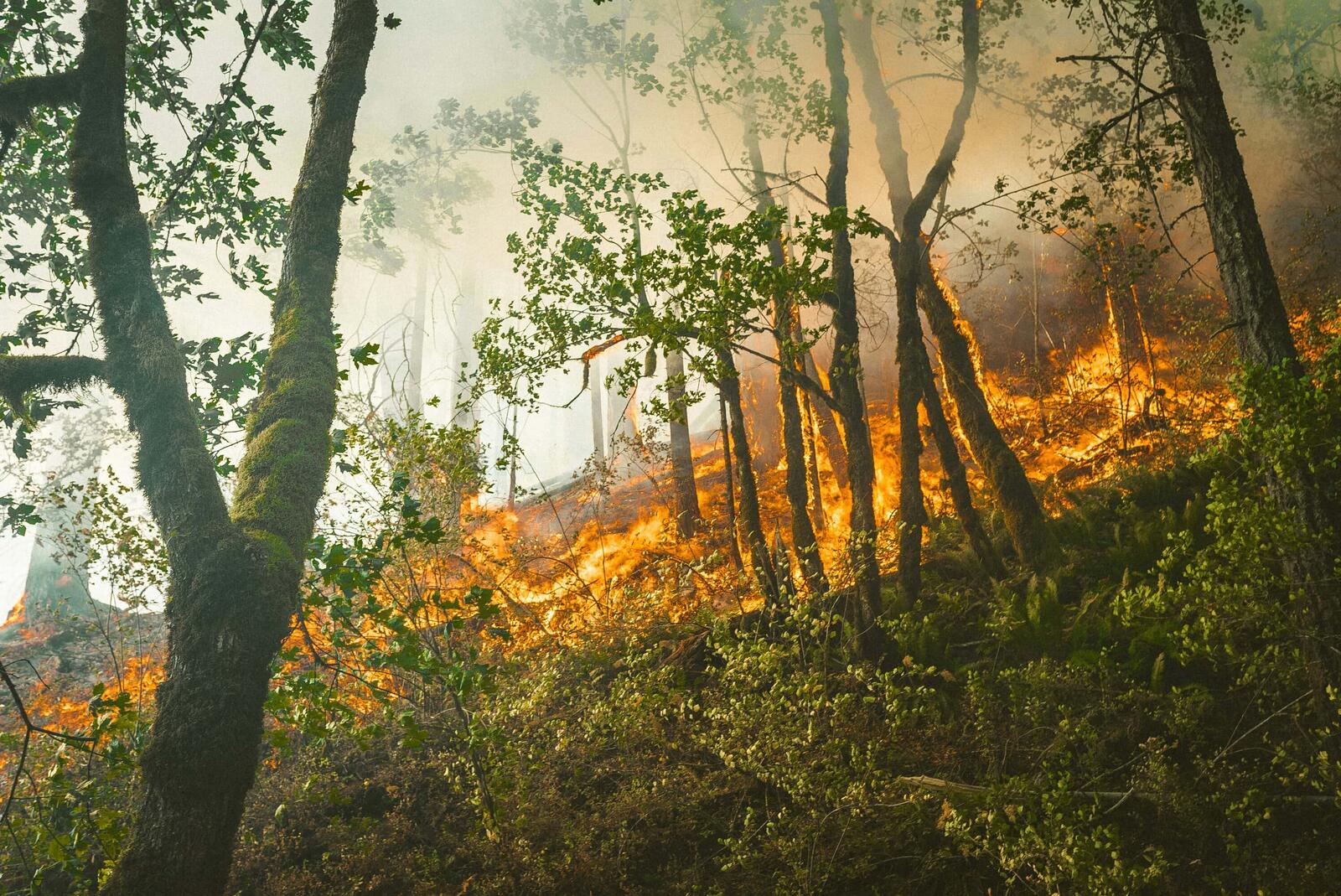
As wildfires continue to tear through parts of Europe, including Spain and France, insurers are finding themselves under increasing pressure. According to reporting from Sky News, authorities have warned that extreme heat, dry conditions and strong winds are creating ideal conditions for fires to spread rapidly across large areas. The result is not only devastation for communities and ecosystems, but also billions in potential insurance losses. And at this point, it doesn’t seem like the situation is improving.
For insurance companies, wildfires present a particularly difficult challenge. Unlike a single house fire or isolated weather event, large-scale wildfires can generate thousands of claims, and when so many claims arise simultaneously, this can have a dramatic effect on entire regions, and it can and create long-term uncertainty around future risk.
In the age of AI, this raises an important question. If AI is being applied to pretty much everything from healthcare to software development, could it help insurers better manage the growing wildfire crisis?
The Insurance Industry’s Wildfire Problem
Climate-related disasters have always been part of the insurance equation, but plenty of experts argue that the frequency and severity of extreme weather events are changing the economics of the industry. And it’s quite clear (and understandable) why they’re saying this.
When major wildfire events occur, insurers face multiple challenges at once. They need to estimate risk accurately, price policies appropriately, process claims quickly and avoid excessive financial exposure.
In the past, much of this has relied on historical data. The problem here is that historical data becomes less useful when weather patterns themselves appear to be changing.
As a result, insurers are increasingly looking for new ways to predict risk and respond more effectively.
More from Artificial Intelligence
- What Is AI Inference?
- Is AI Making It Easier To Build A Startup, Or Just More Difficult To Stand Out? The Experts Weigh In
- Beyond Headcount: How AI Is Changing The Way Businesses Plan Their Workforces
- Can AI Weather Models Accurately Predict Extreme Events Like El Niño?
- AI Was Supposed to Replace Us. Could Originality Be the One Thing It Can’t Compete With?
- The AI Governance Gap: Why Global Agreements Mean Little Without Corporate Action
- The Best AI-Native Gateways For Developer-First Teams In 2026
- What Does A Planned US “Freeze AI” Walkout Say About Public Attitudes Towards Big Tech?
How Could AI Make A Difference?
AI is already being used across the insurance sector to improve things like underwriting, claims processing, customer service and fraud detection – some of the most important, and time-consuming, tasks that need to be done by insurance brokers. In fact, some insurers are increasingly exploring AI-driven analytics to support decision-making and operational efficiency.
Now, when it comes to wildfires specifically, one potential application is risk modelling.
AI systems can process massive amounts of information from satellite imagery, weather forecasts, vegetation data, topography and historical fire patterns. In theory, this could help insurers build more detailed risk assessments than traditional methods alone.
So rather than viewing risk at the postcode or regional level, insurers may be able to assess individual properties with greater precision.
That doesn’t necessarily mean AI can predict exactly where the next wildfire will occur – in fact, wildfire prediction remains notoriously difficult – but it may help insurers identify areas where risk is increasing and adjust their strategies accordingly.
Faster Claims and Better Responses
Another area where AI could prove valuable is after a wildfire has, sadly, already occurred. In some cases, insurers are experimenting with AI-powered claims systems that can automate parts of the claims process and analyse large volumes of information quickly.
Indeed, when a major wildfire event occurs in which a large amount of damage has taken place, like in California in 2025, claims departments can become overwhelmed.
AI tools could potentially analyse photographs, satellite imagery and damage reports to help prioritise cases and speed up assessments – something that would usually take a huge amount of time. As a result, this may reduce waiting times for policyholders while helping insurers manage large claim volumes more efficiently. It would also allow people who have been affected by the wildfires and lost property and homes to attempt to begin to move forward.
Again, this isn’t a silver bullet. Human expertise is still absolutely critical, particularly when assessing complex losses. But still, AI could help insurers cope with the sheer scale of modern disaster events.
Can AI Actually Prevent Insurance Losses?
However, things become more speculative when we start considering the insurance losses that may actually be prevented.
Some technology companies are already developing AI systems that are specifically designed to detect wildfires earlier using sensors, drones and satellite imagery. So, if these systems become more effective, they could theoretically reduce the scale of future losses by helping emergency services respond more quickly.
Of course, for insurers, even a small reduction in wildfire severity could have significant financial implications.
The challenge, on the other hand, is that wildfire behaviour is influenced by countless variables, including weather conditions, terrain and human activity. So, even the most sophisticated AI systems may struggle to account for all of them.
As recent events in Spain and France demonstrate, wildfires can escalate rapidly despite extensive monitoring and firefighting resources.
AI Won’t Solve The Wildfire Crisis, But It May Just Help Insurers Adapt
The insurance industry is facing a very difficult reality. Wildfire risk appears to be becoming a more prominent part of the global risk landscape, from the United States to Europe and Australia, and traditional approaches may not always be enough.
AI is unlikely to eliminate wildfire losses or provide perfect predictions – the technology still has limitations, particularly when dealing with complex environmental systems.
At the same time, however, according to a great deal of insurance industry analyses from organisations, it certainly seems as though AI may offer insurers new tools for understanding risk, processing claims and improving operational efficiency.
As wildfires continue to make headlines across Europe and beyond, the question may not be whether insurers will use AI, but rather how effectively they can integrate it into an increasingly unpredictable future.


