


Long before Dr Dolittle made talking to the animals look like a charming eccentric pursuit, bioacousticians were steadily drowning in vast, noisy vocalisation datasets that no human ear could ever hope to sort manually. Now, large AI models are finding actual structure in all the acoustic chatter.
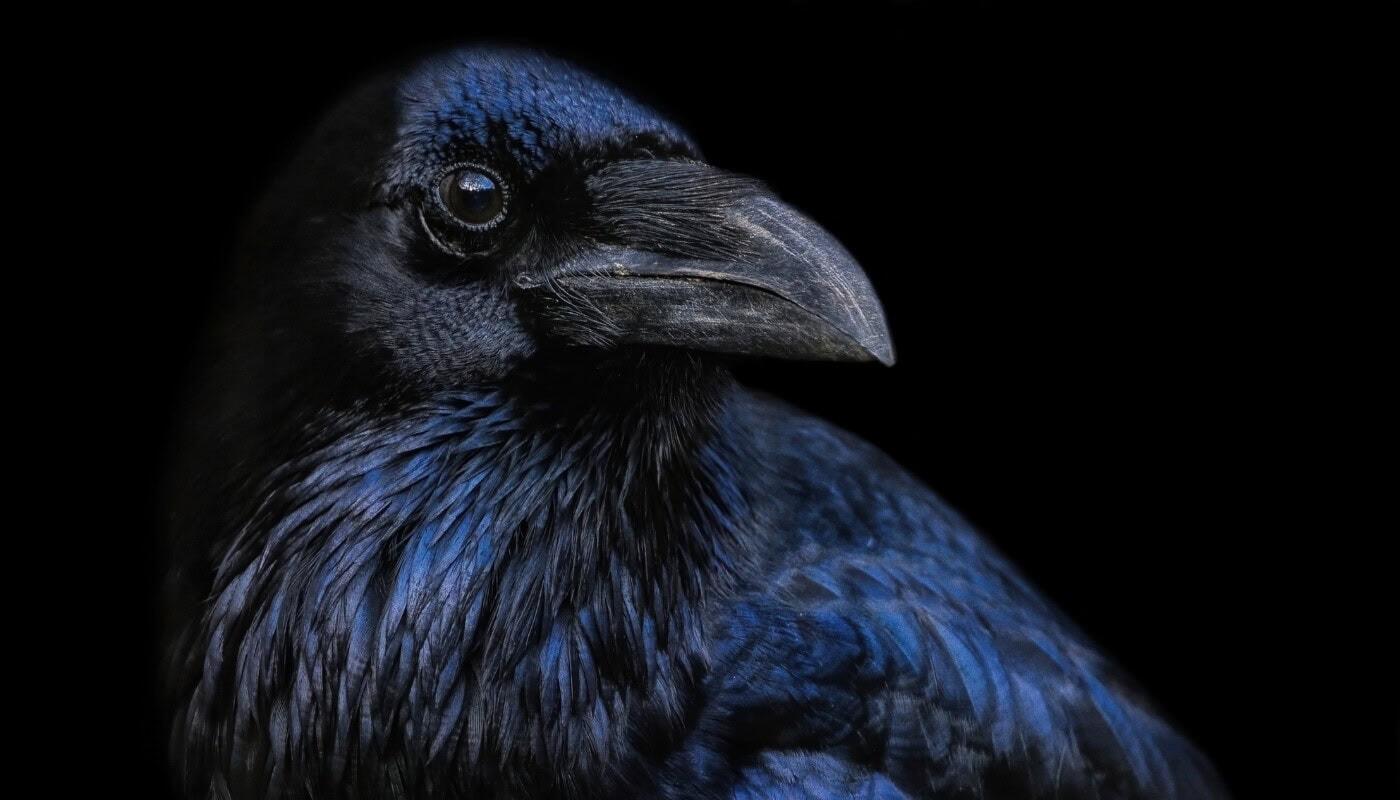
In Spain, biologists Vittorio Baglione and Daniela Canestrari spent decades assembling roughly 150,000 carrion crow calls, and neural networks are finally helping them identify subtle distinctions humans missed, including a dedicated call used to rally nest defences. Equivalent work is underway across marine and terrestrial species, using the same neural architectures behind human language models to study bottlenose dolphin whistles, sperm whale codas, killer whales, zebra finches, elephants and mice too.
Researchers are keen to clarify that this isn’t a translation in any traditional human sense. It’s pure pattern discovery: isolating recurring vocal units and sequences, then assessing whether they consistently correlate with specific contexts such as alarms, nest defence or contact calls. To accelerate this work, the Earth Species Project launched NatureLM-audio, an open audio-language model for non-human sounds.
Meanwhile, the $10 million Coller Doolittle Challenge is offering a massive payout to anyone who can establish two-way communication without the animal realising it’s talking to a human, a feat backers believe could be achievable by 2030.
The Manipulation Problem
What troubles bioethicists most is the immediate prospect of systemic manipulation.
Once an AI model can accurately replicate or synthesise animal calls, influencing wildlife behaviour without anything approximating consent becomes too easy. Poachers can easily use synthetic mating calls to lure targets, while land management can broadcast distress loops to control animal movement. At its most extreme, broadcasting artificial whale calls across entire ocean sectors would modernise historical acoustic driving techniques, coercing marine life onto predictable paths.
A 2025 commentary in a Springer Nature journal argues that current research ethics largely ignore animal privacy, the interest an animal might have in controlling how it appears to others, even as researchers harvest vocalisations and movement data at an industrial level.
Even benign intentions don’t make precise audio playback ethical. Zoologist Katy Payne illustrated this by observing severe distress in a living elephant exposed to the recorded voice of a deceased herd member, proving that high-fidelity audio reproduction isn’t inherently responsible. Baglione also acknowledges this tension in his own crow-call studies.
The very tool built to map and understand a distress signal equips anyone with the means to create false comfort or distress.
More from Artificial Intelligence
- What Is AI Inference?
- Is AI Making It Easier To Build A Startup, Or Just More Difficult To Stand Out? The Experts Weigh In
- Beyond Headcount: How AI Is Changing The Way Businesses Plan Their Workforces
- Can AI Weather Models Accurately Predict Extreme Events Like El Niño?
- AI Was Supposed to Replace Us. Could Originality Be the One Thing It Can’t Compete With?
- The AI Governance Gap: Why Global Agreements Mean Little Without Corporate Action
- The Best AI-Native Gateways For Developer-First Teams In 2026
- What Does A Planned US “Freeze AI” Walkout Say About Public Attitudes Towards Big Tech?
Rules Built For An Earlier Era
Formal safeguards across the field are virtually non-existent. Most of what currently governs this work exists inside general animal-research ethics guidelines that lack tailored provisions for AI-scale acoustic analysis or synthesis.
Existing institutional review boards evaluate field experiments through traditional welfare metrics like physical tagging impacts, relying on legacy standards that weren’t constructed with machine learning capabilities in mind.
Existing AI ethics guidelines haven’t caught up either. Bioethicists warn that the current standards fail to address dual-use vulnerabilities, which leaves a thin line between beneficial conservation models and harmful exploitation tools. The field’s current incentive structures only heighten this friction. Rewarding covert two-way communication, as the Doolittle Challenge does, pushes technical boundaries while bypassing consent concerns.
Who Benefits Depends Entirely On Who Holds The Tools
The positive applications of this technology are certainly compelling. Finding hidden vocal signatures tied to stress, danger, social structure or physical pain could radically advance welfare assessments in agricultural, clinical and wild settings, giving conservation teams data where they once relied on educated guesses. Even so, these extraordinary possibilities don’t erase or diminish the inherent risks existing alongside them.
The reality is that this technology is dual-use in the truest sense. The outcome depends entirely on who holds the keys to the models and acoustic playback hardware. A conservation researcher and an illegal poacher could easily operate using the same algorithm.
Whether ethics policies adapt quickly enough to address animal consent and acoustic influence before this software becomes ubiquitous is a question the scientific community has yet to resolve.


