


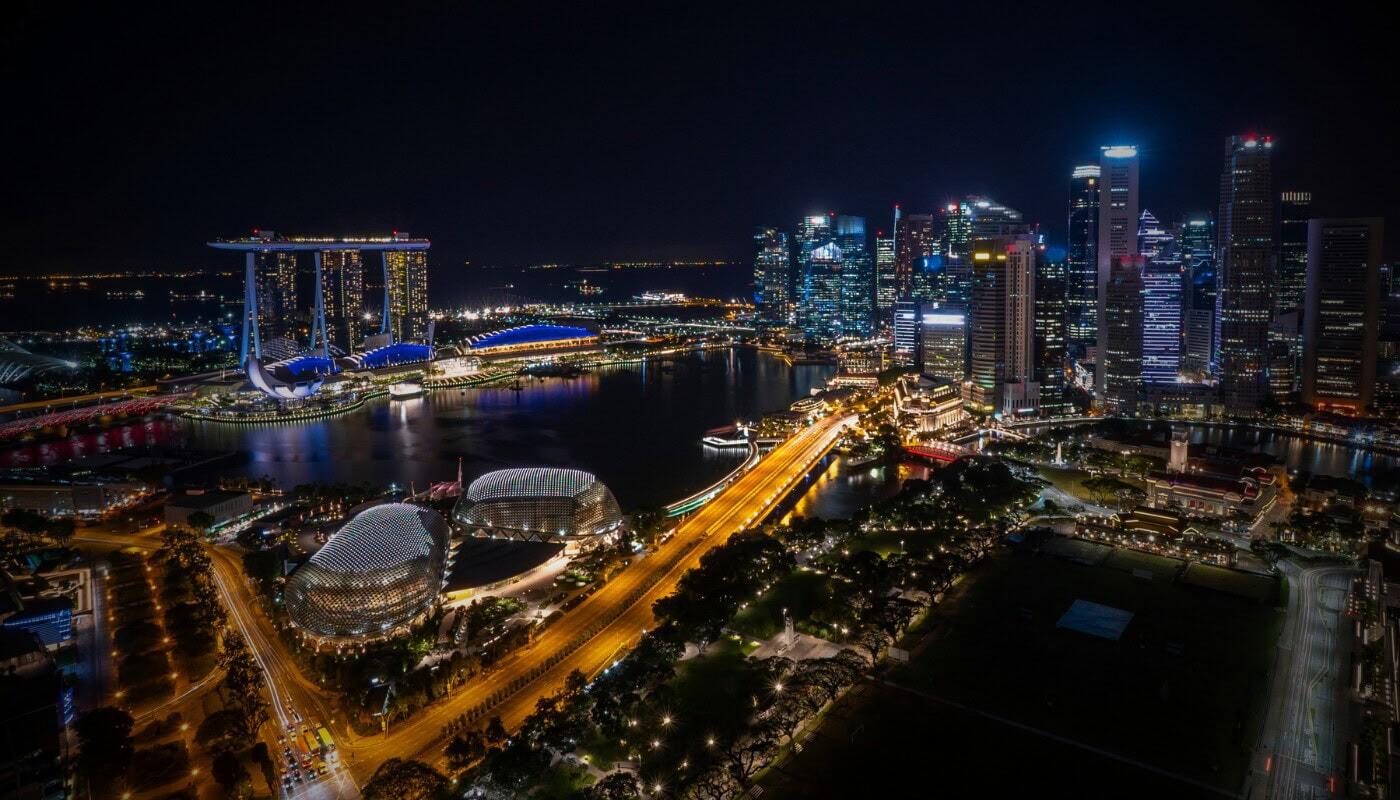
Every November, Singapore packs a convention centre with founders, investors and regulators, polishing its status as finance’s favourite innovation capital. The narrative looks great in pitch decks, though it rarely faces tough questions once the spotlight moves on.
This year’s Singapore FinTech Festival takes over the Singapore EXPO from 18 to 20 November around the grand theme “Five Forces Rewiring Global Finance”. Organised by the Monetary Authority of Singapore and the Global Finance & Technology Network, in collaboration with the Association of Banks in Singapore, the event puts the regulator and the industry on one programme.
The organiser line-up is a cheeky reminder that the rule-makers and the industry share one programme, and the next few sections show how much of their work overlaps too.
A Calibrated Approach To Oversight
The Monetary Authority of Singapore likes to call its regulatory touch calibrated, a label that happens to fit the recent paper trail well.
Take the Shared Responsibility Framework introduced on 16 December 2024. It puts duties on banks and telecom operators as well as consumers, and can require payouts where those duties are breached.
Desperate times require sharp rules, as the stats make quite clear. Official figures from the Singapore Police Force show that scam losses hit SGD1.1 billion in 2024, marking a 70.6 per cent increase from the SGD651.8 million recorded in 2023.
The central bank has also shaped the buy now, pay later code, which stops accredited providers extending more than SGD2,000 in credit without an additional credit assessment. The code itself is written by the industry under MAS guidance, which makes it self-policed in name and regulator-shaped in practice.
Banks have also added tools such as Money Lock, which lets customers put savings out of a scammer’s reach.
More from Business
- Brown University: Successful Alumni Who Founded Companies
- Experts Comment: Is The Next Generation More Interested In Financial Freedom Than Building An Empire?
- Could Sequoia’s London Exit Mark The Beginning Of A Wider US VC Retreat From The UK?
- 31 January Is Less Than 90 Days Away: What Small Businesses Need To Do Now To Be Ready For The Landline Switch-Off
- Manual Or Electric? What Scaling UK Businesses Should Consider Before Buying Warehouse Equipment
- The Power Of Emotional Marketing And Why Feelings Sell
- What Makes France Attractive To Foreign Businesses?
- Johns Hopkins University: Successful Alumni Who Founded Companies
The Experiments That Get The Conference Banners
The headline-grabbing half of the Singapore narrative is the experimentation.
Project Guardian, led by MAS, targets asset tokenisation, releasing steady research across 2024 and 2025 on tokenised bank liabilities and 24/7 settlement mechanisms. Alongside it is MindForge, another MAS-backed initiative, which launched the AI Risk Management Executive Handbook at the November 2025 festival.
Then there’s Project Nexus, the cross-border payments effort. Nexus Global Payments was incorporated in April 2025 by the central banks of India, Malaysia, the Philippines, Singapore and Thailand, and it’s designed to enable most cross-border payments to reach the recipient within 60 seconds.
Where The Two Stories Merge
Read the credits on those projects and a pattern appears. Guardian is convened by the regulator, the MindForge handbook is a regulator-backed publication and Nexus was set up by central banks. Much of what looks like private-sector invention in Singapore is led, or at least hosted, by the same body that writes the rules.
The discipline side has an inventive streak as well. Splitting scam liability across banks, telecom operators and consumers was a new way of assigning blame, and it came from a regulator, not a startup. That’s why the festival’s policy strand talks about enabling innovation while keeping trust and resilience intact: in Singapore, the two goals are handled by the same people at the same table.
With technology, capital and policy all on the programme this November, the week should show both sides of the arrangement at once, and the regulator will likely be on stage for most of it.


