



What if the goal of starting a business isn’t to become a millionaire, employ hundreds of people or build the next global brand?
A profitable company, financial independence and the freedom to decide when and how you work can be just as appealing as rapid expansion. Traditional measures of business success have often centred on revenue, growth and headcount, but having a business that supports your lifestyle rather than dictates it is becoming quite an increasingly attractive prospect.
Financial Freedom Has Changed Shape
Alyssa Ostroff, Founder & Illustrator at Self-Care Shirts, started her brand after a federal layoff. Her goals, she says, were never to be huge and her verdict on where younger founders have landed captures the sentiment: “A profitable business you control, that gives back and gives you your life, beats a bigger one that owns you.”
Oscar Trelles, an investor and coach who works with founders and aspiring leaders, sees the same pattern among his clients. “They’re not necessarily less ambitious. They’re questioning what ambition is supposed to serve.” He adds that “Financial freedom is often the starting point, but purpose is the deeper motivation.”
Shawn Kuehn, Founder of Work Faster Play Longer, LLC, has turned the idea into an actual figure. “It’s enough profit to cover the life I want to live, not a revenue target. The funny thing is it’s usually smaller than you’d expect.”
More from Business
- Could Sequoia’s London Exit Mark The Beginning Of A Wider US VC Retreat From The UK?
- 31 January Is Less Than 90 Days Away: What Small Businesses Need To Do Now To Be Ready For The Landline Switch-Off
- Manual Or Electric? What Scaling UK Businesses Should Consider Before Buying Warehouse Equipment
- The Power Of Emotional Marketing And Why Feelings Sell
- What Makes France Attractive To Foreign Businesses?
- Johns Hopkins University: Successful Alumni Who Founded Companies
- Akeneo Expands AI Agents Across Product Data Operations With New Enterprise Controls
- Dmitrii Khasanov: Building Companies For Long-Term Value, Not Short-Term Hype
Does Anyone Still Want To Build An Empire?
Chris Sees, Co-Founder of Hoxton Mix, has a great way of describing the goal: “Founders want to run their businesses, not have their businesses run them.” He thinks part of the change comes from a more realistic view of growth. “Scaling brings complexity pressure, and not every founder wants to spend their life managing a large organisation or answer to a PE company.”
Shawn is just as keen on a diary with some space in it. “I think people really want a calendar they own and the flexibility to push things if necessary.” His own version involves two work blocks a day, leaving room to spend time with his family. It’s a more civilised schedule than most offices manage.
Michael Khoury, CEO of Go Vertical ICM, has a warning for anyone who thinks revenue alone buys that kind of freedom. “If every decision, sale and delivery still depends on the founder, revenue alone does not create freedom. That requires healthy margins, repeatable processes and a team that can operate independently.”
Can Technology Do The Job Of A Whole Floor Of Staff?
Jeet Pattanaik, Founder & CTO of Glokal AI, thinks AI is a big part of why smaller ambitions are easier to reach. “AI makes this path more realistic than ever, because a small team can now build and sell something valuable in a fraction of the time.”
Chris agrees that technology has shifted what a small team can take on. “Technology and AI are also making it possible for smaller teams to achieve more, reducing some of the barriers that previously made significant growth dependent on substantial investment and headcount.” He is applying the same thinking at Hoxton Mix, where the business is scaling sustainably through technology while competing and partnering with much larger brands.
Freedom First, Empire Second
Jeet is the one who challenges the premise, because he doesn’t see freedom and empire as opposites at all. “The path I’d choose, and see many others choosing, is one or two quick exits, a micro-retirement, and then one long business built properly.” He points to Elon Musk, who sold Zip2 and his stake in PayPal before going on to build Tesla and SpaceX, and notes that Tim Ferriss popularised the idea of the “mini-retirement” back in 2007. His reasoning is that “You make far better long-term decisions when you aren’t building out of financial fear.”
Oscar is open about the limits of what he sees. “Of course, my clients are somewhat self-selecting because this is also how I approach entrepreneurship.” He still thinks something is shifting: “I think there’s a growing recognition that a business can be financially successful and still be poorly designed for the person running it.” Michael lands in a similar place with a rule of thumb for deciding when to grow: “Growth should serve the founder’s goals and strengthen the business.”
A Business Is Now Judged On What It Gives Its Founder
These experts point to a scoreboard with a column for revenue and a much longer one for everything a founder gets to keep: time, energy and control over their own life. Growth hasn’t been dropped from the rules; it just has to justify itself against a lot more of the page than it used to.
None of this proves that a whole generation has changed its mind, because it reflects the founders these six happen to work with and talk to. It does suggest that ambition and a quieter life can sit on the same spreadsheet, provided the founder decides what the spreadsheet is for.
Our Experts:
- Jeet Pattanaik: Founder & CTO, Glokal AI
- Alyssa Ostroff: Founder & Illustrator, Self-Care Shirts
- Chris Sees: Co-Founder, Hoxton Mix
- Shawn Kuehn: Founder, Work Faster Play Longer, LLC
- Michael Khoury: Chief Executive Officer, Go Vertical ICM
- Oscar Trelles: Founder, Investor and Author of “The Human OS Manual”
Jeet Pattanaik, Founder & CTO, Glokal AI
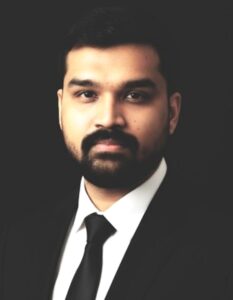
“The path I’d choose, and see many others choosing, is one or two quick exits, a micro-retirement, and then one long business built properly.”
“AI makes this path more realistic than ever, because a small team can now build and sell something valuable in a fraction of the time.”
“Freedom and empire aren’t opposites. For many founders, freedom is what makes the empire possible.”
“You make far better long-term decisions when you aren’t building out of financial fear.”
“Elon Musk sold Zip2 and his stake in PayPal before building Tesla and SpaceX. Tim Ferriss popularised the ‘mini-retirement’ back in 2007.”
Alyssa Ostroff, Founder & Illustrator, Self-Care Shirts
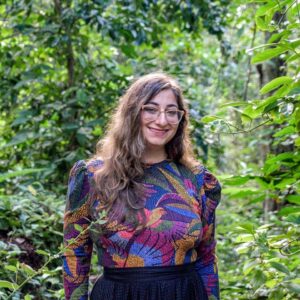
“I think my generation is quietly redefining success.”
“Younger founders increasingly measure success by autonomy over their time, alignment with their values, and whether the work protects their wellbeing rather than consuming it.”
“A profitable business you control, that gives back and gives you your life, beats a bigger one that owns you.”
“It’s not a lack of ambition – it’s ambition pointed at freedom and meaning instead of scale for its own sake.”
“I started my own brand after a federal layoff, and my goals were never to be huge.”
Chris Sees, Co-Founder, Hoxton Mix
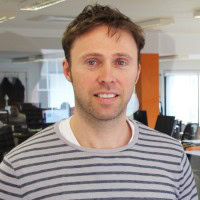
“Founders want to run their businesses, not have their businesses run them.”
“Scaling brings complexity pressure, and not every founder wants to spend their life managing a large organisation or answer to a PE company.”
“Technology and AI are also making it possible for smaller teams to achieve more, reducing some of the barriers that previously made significant growth dependent on substantial investment and headcount.”
“I don’t think entrepreneurs are becoming less ambitious. I think we’re becoming more selective about what we want that ambition to deliver.”
“We’ve built Hoxton Mix to solve a real problem and we’re scaling it sustainably using technology so we can compete and partner with huge brands like Tide and Anna.”
Shawn Kuehn, Founder, Work Faster Play Longer, LLC
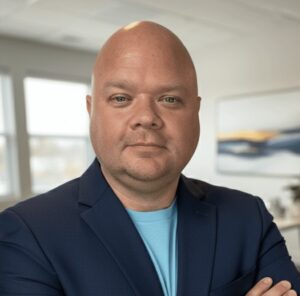
“Financial freedom is what most people want, and I figured out what that number means for me.”
“It’s enough profit to cover the life I want to live, not a revenue target. The funny thing is it’s usually smaller than you’d expect.”
“I think people really want a calendar they own and the flexibility to push things if necessary.”
“Once you figure that part out, ‘big’ stops being the goal, and ‘enough, and on my terms’ takes over.”
Michael Khoury, Chief Executive Officer, Go Vertical ICM
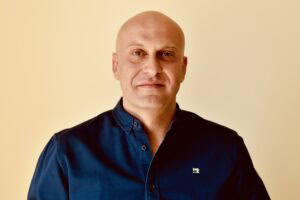
“My view is that younger entrepreneurs are broadening the definition of success: income, control over their time and the freedom to choose how they work.”
“The distinction is between owning a business and owning a job.”
“If every decision, sale and delivery still depends on the founder, revenue alone does not create freedom.”
“A larger company that consumes all your time may deliver less freedom than a disciplined, profitable one.”
Oscar Trelles, Founder, Investor and Author of “The Human OS Manual”
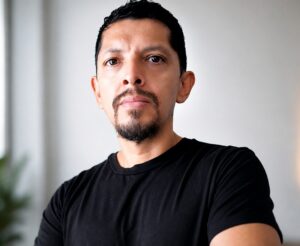
“We’re seeing a shift from building the biggest possible business to building a business that makes a meaningful life possible.”
“They’re not necessarily less ambitious. They’re questioning what ambition is supposed to serve.”
“Financial freedom is often the starting point, but purpose is the deeper motivation.”
“I think there’s a growing recognition that a business can be financially successful and still be poorly designed for the person running it.”
“Of course, my clients are somewhat self-selecting because this is also how I approach entrepreneurship.”


