
Every August, hundreds of thousands of teenagers open an envelope that feels, in the moment, like it contains their entire future. Today was that day. Over 320,000 students across England received their A-level results, with 28.5% of entries awarded an A or A* across England, Wales and Northern Ireland – up from 28.3% last year. Northern Ireland led on top grades at 30.7%, followed by Wales at 29.6% and England at 28.7%. Mathematics remained the most popular subject, and economics made the top five for the first time.
Today delivers straightforward victory for a segment of students securing their chosen placements. A substantial majority navigate a much more chaotic reality filled with disappointing marks, altered plans and fundamental doubts about long-held ambitions.
Hovering over all of it is a tech industry that looks nothing like the one that existed when the people giving advice today were 18 themselves.
What Advice Actually Stands Up In 2026?
Conventional wisdom for school leavers belongs to the world of 2016. Go to a good university, play it safe with your subject choice and get a graduate job at a company with a recognisable name. That advice made sense when the tech industry was a distinct sector you entered through a specific gate. It makes considerably less sense now that AI is reshaping what entry-level roles look like, what skills hold their value and how people actually build careers in tech.
The entrepreneurs offering advice today don’t share a single origin story. Some value their time at university, while others skipped degree courses to start building. A handful launched startups in their twenties, while others took the leap much later. Their shared strength lies in raw, real-world knowledge of how the market operates behind closed doors.
We went to tech founders, startup builders and entrepreneurs and asked them one question: if you were 18 in 2026, knowing what you know now about AI, the industry and how careers actually get built, what would you do? Here’s what they said.
More from News
- Vidoser Launches AI-Powered Platform To Streamline Creator Marketing For Brands And Agencies
- A “Power Event” At Google Cloud’s London Region Affected Revolut And European Banks – What Happened?
- Anchor Launches Action Index, Cutting Computer-Use Agent Token Costs By 100X
- Anthropic Selects Build Circle As A UK Partner To Help Supercharge AI Realisation For Clients
- An OpenAI Engineer Is Charged Over A $14 Recording Device – What Does It Say About Security At AI Labs?
- Mhance Acquires CPS And City Dynamics To Strengthen Its Copilot, Modern Work And Business Solutions Capabilities
- What Can Startups Learn From HSBC’s AI-Driven Job Cuts?
- Moterra AI Achieves Select Partner Tier In Anthropic’s Claude Partner Network
Our Experts
- Sami Aintaoui, CEO, MBA Group
- Juliana Chyzhova, Head of Marketing, AGI Inc. and Co-founder, Catalyst Bay
- Abi Hill, Founder and CEO, Just Starting Out
- Jamie Beaton, CEO and Co-founder, Crimson Global Academy
- Rica Elysée, Founder and CEO, BeautyLynk
- Jordan Richards, Founder and CEO, &above
- Sam Jacobs, CEO and Co-founder, GoPlaces
- Jamila Carrington Smith, Founder and CEO, Centric AI
- Miki Furman, Founder and CEO, Call Force Global
- Eric Simons, CEO, Bolt.new
- Rob Robinson, Founder and CEO, C86
- Katie McDermott, Founder, See Me Please
- Keith Griffiths, Founder and CEO, The Entrepreneur Festival
- Gareth Hoyle, Founder and Managing Director, Marketing Signals
- Louis Rix, Co-founder, Car Finance 247
Sami Aintaoui, CEO, MBA Group

“If I were 18 today, I’d skip university and go straight for experience. My own path was university, then a big corporate, then a start-up, then ownership. Looking back, experience taught me more than any lecture did. If I were starting again, I’d want the broadest exposure possible, as fast as possible.”
“I’d look for a smaller business where IT sits next to finance, sales and operations. Entering AI-native, you can have a real impact while learning how a whole company actually works. A larger corporate teaches you something different: professionalism, communication, and how to build things that scale.”
“But if I had to choose one route, it would be an apprenticeship. We’ve built a scheme at MBA, and I’ve watched apprentices given real responsibility outperform expectations again and again. It works both ways: they get context and experience most graduates don’t have until years later, and we get people who think differently and are instinctively comfortable with AI.”
“Entrepreneurship has never been more accessible either, so if I’d already had a taste of the environments above, I’d seriously consider building something of my own.”
“The one thing I wish I’d understood at 18? Wanting to learn matters more than anything else, and that means actually listening to the people trying to help you.”
Juliana Chyzhova, Head of Marketing, AGI Inc. and Co-founder, Catalyst Bay

“If I were 18 today, I’d build something and put it in front of real people before anyone gave me permission. That’s the part that changed. The old path was get a degree, land a junior job, and learn on the small tasks. Those small tasks are the ones AI does now, so that on-ramp is thinning fast. You have to make your own reps.”
“I wouldn’t rule out university, but I’d stop treating it as the thing that qualifies you. A shipped project, a small community you grew, an open-source contribution. That’s the proof employers actually read now. Credentials say you could do the work. Proof says you did.”
“I’d also get good at directing AI early: run it, check it, catch what it gets wrong. That’s the new entry-level skill, and it builds judgement in months instead of years.”
“I built my career and my community from scratch after starting over in a new country, where self-reliance wasn’t a choice, it was the only option. So the one thing I’d tell an 18-year-old: nobody is going to hand you a path, and that’s good news, because it means you can build one. Start now, start small, and stay close to the work. The people who win in tech are the ones who can’t stop making things.”
Abi Hill, Founder and CEO, Just Starting Out

“If I were 18 today, I wouldn’t put pressure on myself to make one enormous decision about the rest of my life. I’d probably do the opposite: I’d give myself permission to experiment.”
“University can be brilliant, but I wouldn’t go simply because it felt like the expected next step. I’d seriously consider an apprenticeship or joining a start-up, where I could learn how a business actually works while earning and building experience. And if I had an idea of my own, I’d start testing it alongside whatever else I chose to do.”
“That’s perhaps the biggest difference for an 18-year-old today. You don’t necessarily have to choose between learning, earning and building. Technology and particularly AI has dramatically lowered the barriers to starting something. You can research a market, build a basic website, create content, learn new skills and test an idea with relatively little money.”
“But I wouldn’t tell an 18-year-old to simply “learn AI”. Tools will change. I’d tell them to learn how to think, communicate, solve problems and understand people. Those skills will survive whatever technology comes next.”
“The one thing I wish somebody had told me at 18 is that careers rarely happen in a straight line. Your first decision isn’t your final destination. So choose something that gives you skills, experience and options, then start doing things. You can change direction later.”
Jamie Beaton, CEO and Co-founder, Crimson Global Academy

“Growing up, I wanted the flexibility to pursue an unusually broad range of academic interests and opportunities beyond the classroom. A traditional school structure wasn’t designed to accommodate everything I wanted to take on at once, so I learned across multiple schools and programmes.”
“That experience became the blueprint for Crimson Global Academy: a global online school combining academic rigour, exceptional teachers and personalised pathways with the flexibility for students to pursue elite sport, entrepreneurship, the arts and other ambitions at a high level.”
“My advice to entrepreneurs is simple: when people’s ambitions outgrow the systems designed for them, there is an opportunity to build something better. Create what the next generation needs.”
Rica Elysée, Founder and CEO, BeautyLynk

“If I were 18 today, I wouldn’t skip university, I’d stop treating it as the thing that qualifies me. I’d go, and I’d build something small and unglamorous the whole time I was there. A degree is a door. It’s not a résumé.”
“I’d also stop waiting to be the most technical person in the room. I built a beauty tech company without a computer science background. AI has collapsed the cost of figuring out how to build something. It has not touched the cost of knowing what to build and who will pay for it. That judgement comes from standing close to a real problem, not from a syllabus.”
“The one thing nobody told me at 18: funding is not a milestone. I’ve never raised a traditional VC round, and for years I read that as a gap on my record. It isn’t. Customers are the only permission slip that can’t be revoked. Learn to get someone to pay you before you learn to get someone to fund you.”
“And consider the unfashionable industry. Every 18-year-old wants to build in AI. I went into beauty, a category most of tech ignored, and that neglect was the entire opportunity.”
Jordan Richards, Founder and CEO, &above

“I’d do the apprenticeship again. I was one of the first apprentices at Google at 18 years old, ten years ago now. My co-founder Josh, our CTO, didn’t go to university either.”
“The case for it is even stronger now. You can’t teach AI from a syllabus. You learn it through real work, surrounded by real-world challenges. An apprenticeship gives you both from day one.”
“Two things to be aware of. Apprenticeships get sold as the accessible option, but they can be hard to get. When I applied, there were 16 places for over 2,000 applicants, and schools push university because it keeps their numbers looking good. Employers also still treat apprentices as second-class to a graduate, even after years of applied work. That ceiling was one of the reasons I left to start &above.”
“What I’d do differently, and the one thing I’d tell an 18-year-old: build your own things sooner, alongside the job. AI means you can now make almost anything you can describe, with a limited budget and nobody’s permission. What gets my attention when I’m hiring is someone talking me through what they have built and why, not a qualification. Go and build the thing.”
Sam Jacobs, CEO and Co-founder, GoPlaces

“Honestly, I’d start selling something. Not writing a CV, an actual product or service, this month. The entire industry my company operates in didn’t exist when today’s school leavers chose their GCSE options. That’s the most useful thing to understand right now: the most valuable skills are the ones nobody has a degree in yet.”
“University still makes sense if you know exactly why you’re going. But it’s one option, not the default. The smarter question is where you’ll get the fastest feedback loop. Join a start-up in a brand-new category, or start building in one. When a market is two years old, nobody has ten years of experience. An obsessed 18-year-old can become genuinely expert within months. That’s the arbitrage, and AI tools have made the cost of building almost zero.”
“The one thing I’d tell any 18-year-old who wants to build: nobody hands you a career. You get one by doing the job before anyone pays you to do it. Start today and the opportunities will find you.”
Jamila Carrington Smith, Founder and CEO, Centric AI

“I come from a family that believed there was a straight line from your major to whatever you do with your life. That is absolutely not the case. I wish someone had told me at 18 that the path to the most creative and fulfilling work you’ll do is completely nonlinear. It curves. It doubles back on itself. I spent twenty years in advertising before I built software.”
“If you pay close attention to people, you’ll learn what they need, what they’re afraid of, and what they hope for. If you learn to navigate the moment right in front of you, new, formerly invisible paths will open to you.”
“Watch out for the single-domain expertise trap. It’s everywhere in tech. You’ll see it in people who know a great deal about technology and almost nothing about its implications. It’s how we ended up where we are now: some of the biggest tech companies have delivered real transformation and done real harm to people.”
“If you go to university, do not blow off your humanities courses. They are as foundational to an education in technology as basic maths is to someone majoring in the humanities. If you never go to university, collect experiences with people, through people. Learn how people work.”
Miki Furman, Founder and CEO, Call Force Global
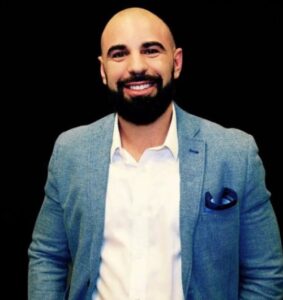
“Would I go to university at 18 today? No, and I say that as a founder who is not an engineer. I came up through sales, and I now run Call Force Global, a nearshore outsourcing company where I build our AI systems myself: phone agents, billing automation, our own CRM. None of that required a degree. It required knowing what a business will pay for, which I learned by selling.”
“So at 18 I would take a commercial job at a small company where you sit close to the money, and spend nights building with AI tools until the two skills meet. The one thing nobody told me at 18: code stopped being the moat this decade. Knowing which problem is worth solving never will.”
Eric Simons, CEO, Bolt.new

“If I were 18 again, choosing between higher education or real-world experience, I’d pick the exact path I did, opting to go straight into work. Too many students default to university because it’s the norm and everyone does it. This, paired with the taboo around questioning university, is holding an entire generation back from making the decision that’s actually right for them.”
“I’d offer three pieces of advice. First, learn how to learn. For most fields, like design, software development and entrepreneurship, what matters is whether you’ve developed the ability to teach yourself new skills, identify what you don’t know, and seek out the resources and people who can help you grow.”
“Second, build resilience. There will be hardships and challenges along the way. Learn how to lean into that discomfort and find a viable path.”
“Finally, create leverage. Always ask yourself: how can I create disproportionate impact? How can I build something that scales beyond my individual effort? That mindset, more than any specific path, is what separates those who excel and those who don’t.”
“As you face the choices around A-level results day, ask yourself: what do I want to learn? How do I learn best? Am I making this choice because it’s right for me, or because it’s what’s expected? You might be surprised by the answer.”
Rob Robinson, Founder and CEO, C86

“If I were 18 today, I wouldn’t see university and entrepreneurship as competing choices. Having built Gyrocom, DVS Services and Company 86 from scratch, as well as assisting Company 85 through to a successful sale, I certainly don’t feel that going to university cost me ground as an entrepreneur.”
“University can offer something incredibly valuable: independence, relationships, new perspectives and the space to work out who you are. What has changed is that young people no longer need to wait until their education is finished to start building. Technology has dramatically lowered the cost of turning an idea into something real, while access to global skills, knowledge and expertise has never been greater.”
“If I were starting again, I’d use those years to experiment. I’d develop ideas, build things, fail quickly and learn. I’d combine that with internships and part-time roles, build a portfolio alongside my qualifications and deliberately develop a network of mentors across technology, sales, finance and leadership.”
“The entrepreneurs who succeed increasingly need breadth. Technical people need commercial awareness and commercial people need to be technologically conversant. Education, experience, relationships and experimentation can all happen at the same time. Keep learning, keep building and allow the plan to evolve as you discover where your strengths and opportunities lie.”
Katie McDermott, Founder, See Me Please
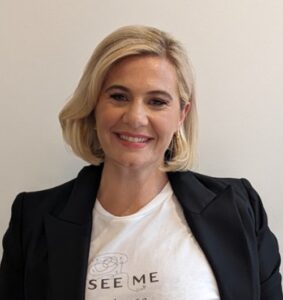
“If I were 18 today, I’d go to university, but not for the degree. What matters is committing to something hard and having to see it through, even when it feels pointless. Go in eyes wide open, knowing you’ll probably never use 90% of what you study. And that’s fine.”
“Start your career in a tiny business, ideally in a sales role. You’ll touch everything, which means you get a really good foundational understanding of all the moving parts that make businesses work. You’ll learn that grit isn’t motivational poster nonsense; it’s what happens when you’re the only person available to fix the problem, even if you have no experience in it.”
“When you step into your first job, question everything you’re told. Lead with curiosity, not compliance. More often than not, the person confidently explaining why things are impossible often has no idea themselves.”
“Build things yourself, even if you have no idea what you’re doing. Even if it fails spectacularly. Most people who spook the conversation with tech talk are actually just prompting faster than you, or worse, scared of having to figure things out themselves. Mystique is mostly posturing. Don’t optimise for the right path. Optimise for giving things a shot.”
Keith Griffiths, Founder and CEO, The Entrepreneur Festival

“Today is an important day for thousands of young people but we need to remember that A-level results are not a verdict on your future. They do not define you.”
“For those who have done well, congratulations. For those who have fallen short, remember that some of the best opportunities can come from taking a different path. Currently, the education system doesn’t teach you how to set up, scale and exit a business. The best way to learn is by doing. Results day may turn into an important crossroads for some young people who now see the opportunity to start their own business.”
“Life doesn’t always go to plan, but some of the most successful entrepreneurs I’ve ever met have succeeded through adversity. My own journey hasn’t been defined by getting everything right the first time. My route to becoming an exited founder of a multi-million-pound business actually started when I became redundant.”
“That’s my reminder to young people today: perceived failure can be turned into an opportunity for unrivalled success. Sometimes, it’s simply a case of perspective, resilience, and ambition. A-level results can open doors, and students should be proud of the hard work they’ve put in. But if today hasn’t gone the way you hoped, don’t let a set of grades convince you that your future is limited. Some of the biggest opportunities in life come from the setbacks we never planned for.”
Gareth Hoyle, Founder and Managing Director, Marketing Signals
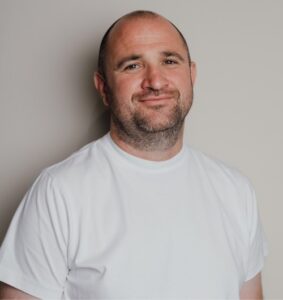
“I’d stop worrying about the grade and go and build something people can actually see. I’ve hired hundreds of people over the past twenty years, and I can’t remember a single time A-level results decided who got the job. I look for whether someone can think and get things done, and that shows up in a campaign, a website, a project done off their own back, not in a grade from when they were 18.”
“If I were 18 now, I wouldn’t rule out university, but only for a course that teaches something specific I couldn’t pick up faster another way. An apprenticeship, or a job at a start-up solving real problems from week one, builds a better CV than three years in lectures for most people I’ve hired. Whichever route you take, learn to use AI tools properly rather than just poking at them. Most people your age haven’t bothered yet, so that’s your advantage.”
“The one thing I’d tell an 18-year-old: nobody remembers your grades five years into a career, your track record does the talking after that. Start building one now.”
Louis Rix, Co-founder, Car Finance 247

“If I were 18 today, I’d focus less on the route and more on the opportunity.
“University, an apprenticeship or starting a business are not necessarily competing choices. What matters is finding the path that gives you the best chance to learn, grow and develop valuable skills.
“For anyone interested in tech, I’d be focused on upskilling as quickly as possible, particularly in AI. There are now more ways than ever to learn industry-specific skills without following the traditional route into higher education. The best investment you can make is in yourself.
“Follow your passion and find an industry that interests you. Learn everything you can about it and identify where things could be done better. That’s often where the biggest opportunities are hiding.
“If you’re not ready to start something yourself, look at the companies operating in sectors that excite you and reach out for work experience. Be personal in your approach, be persistent and demonstrate the value you can bring.
“And don’t wait for the perfect moment. It never arrives. If you have an idea and believe you can leave your mark on the world, get cracking. Stop reading about it and start doing.”
For any questions, comments or features, please contact us directly.