


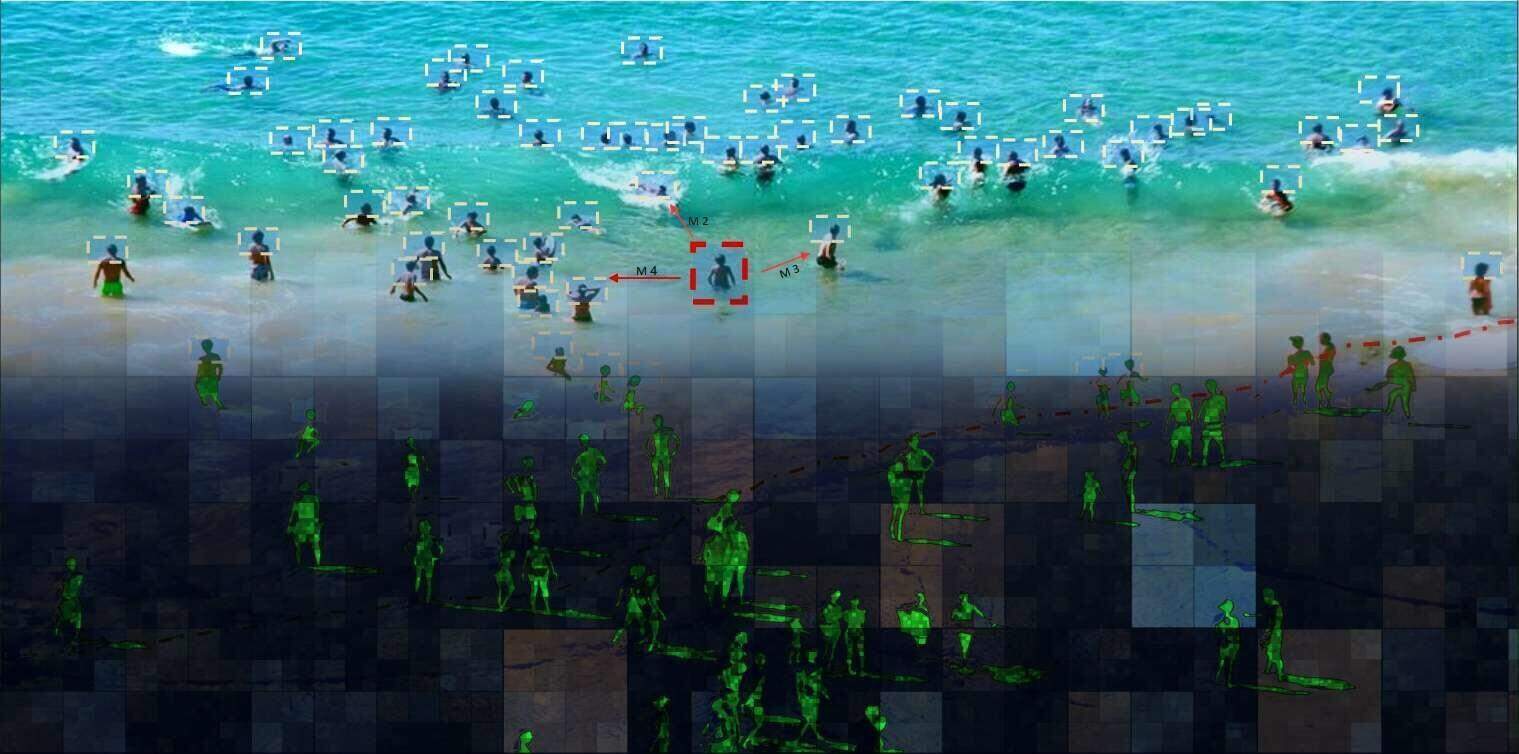
A new artificial intelligence-based (AI) system, Sightbit, developed by Ben-Gurion University of the Negev (BGU) alumni, helps lifeguards monitor thousands of swimmers and identify risky situations and other water hazards. Sightbit aims to save lives and modernise ocean rescue practices worldwide. Using the Sightbit system, the Israel Nature and Parks Authority will make Palmachim National Park, with five miles of coastline, the first “smart beach.”
The system uses standard cameras that cover a defined area and transmit real-time information on monitors in the lifeguard tower. It sounds alarms when swimmers are in danger. Instead of relying on binoculars, the cameras zoom in for an enhanced view. The core system is based on deep-learning computer-vision technology with convolutional neural network architectures for object detection, which feature extraction and real-time predictive analytics.
The system rates sections of a beach according to a risk assessment model with crowd management solutions and weather conditions, and offers estimates on how many lifeguards are needed on a given day to safely monitor swimmers. In addition to real-time alerts and water hazards, Sightbit analytics also enable lifeguards to anticipate risk and take preventative action before swimmers are ever in danger.
Sightbit also monitors certain at-risk populations such as child swimmers and can even be used to guard beaches where lifeguards are not present or off duty. The lifeguards can set the parameters of what warning alerts they see. Different options include dangerous currents, vessels (boats, jet skis, etc.) and riptides.
More from News
- How Is The US-Iran Conflict Impacting Big Tech?
- Cyber Attacks Are Costing 80% Of CNI Organisations Up To £5 Million
- US Petrol Prices Are Over $4 For The First Time Since 2022 – Is It Too Late For Recovery?
- Diverse Startup Boards Are More Likely To Succeed – What’s Driving The Advantage?
- Let’s Talk About The White House App: Informative, Intrusive Or Irrelevant?
- 75% Of Fans Oppose VAR As Experts Analyse The Technology Behind It
- How Much Are UK Households Spending On Subscriptions Each Month?
- Indonesia Is The Next Country To Introduce Social Media Bans For Teens
“Sightbit is, in essence, an AI lifeguard and superior to humans which aren’t optimised for tracking hundreds of swimmers with or without binoculars,” says BGU alum Netanel Eliav, Sightbit chief executive officer. “In the case of drowning, every second is critical. Our system acts as an additional lifeguard by flagging threats to swimmers and providing an earlier warning so they can act more quickly and save lives.”
According to Amir Chen, director of Coastal Space and Parks Authority: “Sightbit’s innovative solution is in line with the Nature and Parks Authority’s ambition to ensure as much as possible the safety of travellers and visitors to the national parks and reserves using advanced and innovative technologies, among other things at the beach.
The Sightbit team plans to expand internationally and has been invited to conduct additional pilots at beaches in the U.S. and Europe.


