


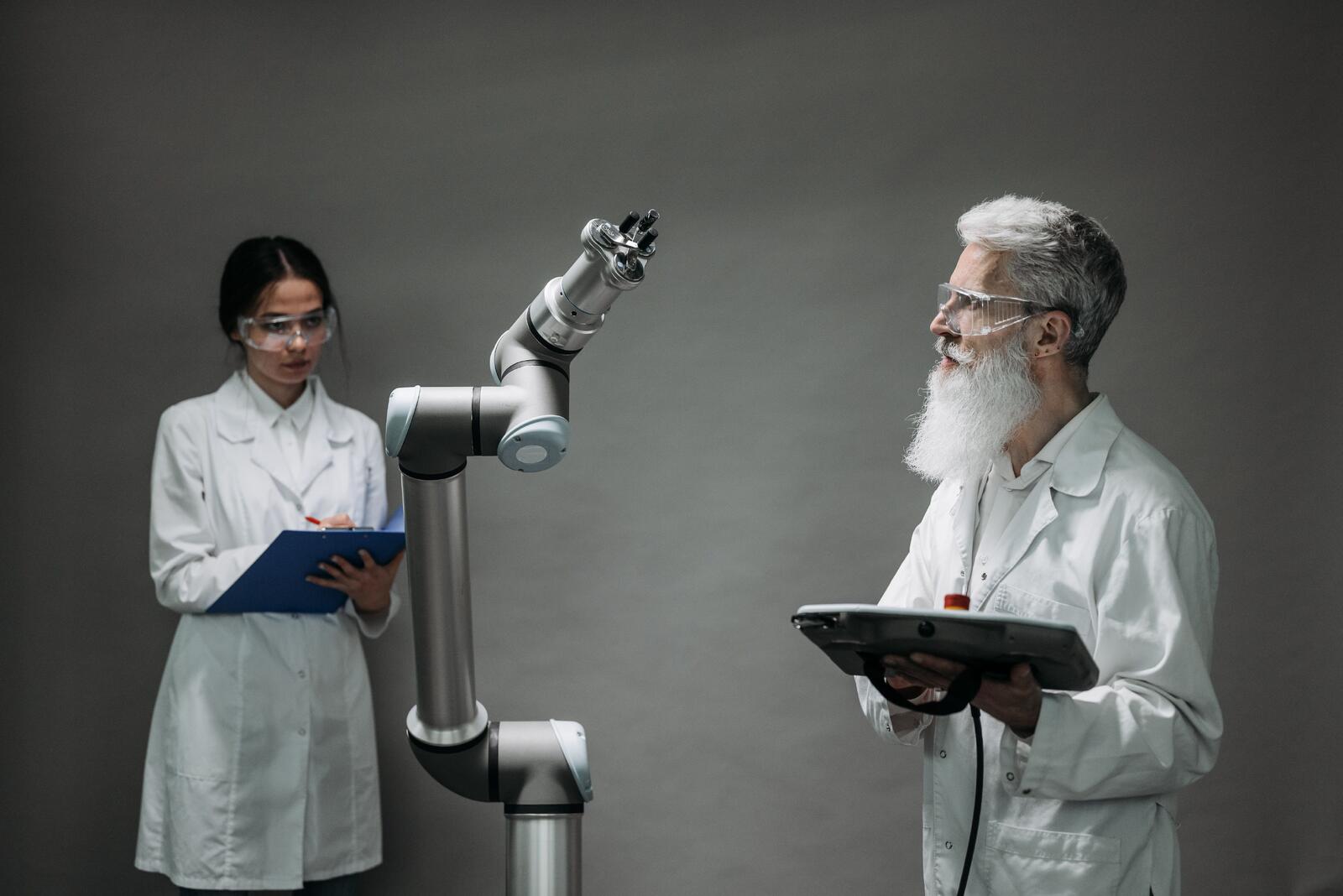
Robotics is moving beyond machines that repeat the same programmed movement, with artificial intelligence helping robots respond to their surroundings and handle physical tasks that once required constant human input. Known as physical AI, the technology is opening up new possibilities for industries where automating work has proved difficult.
The US has startups tackling everything from unloading delivery containers to sanding industrial parts and automating food production. Rather than focusing solely on humanoids designed to look like people, these companies are developing machines for jobs with a clear purpose.
What Is Physical AI And Does It Need Legs?
Physical AI refers to AI systems that perceive and interact with the physical world, using information from cameras and sensors to help machines decide how to move or handle objects.
Unlike conventional automation that follows predefined instructions, these systems can use AI to adapt their actions to changing conditions. Traditional industrial robots can already use advanced sensors and controls, but physical AI aims to make machines more adaptable to unfamiliar situations.
The Ideas Driving Robotics Forward
Robotics startups are approaching automation from different angles. Some are adapting machinery already used on construction sites, while others are developing systems for handling food, tracking warehouse stock or finishing industrial parts.
More from Startups
- Founder Of The Week: Alexandra Ion
- Startup of the Week: ChatRank
- £180m Gets UK AI Startups Started, Who Pays to Keep Them Here?
- How Is Austria Attracting Entrepreneurs?
- How a Fuel Card Became The Go-To Cost-Control Tool For UK Startups
- 5 Startups Crowdfunding w/c 19.10.2026
- Quite Contrary: The Fastest Way To Scale A Business Is To Slow Down, Says John Messer
- Founder Of The Week: Matt McLuckie
1. Gritt
San Francisco-based Gritt launched in July 2026 with $32.4 million in pre-seed and Series A funding. Founded by Puneet Puri and Vishal Dugar, the company combines robotic arms and AI with existing construction equipment, including skid steers and forklifts. Contractors can use its technology on machinery they already own instead of replacing their fleet.
Gritt is starting with large-scale solar installations, where its systems are designed to place panels and handle repetitive work outdoors. Its technology has autonomously placed tens of thousands of solar panels without breakages.
2. Bedrock Robotics
Founded in 2024 and headquartered in San Francisco, Bedrock Robotics develops autonomous systems that retrofit existing construction machinery, including excavators, bulldozers and loaders. Its technology is intended to let contractors automate heavy equipment without having to buy an entirely new fleet.
In February 2026, Bedrock announced a $270 million Series B, taking its total funding to more than $350 million. The company is working with construction contractors on autonomous machinery and aims to move beyond individual machines towards coordinated fleets.
3. Anyware Robotics
Founded in 2023, Anyware Robotics is based in the San Francisco Bay Area. Its first robot, Pixmo, is designed to unload boxes from trailers and shipping containers using a mobile base, a robotic arm and a conveyor attachment. It can adapt to differences in box sizes, orientations and container layouts, rather than relying on every box arriving in exactly the right place.
Pixmo is operating at Saddle Creek Logistics Services in Modesto, California. The deployment has handled more than two million pounds of goods across 150 containers. It can unload a container in two to three hours, while the facility has reduced the number of workers needed at the dock from four or five to one or two.
4. GrayMatter Robotics
GrayMatter Robotics, based in California, develops AI-powered robotic systems for industrial surface finishing, including sanding, grinding, polishing and spraying. Its Scan&Sand system scans a part and generates robotic sanding paths, helping manufacturers handle different shapes without manually programming every movement.
Its technology has processed more than 30 million square feet of surface area across over 20 industries. GrayMatter’s systems work with materials including metals, wood, plastics, fibreglass and composites, allowing manufacturers to automate finishing work across different types of parts.
5. Chef Robotics
San Francisco-based Chef Robotics builds AI-powered robotic systems for food manufacturing. Its robots portion ingredients into meal trays on production lines, taking on repetitive work that food manufacturers have traditionally relied on people to perform.
In April 2026, Chef reached 100 million servings produced by its robots at customer facilities. These servings refer to portions placed into meal trays, rather than 100 million complete meals. Its systems were operating at more than a dozen production facilities across the US, Canada and Europe. Amy’s Kitchen became its first customer in 2022.
6. Gather AI
Pittsburgh-based Gather AI was founded in 2017 by researchers who met while completing PhDs at Carnegie Mellon University. The company uses AI with warehouse drones and cameras mounted on moving equipment to capture inventory information, including barcodes, quantities and pallet locations. That information can then be compared with warehouse management records.
Gather AI announced a $40 million Series B in February 2026, bringing its total funding to $74 million. Its platform is designed to improve inventory visibility, with a stated inventory accuracy rate of 99.9%. The company is expanding its focus beyond inventory intelligence towards broader logistics operations.
7. Dyna Robotics
Redwood City-based Dyna Robotics develops robots driven by its own AI models for repetitive physical tasks. Its work with restaurant group Din Tai Fung gives it quite a specific application: folding napkins to a consistent standard, rather than attempting to automate an entire kitchen at once.
In August 2026, Dyna introduced its Dyna-2 system, which can produce 1,590 table-ready napkins during an 18-hour shift, with 93% meeting Din Tai Fung’s quality standard. The system builds on an earlier model and is designed to increase output while keeping the finished folds consistent. Din Tai Fung is rolling out Dyna’s robots across its restaurant network after the technology met its return-on-investment threshold.
8. Persona AI
Houston-based Persona AI was founded in 2024 by Nic Radford, Jerry Pratt and Jide Akinyode. It is developing humanoid robots for heavy industry, with welding in shipyards among its target applications. The company raised $27 million in pre-seed funding in May 2025.
A September 2026 securities filing showed that Persona AI had sold $65.4 million towards a planned private offering of nearly $142 million. The filing doesn’t mean the full offering had been completed.
Persona AI has an agreement with HD Korea Shipbuilding & Offshore Engineering and HD Hyundai Robotics, alongside robotics firm Vazil, to develop humanoid welding robots for shipyards. The plan announced in May 2025 targeted prototype completion by the end of 2026, with field testing and commercialisation scheduled to begin in 2027.
Turning Robotic Potential Into Progress
Physical AI is developing in several directions, with startups taking different approaches to how machines interact with the world around them. The technology is still developing, but its commercial future will depend on whether these systems can work safely and consistently at a cost businesses can justify.
The next stage is about making robotic systems dependable enough for everyday use. Reliability, safety and cost will help determine which technologies move beyond early deployments and become a lasting part of how businesses operate.


