


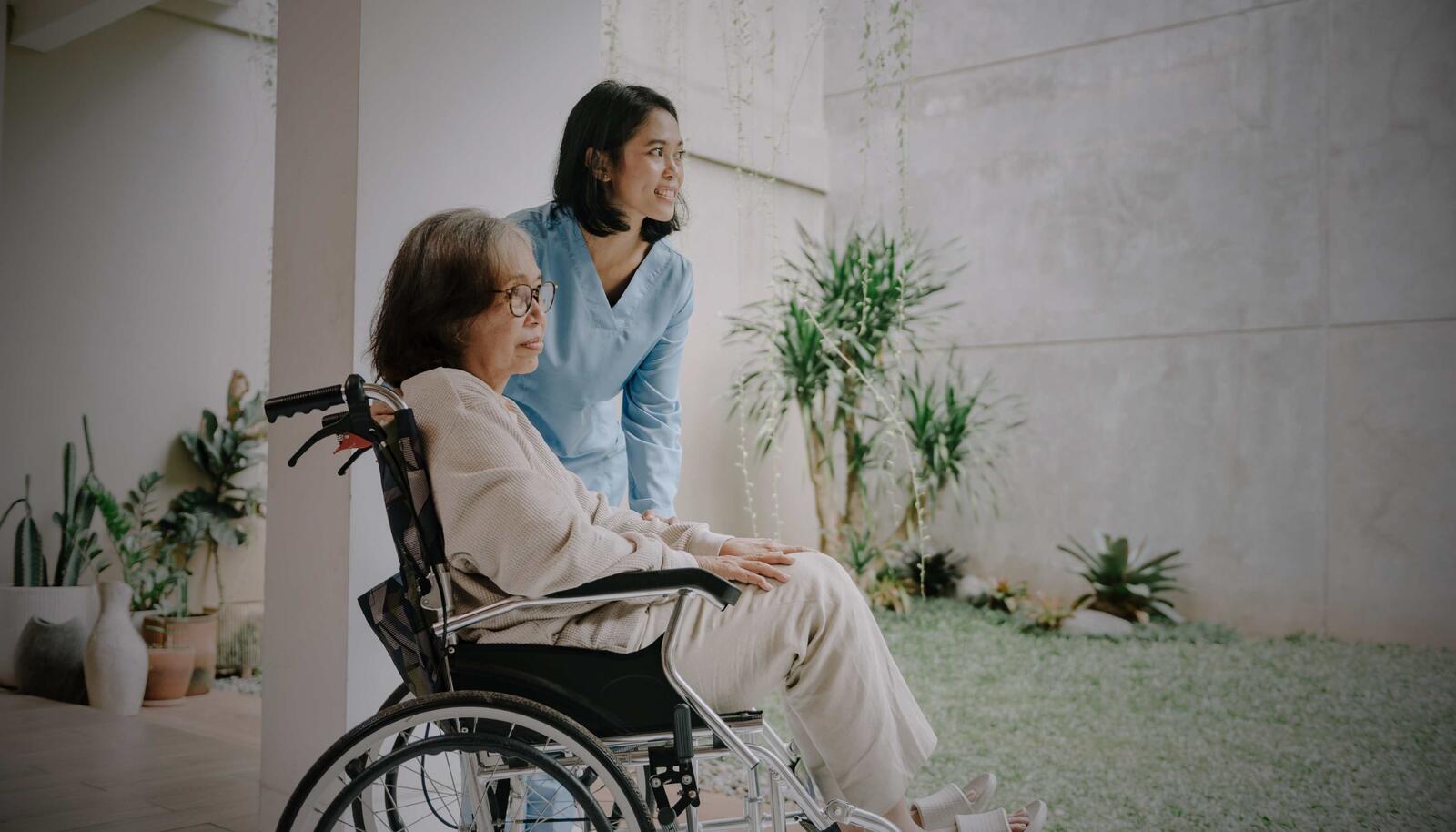
Two million older people in the UK face unmet care needs while the NHS remains under constant pressure. The technology to bridge this gap already exists – commercially available sensors, now being rolled out by major electronics manufacturers, offer a non-intrusive way to track mobility, detect falls and provide early warnings for cognitive decline.
Samsung added cognitive decline flagging to its SmartThings platform in May 2026, bringing ambient sensing for elderly care into the consumer mainstream. In the UK, startups including Currant Care, Birdie and Whzan Digital Health are building dedicated platforms for the care sector, packaging monitoring with clinical workflows rather than offering raw sensor data.
While the necessary commercial infrastructure is now in place, the NHS lags behind in adopting these technologies, despite their proven potential to significantly lower hospital admissions and reduce delayed discharges.
How Ambient Monitoring Works In Practice
The winning formula is simple: it needs to be passive, respectful of privacy, and built to plug straight into clinical care.
Sensors detect behavioural signals – gait changes, sleep disruption, reduced activity, falls – and produce alerts that map to existing care pathways, so a flagged deterioration in overnight movement triggers a check-in and a pattern of reduced activity over a week generates a referral. The sensor does the watching; a person with a protocol does the responding.
That’s the difference between tech that changes the game and tech that just gathers dust. Academic reviews of smart home IoT for elderly care consistently find that the technology can detect behaviour changes and falls with reasonable sensitivity. Where pilots fail isn’t in the detection – it’s in what happens next. Without defined triage protocols, named responders and care pathways that connect an alert to a clinical action, data accumulates and nothing changes. Alert overload is a known failure mode: if every flag is treated with the same urgency, none of them are.
The pilots showing the most promising results are the ones that treat the sensor as one component of a redesigned care workflow, not a product to be installed and monitored. Trials that combine ambient sensing with rapid response teams or community nursing show better outcomes in the literature than trials where the technology was deployed alongside existing, unchanged processes.
More from Tech
- Top Physical AI And Industrial Robotics Startups In Japan To Watch In 2027
- From Pit Lanes To Cargo Planes: The Logistics Behind Moving Formula 1 Around The World
- AI Can Now Build A Free Adobe Rival – So Why Can’t It Open Files?
- How Modern Rendering Solutions Fit Into Creative Pipelines
- Women In Tech Week: AI Has Become A Career Skill – So Why Are Fewer Women Using It?
- Same Car, Different Driver: The Tech Behind F1’s Custom Set-Ups
- From Web3 Hype To Commercial Advantage: How The Next Phase Of Emerging Technology Will Be Won
- Who Controls The Thermal Skies? The Security And Privacy Questions Behind SatVu’s New Satellite
Why Scale-Up Is Stalling
The hurdles to getting this into the NHS have nothing to do with the tech itself. The evidence base, while still developing, is enough to support commissioning decisions for fall detection and mobility tracking. The problem is systemic, familiar to anyone watching healthtech adoption in the UK, and it operates on multiple levels simultaneously.
Commissioning and funding structures create the first problem. The NHS and local authorities buy different services from different budgets, with procurement cycles that rarely align with the multi-year evidence timelines population health technology requires – pilots are funded, scale isn’t. Many promising implementations reach the end of their pilot funding having demonstrated efficacy and fail to convert to ongoing contracts because there’s no commissioning mechanism that crosses health and social care in a way that captures the full system saving. The sensors save the NHS a fortune in acute care, but the bill for buying them is stuck with social care – and that’s exactly where the system breaks down.
Interoperability is the second barrier. To be truly useful, these platforms can’t just exist in a bubble; they need to plug straight into electronic patient records and social care systems. Without integration, an alert from a sensor at home exists separately from the clinical record it needs to inform. The lack of data standards and APIs across NHS and social care systems forces every deployment to build its own integration, raising cost and slowing rollout.
Regulation and liability are the third, and the most challenging. Flagging cognitive decline sounds great in theory, but it opens up a can of worms that current frameworks don’t have the answers for. If a sensor flags early signs of cognitive deterioration, who has clinical responsibility for acting on that flag? What constitutes informed consent for passive monitoring in a person whose cognitive capacity may be changing? What are the acceptable false positive rates for a flag that might lead to an assessment or intervention the person didn’t seek?
These questions need answers before clinicians can be expected to embed automated cognitive flags into routine practice.
What Needs To Change
The problem isn’t the technology – it’s everything else.
The evidence base needs to mature through larger, longer pragmatic trials that measure outcomes clinicians and commissioners care about – reduced admissions, delayed discharge rates, cost per quality-adjusted life year – not only technical detection accuracy. Recent reviews call for a shift: trials must focus on specific conditions and track patients over years instead of months.
Procurement needs to be redesigned with scalability in mind. Pilots that include explicit criteria for what success looks like and a funded pathway to rollout if those criteria are met produce better conversion rates than open-ended pilots with no exit plan. Commissioners, NHS trusts and local authorities need to co-design adoption roadmaps before a pilot begins, not after.
National data standards and APIs for ambient health platforms would reduce the integration cost of each individual deployment and make it possible for platforms to operate across different NHS and social care systems without bespoke engineering for each site.
And regulators need to provide clearer guidance on liability, consent and clinical thresholds for cognitive flagging specifically – the area where both the promise and the governance complexity are highest. Until clinicians know how to act on a cognitive flag without exposing themselves to liability for either acting or not acting, that feature will remain in pilots rather than practice.
The technology works, the investment is arriving and two million people are waiting. Whether the systems around it can move fast enough is the question that still doesn’t have a satisfying answer.


