


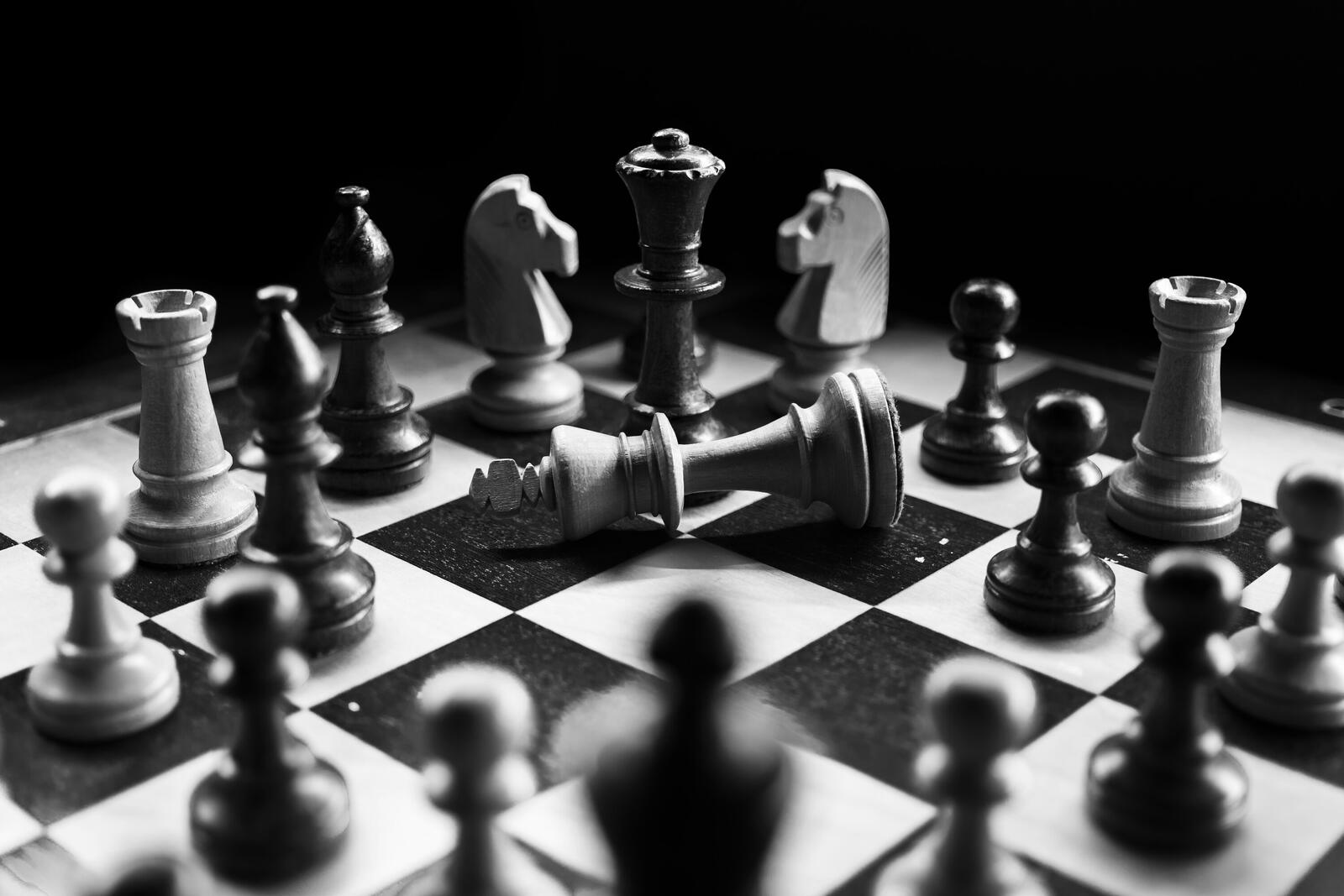
In today’s episode of “Ridiculous Headlines That Don’t Sound True But Sadly, Are”, Elon Musk is having a very heated, very public argument with a chess website.
This feud is nothing new. Much like Paris Hilton and Nicole Richie’s iconic early-2000s feud, the quarrel between Musk and Chess.com has been ongoing for years. But now, Musk seems to believe he holds a silver bullet: AI will “solve” Chess just like it did Checkers, he has claimed.
Cue: gasps, whispers and shock among the crowd! Followed by outrageous applause and and a roaring, standing ovation! Well, perhaps in his imagination, but in reality, the world in which most of us live, it’s been more like the virtual version of many confused expressions and the exchange of one too many awkward glances between strangers.
Look, Elon’s done a lot in his day – hell, he’s done a lot this year. But, is he really arguing with a website? Or rather, whoever’s controlling the social media for the website? And not just any website, but Chess.com?
The answer is yes, and while the story is admittedly absurd, I do believe there’s a far greater truth in this fun little anecdote that we ought to take note of. Almost like a small child trying to keep a secret who blurts everything out at the dinner table by accident. I think Musk has, in a way, revealed the essence of why his understanding of the world, technology, AI and just about everything else is often so far from common consensus, and the trouble is, this reflects a logic that is becoming widely adopted (whether intentional or not).
Indeed, I don’t think it’s just him; I think this manner of thinking is what we’re seeing in so many powerful figures in big tech, and for that reason, it’s well worth sticking around and taking a few notes.
Musk Vs. Chess: AI Will Win, Mark My Words!
Essentially, Elon took to X to make his feelings known about the game that seems to get him rather riled up: he asserted, in a flurried string of posts, that soon enough, AI will “fully solve” Chess,, because, in his words, “Chess is hard for humans but not for computers”. Of course, Chess.com fired back with a response that cited numbers and spoke about the sheer complexity of the game of chess, essentially concluding that it would be virtually impossible to map all possibilities.
The exchange went on, becoming increasingly petty and heated, and much like most arguments on social media, there was no clear winner.
But here’s what stood out to me, and hopefully to many other people who were furiously snacking on the metaphorical popcorn while the feud unfolded: why are we arguing about whether or not a computer would be more likely to win a game than a human?
I’m not dismissing the obvious relevance of the fact that the whole issue is based on exponential probability, something computers tend to be pretty good at. Nor am I disagreeing with him; he’s probably right. But the thing is, the whole discussion is missing the point of why and how we play a game like chess, and chess is becoming symbolic of a far greater truth.
More from Artificial Intelligence
- Amazon Is Building Its Own AI Chips – Why Not Just Buy Them?
- Anthropic’s Own Alignment Lead Says There Is A 10% Chance AI Kills Everyone Within A Decade
- The Company Teaching Software To Speak: ElevenLabs
- Can AI Stop Ageing? Inside The Clinical Breakthroughs Delivering Concrete Results
- AI Deepfakes Are Forcing Schools To Rethink Child Protection
- Experts Are Sounding The Alarm On AI Animal Translation – Breakthrough Tool Or New Form Of Exploitation?
- The Rise of “Agentic Compliance”: Shifting from Policies To Real-Time Guardrails
- Inside Nairobi’s AI Shock: What Happens After AI Wipes Out A 40,000-Worker Economy?
Perhaps Winning By Solving An Algorithm Isn’t the Point
There are many things in the world – many tedious, time-consuming tasks – that would be made exponentially easier if we could find a way to get them done immediately. To remove all friction from the equation and make it as easy as simply imagining it were done, to having it actually be accomplished in a matter of seconds.
For instance, when you’re late for work and you’re stuck in traffic, wouldn’t it be so convenient to just be able to click your fingers and teleport to the office? Or, what about something more practical, like having to manually fill out forms, only to enter the data into a system in multiple different places a seemingly infinite number of times? With modern technology and AI, we can make that happen in a heartbeat – time saved, fewer curse words uttered.
Both of these examples, while one is real and the other imaginary, include friction that I’m sure we can all agree is pretty unnecessary when it comes to having a positive impact on us and our lives. Sure, someone may argue that sitting in traffic gives you time to think or entering data manually is good for…actually, I can’t even think of a good reason why anybody would want to do manual data entry.
But ultimately, regardless of these potential motivations, these are situations in which the thing that makes them difficult, tedious, time-consuming, and annoying are pretty unnecessary – they don’t actually contribute to the overall goal or final output.
What about something that requires a process to be followed in order for the final goal to be achieved? For instance, going for a run. People run for different reasons – whether it’s to gain fitness, boost mental health, keep physically healthy, lose weight – but no matter the specific motivation, I think it’s safe to say that the activity is about more than reaching a destination or a turning point; it’s about the process.
The point isn’t that you need to physically be five miles away from home. The point is the movement that you do that ends up with you being five miles down the road. After all, if it wasn’t, it would probably be a lot quicker and easier to just hop on a train or in an Uber, right? It’s also why we have treadmills that don’t get you anywhere at all.
And that’s the difference I think Elon is fundamentally misunderstanding.
Chess isn’t being stuck in traffic on the way to work or doing manual data entry at 16:59 on a Friday. Playing chess is going for a run.
Who “Wins” If We Solve Chess?
An AI platform gets a pat on the back, Elon shows off a smug grin and…we all carry on with our day?
I believe that a huge takeaway from Chess.comgate, as I will refer to it from hereonout, ought to be the realisation that perhaps we are way too focused on “solving” everything. And it’s not just an Elon issue, although he takes it to the extremes and certainly shines a very bright (flood) light on it, as he does most things.
With technology having advanced so dramatically over the last decade or so, we’re at a point where we have so much more power than ever before to find solutions and quick fixes. Don’t have time to go grocery shopping? No worries, just login to an app, select your daily pre-organised shopping list and hit order – it’ll be at your house in a few hours. Or, going on holiday but don’t want to get a travel agent to organise the trip for you? Just ask Chat to create a detailed itinerary.
We’ve become so used to having just about anything we need at our fingertips, that it almost feels as if the logic has reversed somewhat. Not only is it possible to sort these things out really quickly, but they should be organised without any hassle. And now, we’re beginning to apply this logic to just about every facet of our lives, even when it’s totally unnecessary.
So, when Elon Musk chose to get into a heated argument with “some random intern at a chess website” (his words, not mine, and I’d argue that he actually kind of schooled himself by admitting this), he inadvertently gave us the greatest example of how our logic is becoming skewed by our obsession with removing any and all friction from our lives.
I say this, because other situations tend to involve significantly more nuance and can be more challenging to explain, but when it comes to chess, I’m sure most people can agree that the process of playing the game is far more important than the final outcome. In fact, the outcome – having a winner and a loser – really only has value because of the intellectual and strategic game that has been played in order to achieve the final goal. So simply asking a computer programme and an advanced AI model to solve it is completely missing the point and would be, well, futile.
I don’t necessarily think that Musk’s obsession with “solving” chess is going to go away, nor do I think that the outcome of this issue in itself will have dramatic consequences for humanity. However, I do think it has revealed a far more telling indication of how our logic is changing with our increasing ability to quickly solve problems with very little (or no) friction. The lesson here should be, I believe, that we need to stop asking whether or not it’s possible to “solve” something, and rather, we should question whether or not we need to “solve” it at all, rather than just work through it ourselves.
Otherwise, I fear we’re zooming towards a dystopian future in which instead of using our smart watches to simply track our runs, they’ll have sliding scales for things like serotonin and other hormones that we can simply modify whenever we feel need a little boost, without putting in any effort, using any brain power or making any kind of intelligent decisions.
Personally, I’d rather just go for a run.


