


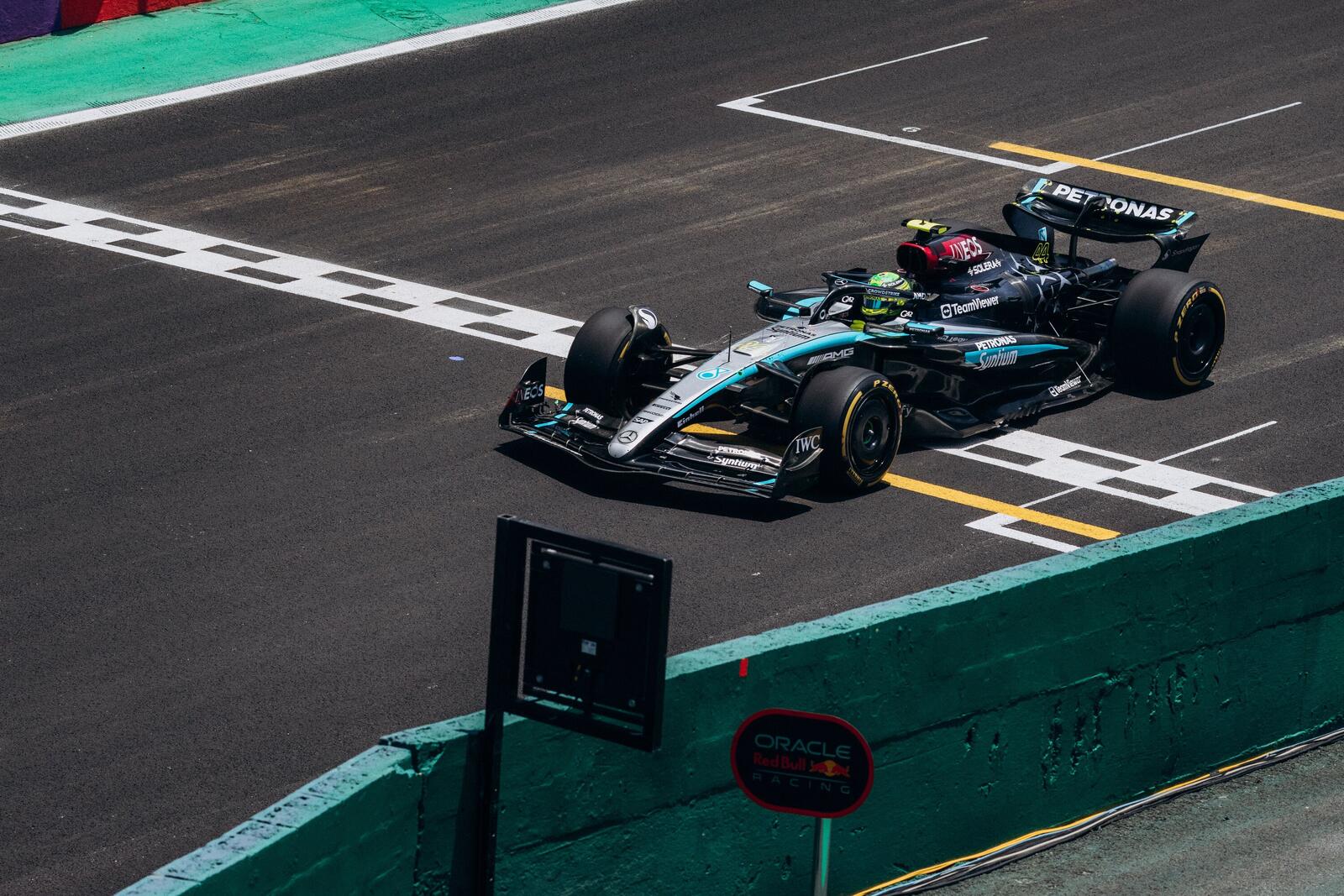
F1 teams usually arrive at a circuit with years of information already waiting for them. They know roughly how the tyres behave, which corners are likely to cause trouble and what kind of setup has worked there before. A brand-new circuit removes that head start, which leaves teams needing to work out what they can before the cars ever turn a wheel.
The Madring in Madrid only joined the calendar this year; there was no recent race data to fall back on, so teams had to build their own picture of the circuit using maps, architectural drawings, laser scans and simulation. Drivers could then spend time learning the layout virtually while engineers modelled what the car might face once it reached the real track.
How Do F1 Teams Learn A Track They Haven’t Raced At?
McLaren’s preparation for the Madring shows how much information can be assembled before the circuit is properly tested. The FIA provided an initial layout, which the team supplemented with Google Maps before architectural drawings added more detail around the track edges, corners and elevation changes.
Oscar Piastri has explained that he starts by watching footage from the F1 video game before moving into McLaren’s simulator, where around 15 to 20 laps is enough for him to start getting comfortable with the gears, corner speeds and how much speed he can carry. Engineers can work on their own simulations at the same time, using the virtual circuit to investigate racing lines and what the track could demand from the car.
Why Is Preparation So Important Before The First Lap?
A driver who has already learnt the basic rhythm of a circuit can arrive at FP1 thinking about how to drive the car quickly, rather than using the session to remember which gear each corner takes. Piastri estimates that without any simulator preparation, he would only be reaching that point towards the end of FP2 or into FP3, meaning valuable practice time would be spent learning the circuit instead of working on the car and his driving.
Practice is still the best opportunity for team to find out how its predictions compare with the real circuit. The 2026 regulations have also introduced new variables around the cars and power units, including changes to energy management that affect how teams approach each track. McLaren’s preparation for Madrid therefore included modelling energy deployment and aerodynamic demands, while tyre behaviour on the new asphalt was something the team could only predict until it had real running data.
More from Tech
- Why Is It So Hard To Put Tech Down? The Design Choices Behind Our Attention
- Can A Trading App Truly Be Risk-Free When Real Financial Habits Are On The Line?
- Beauty Tech Explained: The Cosmetic Treatments Changing Aesthetic Medicine
- Could An App Help Families Manage Allergies More Confidently? ACE Launches Allergy Assist
- Wi-Fi 8 Is Arriving – What Does It Actually Change For Your Home?
- The Unexpected Role Of Consumer Tech In Space Engineering
- How To Optimise Your VoIP System For Better Performance
- Beneath Our Skin: How Technology Reveals What We Can’t See
1. LiDAR and 3D Track Mapping
Before a driver can learn a new circuit in the simulator, the team needs a detailed version of it. McLaren can start with information from the FIA, Google Maps and architectural drawings, with LiDAR scanning adding a much more detailed picture of the circuit and its surroundings. A mapping vehicle drives around the track while lasers and cameras measure the area, creating the 3D data used to recreate the layout, elevation changes and track edges.
Ferrari’s filming day at the Madring in July also gave the team a chance to collect information from the physical track and compare it with what the engineers had already modelled.
2. Driver-In-The-Loop Simulators
Once the team has a circuit to work with, the driver can start learning it. A driver-in-the-loop simulator puts them in a physical cockpit and lets them drive the virtual track using the same basic inputs as the real car. McLaren describes its simulator as its most important tool for preparing for a new circuit.
Piastri has said it takes him around 15 to 20 laps before the gears, corner speeds and rhythm of a new circuit start to feel natural. Drivers can work out braking points, experiment with different lines and get comfortable with the layout before FP1, instead of using valuable track time to learn the basics.
The simulator still can’t perfectly recreate the grip, bumps or changing surface of the actual circuit, while wet weather is another thing drivers have to experience for themselves.
3. Computer-Based Car Simulation
The engineers can put the car through its own virtual laps too. Without a driver in the cockpit, they can test different conditions and investigate what the circuit could demand from the car before the team has any race-weekend data.
For Madrid, McLaren had already built up information around the layout, energy deployment and aerodynamic demands, giving engineers a starting point for the car’s setup. Ferrari’s filming day also gave its engineers information from the actual Madring surface that could be fed back into their understanding of the circuit and simulator model.
The F1 video game had already recreated the Madring by 3 June, when EA SPORTS added it to its 2026 season content. That’s obviously not the same technology F1 teams use, but it shows how quickly a digital version of a new circuit can exist before the first Grand Prix.
4. Data and Race Scenario Modelling
Knowing the layout doesn’t tell a team how the tyres will behave over a race distance, how much energy the car will need or which strategy could work. Without recent data from the circuit, engineers have to build those predictions using information from elsewhere.
For Sepang, which returned to the F1 calendar in 2026 after last hosting a Grand Prix in 2017, McLaren planned to use what it had learned from other hot races during the season, including Italy. Its tyre department also worked with Pirelli to predict how the tyres might behave in Malaysia.
Sepang’s heat and heavy rain mean teams need to prepare for both conditions, but there had been little wet-weather running during the 2026 season to draw on. Engineers could model different dry and wet scenarios ahead of the weekend, then use the first sessions to see how closely those predictions matched the conditions at the circuit.
5. Real-Time Data Collection
Once the cars leave the garage, predictions start being replaced by real information. Each F1 car has more than 300 sensors producing over 1.1 million data points every second, according to Formula 1 and AWS.
Engineers can compare that information with their simulations and change the setup if the tyres, grip or energy use aren’t behaving as expected. McLaren’s Madrid practice sessions gave the team more information about the braking zones, corners and track surface once the car was finally running.
That data then feeds back into the preparation for the next session, giving engineers a better model and the driver a clearer idea of what the circuit is actually asking from the car.
Why The First Real Laps Still Matter
An F1 team can arrive at an unfamiliar circuit with a lot more than a map and a driver’s first impression. By then, there may already be a detailed 3D model, hundreds of simulator laps and predictions covering the car’s aerodynamics, energy use, tyres and possible race conditions. Months of preparation can turn a completely new track into something the team already has a working theory for.
The first real laps still have the final say, because asphalt doesn’t always behave the way a model expects. Running at the Madring before the Grand Prix showed just how much can still be learned from putting the car onto a newly prepared surface, including how the asphalt behaves under the tyres and what the track is actually like at speed. Those are the kinds of details that a virtual model can only estimate until a real F1 car arrives.
For teams facing a circuit they haven’t raced at before, the technology isn’t there to make the track predictable. It gives the engineers and drivers a head start, so the first practice session can be spent testing their assumptions instead of learning the entire circuit from scratch.


