


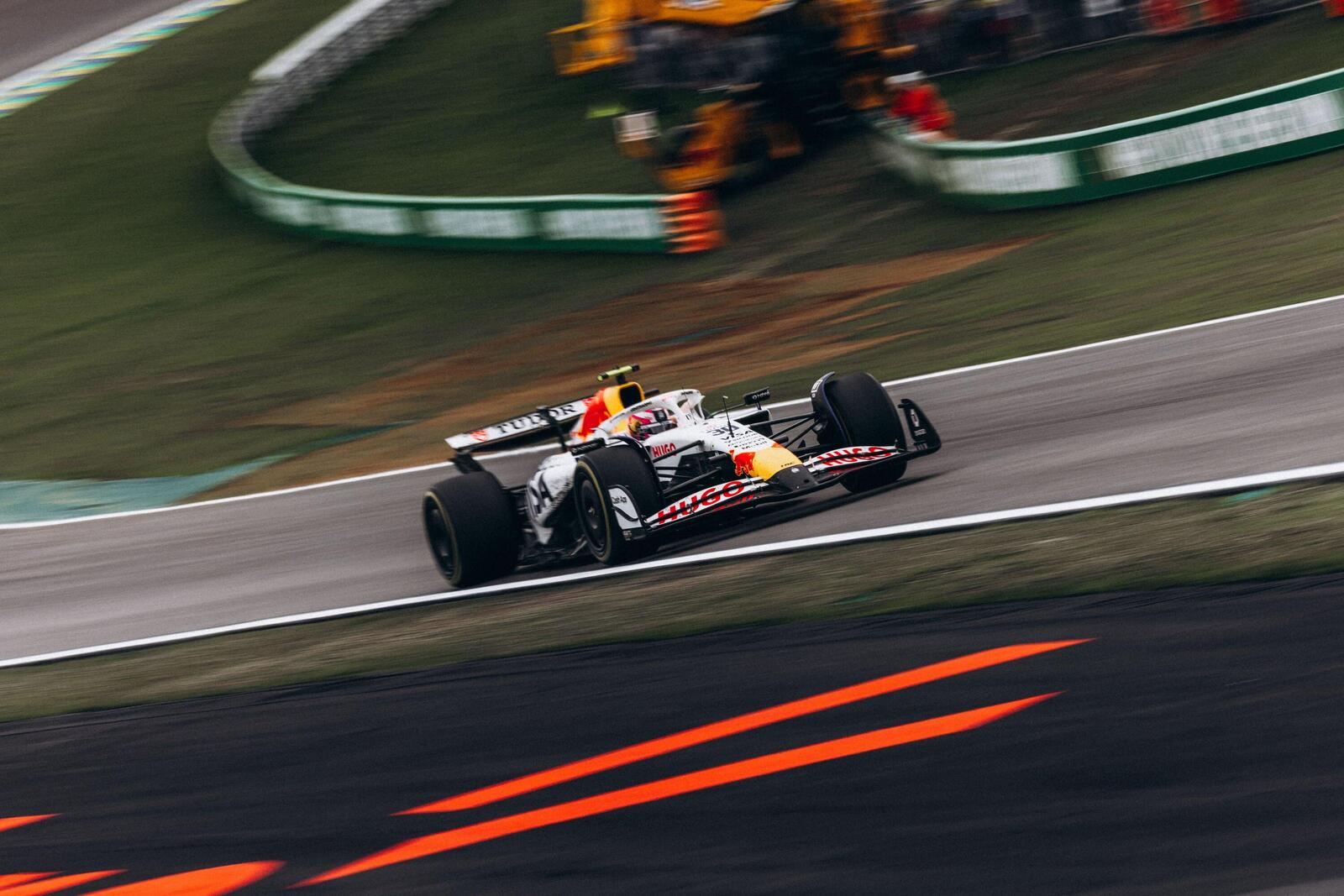
Two drivers in the same team can arrive at a race weekend with cars built to the same design, using the same engine and aerodynamic package, yet ask for completely different handling. One wants the nose to bite into a corner the moment they turn the steering wheel, while the other would rather the car stay calm until they say otherwise.
A car’s set-up is the collection of adjustments that affects how it responds to steering, braking and acceleration. Teams use telemetry, simulators and loads of driver feedback to tune it for each person. Mercedes-AMG Petronas explains that identical set-ups are rare because drivers have different preferences.
Same Garage, Same Car, Different Opinions
A car that feels predictable to one driver might feel insanely unstable to another. Engineers can build two cars to the same specifications, but that doesn’t mean both drivers will get the best out of them with identical settings. Small adjustments can change how confidently a driver attacks a corner or gets back on the throttle.
In July 2022, Lando Norris discussed Daniel Ricciardo’s struggles with McLaren’s MCL36, explaining that they had different preferences behind the wheel. According to Formula 1, Norris said he didn’t mind as much instability and could push the front tyres harder, while Ricciardo liked a more stable car with a little more understeer. Norris also admitted he’d struggled to adapt to the MCL36 himself, despite having raced for McLaren for years already and even though he was the more successful driver that season, that still didn’t mean that the car was a better fit for him.
Turning “It Feels Weird” Into Numbers
A driver might report understeer, where the car doesn’t turn as much as they want, or oversteer, where the rear slides out. Engineers compare that feedback with telemetry, including speed, throttle, braking and steering inputs, to understand what the car is doing and where time is being lost.
Mercedes says teams spend hundreds of hours preparing car set-ups. Simulators let engineers test possible changes before trying them on track, although the results still need to be checked during practice. Even with all that data, a driver calling the car undriveable and then setting a brilliant lap time isn’t going to make the engineers’ job any easier.
More from Tech
- From Web3 Hype To Commercial Advantage: How The Next Phase Of Emerging Technology Will Be Won
- Who Controls The Thermal Skies? The Security And Privacy Questions Behind SatVu’s New Satellite
- The Drone Technology Helping Farmers Cover More Ground In Less Time
- F1’s Pitlane Has Its Own Race, And Technology Is Driving It
- Top Deep-Tech Startups In Finland To Watch In 2027
- Are VoIP Calls Secure? Let’s Talk About Who Could Be Listening
- The Tech That Shapes F1 Car Performance From Circuit to Circuit
- From Alton Towers To Thorpe Park: The Technology Bringing Theme Parks To Life
1. Suspension
Suspension affects how the car reacts when a driver turns into a corner, hits a kerb or brakes hard. Springs, dampers and anti-roll bars influence how the car moves under load and how well its tyres maintain contact with the track. Formula 1’s technical explainer on suspension covers how the system absorbs bumps and helps the tyres maintain contact with the track.
A stiffer set-up can help keep the car’s platform stable, while softer settings can help it cope with bumps and uneven surfaces. The choice depends on what the driver needs from the car and the circuit they’re racing on. A sharper response might feel great through smooth corners, but less so when the driver hits a kerb at speed.
2. Aerodynamic Balance
F1 cars rely on downforce for grip, and the balance between the front and rear affects how they turn. Too little grip at the front can make the car reluctant to turn, while a rear end lacking grip can feel unstable through faster corners. Teams can adjust wing angles to change that balance. Formula 1’s explainer on downforce, featuring McLaren aerodynamic specialist Emel Cankaya, explains how wings and the floor generate grip.
A driver who likes a sharp front end might be comfortable with a car that feels too nervous for their teammate. Engineers need to work out whether the extra responsiveness actually helps or just makes the car harder to control. There’s basically no point gaining confidence on corner entry if the rear starts sliding on the way out.
3. Differential
The differential allows the rear wheels to rotate at different speeds through a corner. Its settings affect how the car rotates and behaves when the driver gets back on the throttle. Drivers can adjust certain differential settings from the steering wheel, meaning not every change requires a trip back to the garage. Mercedes-AMG Petronas explains that drivers can adjust differential settings and brake balance from the cockpit.
These adjustments can help a driver get the rear of the car behaving the way they want under acceleration. Engineers compare the results with driver feedback and telemetry to see whether a change improves the car’s response. Asking for a car that turns more easily is one thing; asking for one that does it without trying to swap ends is a more useful engineering brief.
4. Brake Bias
Brake bias controls how braking force is distributed between the front and rear wheels. Drivers can adjust it from the cockpit, changing the car’s braking balance without returning to the garage. Moving the bias forwards or backwards affects how the car behaves under braking, however the wrong setting can also contribute to a wheel locking up.
The ideal setting can change with tyre wear and track conditions, so drivers may adjust it during a race. It’s another decision to make while braking from enormous speeds and trying to hit an apex. Most people struggle to change the radio station while driving; F1 drivers are adjusting their braking balance while racing wheel to wheel.
5. Ride Height
Ride height is the distance between the car’s floor and the track. Running the car lower can help generate downforce, but there’s a limit. If the floor hits the track, the car can bottom out, potentially unsettling it and affecting performance. Formula 1 defines ride height and explains how bottoming occurs when the underside hits the track.
Bumpy circuits can force teams to raise the car, even if that means giving up some aerodynamic performance. The challenge is finding a height that lets the floor work effectively without the car repeatedly hitting the track. Lifting it until the driver stops complaining would be lovely, but unfortunately, the engineers still have lap times to worry about.
Finding What Works
No set-up improves everything at once. A change that helps the car turn into a corner can affect stability elsewhere, so engineers have to consider the whole lap, not just one particularly good corner. They also need a configuration the driver can handle consistently throughout a race.
The team combines driver feedback, simulator results and track data to settle on the settings that work best. There’s no button marked “make the car faster, but without that thing it does in the slow corner”. If there were, a few F1 engineers might finally get home before the sun goes down.


