


More software now runs on voice. AI receptionists take bookings over the phone, support lines hand the first part of a call to a voice agent, clinicians dictate notes between appointments and meeting tools write up who said what. Underneath each of these sits a speech recognition model, the step that turns spoken words into text the rest of the system can work with.
For many businesses, choosing that model comes down to a polished demo and a price list. That is often where the problems start. Most of the leading models are trained primarily on English and run on US infrastructure. English is the first language of around 400 million people, roughly one in twenty people on earth, and one of about 7,000 living languages. A model that sounds flawless in an English demo can make noticeably more mistakes on a Dutch support call or a German dictation, and more again on product names and specialist terms.
The options are also widening. Today, Amsterdam-based speech AI company Reson8 releases Rumble-2-Flash, a speech recognition model that businesses can download for free with open weights and test on their own audio. Drawing on how Reson8 builds and runs its models, these are the questions worth asking before committing to a provider.
Does It Work In The Languages Your Customers Speak?
A language list on a pricing page says little about accuracy. A model can list Swedish as supported and still struggle with it. The only reliable test is your own material: a sample of real calls, meetings or dictations in each language you operate in, transcribed by the model and checked by someone who speaks that language.
“Generic speech models are built for English and make noticeably more mistakes in other languages. Languages like Dutch, French and Polish are spoken by millions, yet they’re an afterthought. Why should a doctor working in Swedish get the medication names wrong while an American doctor gets them right?” says Raoul Ritter, Co-Founder and CEO of Reson8. Reson8 builds its models for more than 50 languages from the start.
Does It Get The Words That Matter Right?
An overall accuracy score can hide the errors that cost the most. A transcript can read well and still get the one word that mattered wrong: a medication name and dosage, an email address, a licence plate, an order tracking number. When you build a test sample, make sure it is full of those words.
Then ask what it takes to fix a model that gets them wrong.
The usual answer is to collect audio datasets and fine-tune the model, which takes time, money and a team with deep technical expertise. Some newer models can learn vocabulary from text instead. With Rumble-2, customers add product names, case references or medical terms as text and the model picks them up in under 60 seconds, with no audio samples and no fine-tuning.
A custom model can hold up to 50,000 phrases.
“Our models are built to adapt to new vocabulary and context on the fly. No fine-tuning, no retraining, no latency hit,” says Ritter.
In practice, a clinic group that wants to transcribe consultations could upload its list of medication names as text and test the model on real dictations straight away, without first recording hours of training audio.
More from Artificial Intelligence
- Has 2026 Been The Year We Finally Fell Out Of Love With AI?
- The Data Centre Dilemma: Can We Really Complain About Data Centres While Simultaneously Demanding More Of The Technology They Power?
- Why Are AI Companies So Interested In Giving Their Models Memory?
- What Are Small Language Models And How Are They Different From Large Language Models?
- Disney Is Teaching AI Its Creative Style – What Does This Mean For The Future Of Entertainment?
- Your Patient Records Could Become AI Training Data – What Do Privacy Rules Say About De-Identified Health Data?
- Google Says AI Could Help Make Software “Unhackable”, But Is That Realistic?
- One Identity Unveils Identity Manager 10.0 LTS With AI And Modern UX
How Does It Cope With Real Recordings?
Demo audio is usually clean. Real audio comes from phone lines, cars, open-plan offices and waiting rooms. Test with your noisiest recordings, including calls at phone-line quality.
“The real world doesn’t happen in a recording studio. It happens in call centres and busy offices, in cars, at the doctor’s office with the door open, and with screaming kids in the background. That’s the world we built Rumble-2 for,” says Thomas Kluiters, Co-Founder and Head of AI at Reson8.
For voice agents, check turn-taking as well as transcription. An agent that cuts customers off or leaves long pauses makes a call feel broken even when every word is transcribed correctly. Reson8’s streaming product for voice agents uses conversational context to detect when a speaker has finished and to handle interruptions.
Where Is The Audio Processed And Stored?
For companies in healthcare, legal, finance and insurance, this is often the question that decides everything else. Ask which country the audio is processed in, whether any subprocessors handle it, whether audio or transcripts are kept, and whether your data is used to train the provider’s models. For European companies, sending voice data outside the EU adds compliance work on top.
Reson8 runs its own GPU clusters in the Netherlands. Because it controls the whole stack, it can guarantee that no subprocessors handle customer audio, that no audio or transcripts are retained and that customer data is never used for training. The company is ISO 27001 certified and compliant with GDPR and the EU AI Act. Enterprise customers can also run the models on-premise or in their own private cloud.
Should You Use An API Or Open Weights?
An API is the quickest route. The provider runs the infrastructure and you pay for what you use. An open-weights model can be downloaded, inspected and run on your own systems, which gives more control but needs the engineering capacity to run it.
Rumble-2-Flash is Reson8’s first open-weights release. It has 500 million parameters, supports more than 40 languages and is released under the Apache 2.0 licence. It is built for fast, accurate transcription of prerecorded audio, such as meeting recordings and clips, and can be downloaded for free or used at low cost through Reson8’s API. Custom vocabulary is not part of the free model; that sits with Rumble-2.
For teams still choosing a provider, a free model is also a low-cost way to run the tests above on their own audio before signing a contract.
Who Is Behind Reson8?
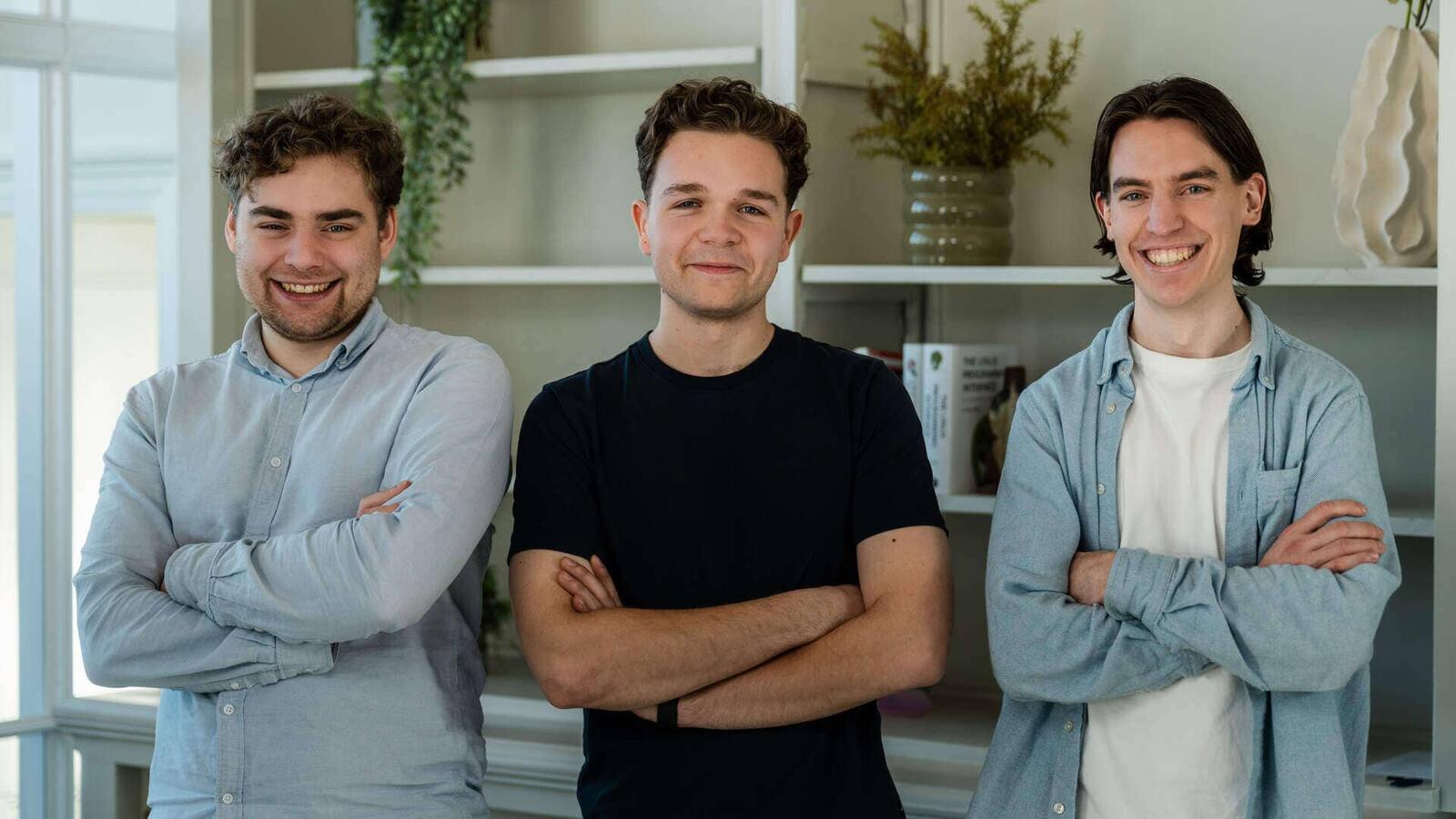
Reson8 was founded in Amsterdam by Raoul Ritter, Thomas Kluiters and Jarno Verhagen. Two of the founders previously built Juvoly, an AI medical transcription service that was sold to Tandem Health in early 2026. Reson8’s models are used in production for meeting notetakers, AI receptionists, customer support voice agents, medical transcription, compliance capture and captioning.
In March 2026, Reson8 raised €5 million in a pre-seed round led by Balderton Capital, with participation from NP-Hard Ventures.
“Speech is quickly becoming a default interface across software,” says James Wise, Partner at Balderton Capital.


