


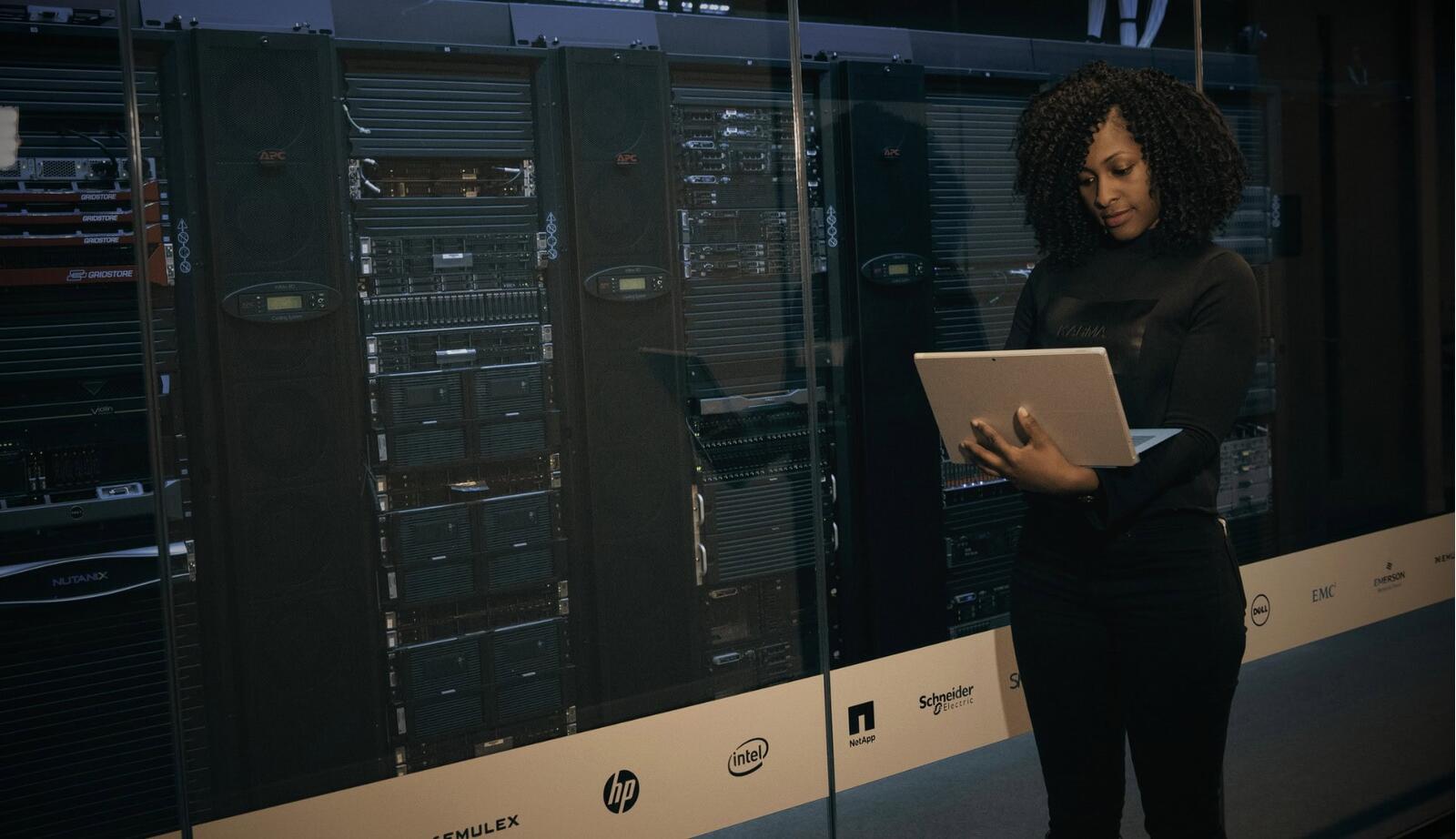
Women make up about 22% of the global cybersecurity workforce, a figure that grows even more threadbare the higher up the ladder you look. Just 16% of global CISOs are women, reflecting a slow increase of three percentage points in five years, while only 7% ever reach top-tier titles like CISO or CTO.
The UK picture is similarly bleak: women account for about 17% of the total talent pool and a meagre 12% of senior roles requiring six or more years under the belt. To top it off, female CISOs at private firms pocket only 83% of what their male peers earn while holding onto their jobs for 19 months less on average.
Safe to say, capability isn’t the challenge here. Women in security report higher adoption of AI and machine learning tools than men, 27% against 17%, placing them at the steering wheel of the tech that will dictate the next decade of defence.
Cybersecurity’s Gender Gap In Numbers
The exact percentages wobble depending on where you look and how you define the job, but the overall picture is the same everywhere.
Global figures suggest women account for 22% to 25% of cybersecurity roles, but if you filter for deep technical posts, the number drops off a cliff to about 12%. In the US, female representation hovers between 18% and 20%, and roughly 16% of security teams worldwide don’t employ any women at all.
The cybersecurity sector has been screaming out for talent for years, which means the industry isn’t only failing to build balanced teams, it’s locking itself out of a massive talent pool while facing a desperate skills shortage.
Those on the front lines don’t see fixing this as a purely ethical argument either. Given that women in security are leading the charge on AI and machine learning tools, fixing this imbalance has quickly become a critical security priority in its own right.
More from Tech
- Satellite Data Is Becoming A Business Tool – What Can Companies See From Space?
- Why FinOps Alone Cannot Control Modern Data Platform Costs
- How Technology Is Used To Engineer Faster Running Shoes
- Top Maritime, Ocean And Aquaculture Tech Startups In Norway To Watch In 2027
- One Crash, Millions At Stake: The Technology Behind F1’s Costliest Mistakes
- How Can Antivirus Software Guard Against Identity Theft?
- 8 Everyday Tech Inventions Originally Designed For Disabled People
- What Is Multisensory Learning, And How Is Edtech Using It?
The Top Women In Cybersecurity In 2026
Here’s a look at the security founders and executives setting the pace in 2026. They’re tackling the hard problems in post-quantum cryptography, industrial security, offensive tactics, AI threat detection and human risk across the globe.
1. Galina Antova, Co-founder and CEO, Kai
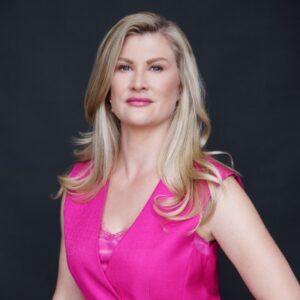
Antova co-founded Claroty, which pioneered cyber-physical security and has since raised $890 million, protecting hundreds of the world’s largest organisations.
She now leads Kai, an agentic AI platform rebuilding cybersecurity from first principles, which has raised $125 million. She’s a rare figure in a funding space where women-led cybersecurity startups are still the exception.
Industrial and cyber-physical defence deals with the gritty overlap between IT and operational technology. Instead of just protecting corporate email and office networks, it secures the software actually powering factories, power grids and vital public utilities. Kai’s focus on agentic security operations puts Antova on the front line of AI-driven defence.
2. Rebecca Krauthamer, CEO and Co-founder, QuSecure

Krauthamer co-founded and leads QuSecure, building post-quantum cryptography and cryptographic-agility solutions for enterprises and critical infrastructure.
A Forbes 30 Under 30 honouree and member of the World Economic Forum’s Global Future Council, she previously went through the Techstars Starburst 2021 programme with QuSecure. Recent accolades include spots on both the inaugural Quantum Security 25 list and Inc.’s 2026 Female Founders 500.
Quantum computing poses a threat to standard encryption algorithms, turning post-quantum cryptography into a high-stakes race to update defences before models go live. Female security professionals consistently report higher engagement with AI and machine learning than men do, and Krauthamer’s push into quantum-resilient systems places her right at the forefront.
3. Sofia Scozzari, CEO and Founder, Hackmanac

Scozzari has 18 years of cybersecurity experience and more than 30 in ICT. Since 2017 she’s been based in Dubai, where she founded and leads Hackmanac, a strategic threat intelligence company operating the HackRisk.io platform.
A board member at Clusit, Italy’s flagship information security body, and Women For Security, she was named to Cyble’s Top 100 Women in Cybersecurity as well as The Cyber Express’s 2026 Top 50 list.
Threat intelligence is all about mapping active cyberattacks so organisations can shore up their defences before a hit occurs, an area where female representation is notoriously thin. Scozzari has spent over a decade co-authoring the annual Rapporto Clusit, sifting through thousands of cyber incidents each year to give Hackmanac a research foundation most competitors just can’t match.
4. Jane Teh, Founder and CEO, VortiQ[x]
![4. Jane Teh, Founder and CEO, VortiQ[x]](https://techround.co.uk/wp-content/uploads/2026/09/jane.jpeg)
Teh founded VortiQ[x] from Kuala Lumpur, bringing more than 20 years of experience advising major verticals on cybersecurity, risk management and technology transformation across Southeast Asia.
Her track record includes stints as an independent interim CISO across finance, advisory and startup spaces, paired with regular judging roles for regional capture-the-flag events, bug hunts and hackathons. Recent accolades include a placement on The Cyber Express’s 2026 Top 50 Women in Cybersecurity list.
Defensive cybersecurity is undergoing a huge move toward AI-native SOCs, stepping away from human-paced threat hunting in favour of platforms that parse and contain incidents in real time. Teh’s work is right at the centre of that migration, bringing critical coverage to a Southeast Asian tech sector that often gets overlooked.
5. Dr Priyanka Sunder, Founder, PurposePulse Global Collective
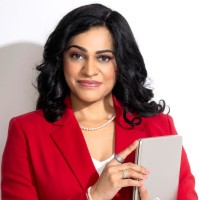
Sunder brings 20 years of experience across Big 4 IT advisory, technology risk management and cloud security, having delivered cyber resilience work across multiple continents including India, the US, UK, Singapore, France and Japan.
She has strengthened information security for eight Fortune 500 companies and audited more than ten global firms. She was named to the Top 50 Women Leaders in Cybersecurity list by Cyble and The Cyber Express in 2026.
She’s now building PurposePulse Global Collective, a training venture aimed at developing what she calls Cyber Conscious Leaders, professionals who are purpose-driven and cyber-aware while grounding that awareness in broader personal wellness. The human side of security, covering phishing vulnerability, behavioural habits and governance, holds huge weight, but it consistently plays second fiddle to flashy technical tools. Sunder’s pivot toward a wellness-integrated approach to cyber awareness pushes that human-risk discipline further still, treating it as inseparable from how people function more broadly rather than a standalone compliance box to tick.
6. Confidence Staveley, Founder, Dextily, and Founder, CyberSafe Foundation
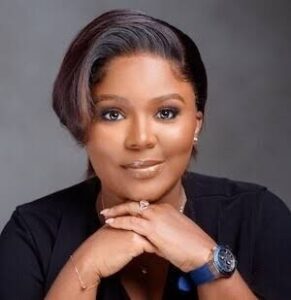
Staveley has spent 15 years in cybersecurity and now runs Dextily, an AI governance advisory helping organisations achieve ISO 42001 readiness and build controls for the EU AI Act and agentic AI systems.
She also founded the CyberSafe Foundation, her non-profit focused on cybersecurity and AI education access across Africa, and serves as editor-in-chief of AI Cyber Magazine.
Africa’s security talent ecosystem is quickly gaining momentum, but chronic under-resourcing forces foundational groups like the CyberSafe Foundation to play a critical role in filling the breach. Staveley’s expansion into AI governance reflects a major industry trend, transitioning from standard cyber protection to the heavy-duty compliance infrastructure AI requires.
7. Ashley M. Rose, CEO and Founder, Living Security
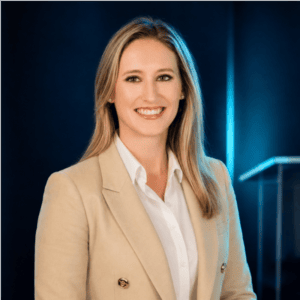
Rose founded Living Security in 2017 and has raised more than $25 million to build the company into a Forrester Wave Leader and INC 5000 company, recognised as the top global leader in cybersecurity human risk management.
She speaks regularly at industry forums including EWF and Security ISACs, and contributes thought leadership to outlets including Forbes.
Technology alone doesn’t stop most breaches. Human error is still one of the most common root causes of security incidents, and Rose’s work treats security culture as something that can be intentionally built and measured, rather than left to an annual compliance training video nobody remembers.
8. Harriet Farlow, CEO and Founder, Mileva Security Labs
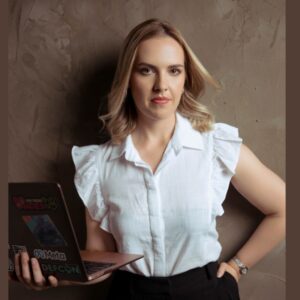
Farlow holds a PhD in AI security and founded Mileva Security Labs, Australia’s first AI security company, though she’s now based in Manchester, England.
She’s a DEFCON speaker and author of Practical AI Security, published by No Starch Press, and has described the work of securing AI systems as having “no template, no playbook” to follow.
Frontier security work is all about confronting emerging risks long before the industry has figured out how to label or patch them, making it look much more like exploratory research than standard tech build-out. Farlow’s work at that point positions Mileva as one of the most uniquely innovative people in this space.
9. Olga Mamlyga, CEO and Co-founder, Quantum Scouts
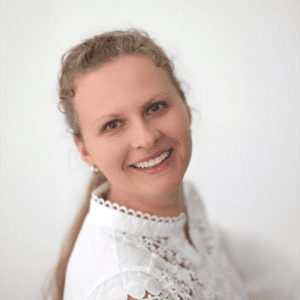
Mamlyga co-founded and leads Quantum Scouts, a Denmark-based company working on quantum-secure networking, post-quantum cryptography and hybrid quantum-AI risk, built around what the company calls its True Quantum Network.
She also co-founded IT-AI Solutions, and is expanding the business into blockchain and crypto, applying quantum-enhanced security to digital finance.
Quantum-resilient networking operates at the connective layer between core systems and broader operational networks. With quantum computing creeping closer to practical application, Mamlyga’s team connects complex deep-tech research and pragmatic risk planning for organisations that need to future-proof their operations today.
10. Celia Mantshiyane, Group Chief Information Security Officer, FirstRand
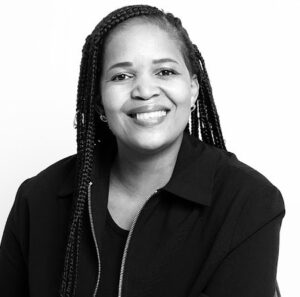
Mantshiyane serves as Group CISO at FirstRand, one of Africa’s largest financial groups, having previously transformed risk management into a strategic asset at MTN South Africa.
She’s been recognised as a Global Top 100 CISO, among the Top 50 Cybersecurity Women in Africa, one of the 45 Most Influential Women in Digital Transformation, and named to The Cyber Express’s 2026 Top 50 Women in Cybersecurity list.
Steering cybersecurity for a major bank is about as high-stakes as it gets, protecting the financial backbone of an entire region. Only about 16% of global CISOs are women, making Mantshiyane’s role at one of Africa’s biggest financial institutions a standout example of senior representation that’s hard to come by, particularly outside the US and Europe.


