


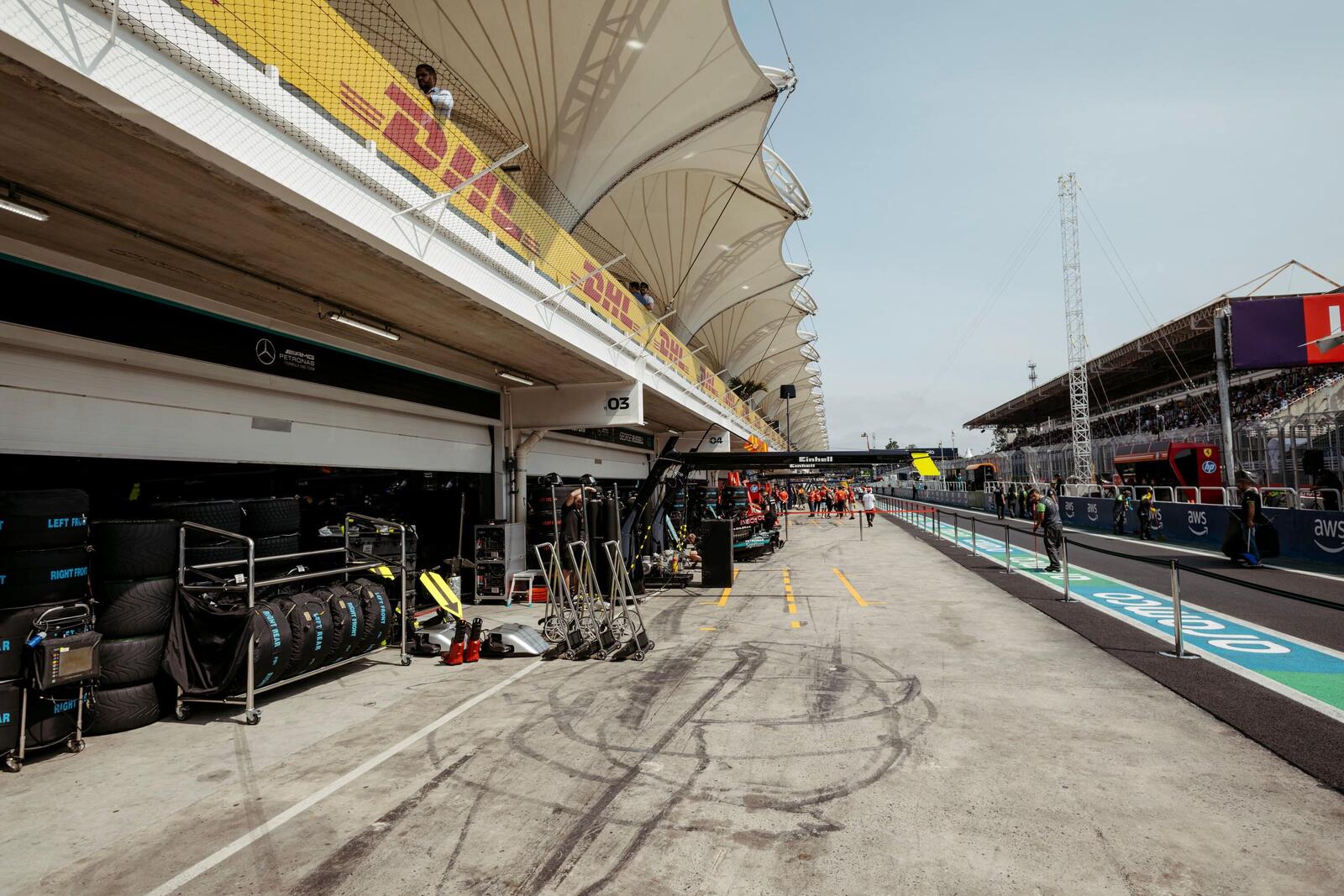
For a while, I had a crazy habit of looking through F1 job listings whenever I came across them. I’d end up going down a rabbit hole of team websites, career pages and articles about people who worked in the sport, trying to figure out how you actually get from a normal degree and a normal CV to working in Formula 1.
What I found was that there are far more routes into the sport than you might expect. An F1 team needs engineers and mechanics, but it also needs people working in marketing, software, data, logistics, communications, partnerships and media. So if you’ve ever wanted to work in F1 but assumed you needed to design a front wing or drive the car, there are loads of other ways you could find yourself working in the sport.
What Does It Take To Work In Formula 1?
There isn’t one single qualification or career path that gets you through the paddock gates, which is great if your CV doesn’t currently include “aerodynamics” anywhere on it. Some roles genuinely do need highly specialised technical education – so you’re probably not going to become a race engineer without an engineering degree and a love for data, but there are plenty of other roles that rely on business, communications, IT, logistics.
F1 teams employ people both at the track on race weekends and behind the scenes throughout the rest of the year. So if you’re interested in the sport but don’t know your DRS from your ERS, that isn’t exactly the barrier you might assume it to be.
Where Could You Work In Formula 1?
The F1 industry is basically a bunch of smaller departments working together, but it’s important to know what those areas look like before getting into a specific job.
There’s the technical and engineering teams designing and developing the car, and the race and trackside operations staff who keep everything running on a Sunday afternoon. Alongside are the business and commercial teams handling sponsorship deals and revenue, plus the media, marketing and communications staff shaping how the team is seen by everyone watching at home (shoutout to Lando Norris’s PR team working over time after this weekend in Madrid).
Then there’s everything keeping the whole operation moving: the logistics and support functions that get people, cars and equipment from one side of the world to the other in a matter of days.
More from Tech
- Why Are Apps Adding Social Features To Increase User Engagement?
- Why Is The UK Investing £30M In Scottish Space Hardware? Decoding The Sovereign Orbit Strategy
- The Marketing Power Of Waiting: How Tech Companies Turn Anticipation Into Hype
- How Dependent Is Britain On Foreign Technology?
- Why Technology Could Define The Next Phase Of UAE-Germany Relations
- Inside The Cockpit: What Technology Do F1 Drivers Have To Control While Racing?
- How Technology Is Transforming The UK Eyewear Industry
- Women In Tech: Top 10 Women In Robotics In 2026
1. Aerodynamicist
An aerodynamicist spends their working life obsessing over how air moves around, over and under the car, because in F1 even small changes to airflow can have a serious effect on performance. Williams says its aerodynamicists work on areas including wings, floors and diffusers, using wind-tunnel testing, CFD and track data to find improvements to the car.
Their work is all about downforce, drag and the balance of the car; which probably makes aerodynamics one of the most technically demanding areas of F1. It’s a role that usually needs someone with a strong understanding of fluid dynamics, computer modelling and how small aerodynamic changes can affect the car.
2. Race Engineer
The race engineer is the voice you hear crackling over team radio, working directly with the driver throughout a race weekend to interpret data and decide how the car should be set up or adjusted. Formula 1 explains that race engineers focus specifically on their assigned car and driver, using information such as telemetry, GPS data, radio communications and weather conditions to help make decisions during a session.
It’s a job that blends engineering knowledge with the sort of calm communication skills you’d want from someone talking drivers through a strategy change at super high speeds. Get it right and you’re a hero; get it wrong and you’re the reason a driver is swearing on live television.
3. Strategy Engineer
Strategy engineers spend the race weekend buried in data on tyre choices, pit stop windows and every possible scenario that might unfold once lights out happens, then use modelling and analysis to help the team decide what to actually do when those scenarios play out in real time.
Formula 1’s own explanation of the pit wall gives Ferrari as an example, where the Head Of Strategy coordinates a strategy department in Maranello; where teams work on individual analysis for drivers and study the opposition. This can give you an idea of how much work happens away from the circuit before a strategy call ever even reaches the pit wall.
4. Software Engineer
F1 cars and the teams behind them run on software just as much as they run on fuel, so software engineers are increasingly central to how a team operates. Williams lists Software Engineering, Enterprise Systems and Data & AI within its Technology & Innovation division.
Depending on where you land up, you could end up working on vehicle systems, simulation tools, data processing pipelines or the internal technology that keeps the entire operation functioning.
It’s a genuinely solid route into the sport for anyone with a computer science or software background who assumed motorsport wasn’t really their world.
5. Data Analyst
Every race weekend generates crazy amounts of data; someone needs to turn that mountain of numbers into information the team can actually act on. Williams says a single lap can generate data covering everything from tyre pressure and brake temperature to aerodynamic load and driver inputs. That data can then be used to understand car performance, spot potential problems and help engineers make decisions during the race
Data analysts and data scientists might focus on performance, reliability, strategy or any number of other areas, depending on the team’s structure and priorities. It’s a role that highlights just how closely modern F1 is tied to data technology, to the point where a good analyst can have an impact without ever touching the car.
6. Mechanics
Mechanics and car build technicians are responsible for assembling and preparing the car, both at the factory and at the track. Their work can involve everything from fitting components and checking assemblies to making sure the car is ready to run safely between sessions.
F1 teams also need people working on manufacturing, assembly, quality checks, testing and validation before the car even reaches the track. Mechanics working trackside also need to be able to work quickly between sessions when changes and repairs are needed. For someone who prefers practical work to spending all day behind a computer, this can be a more natural route into motorsport.
7. Logistics
F1 has an entire logistics operation happening behind the scenes, and it isn’t handled entirely by the teams themselves. DHL has been Formula 1’s Official Logistics Partner since 2004, working with F1 and the teams to transport everything from cars and engines to tyres, spare parts and broadcast equipment around the world.
That creates career opportunities outside the teams themselves, with specialist logistics companies employing people to plan shipments, coordinate freight and deal with the practicalities of getting thousands of items between races. With the 2026 calendar having 23 races, getting everything where it needs to be (and on time) – really takes a serious amount of planning.
8. Marketing
Marketing and partnerships teams handle sponsorships, campaigns, fan engagement and the really important job of keeping brand relationships happy. Formula 1 describes its commercial department as covering sponsorship, marketing, media rights and hospitality, while Williams includes marketing within its business services team.
This usually means working directly with some of the world’s largest companies and finding ways to turn a sponsorship into something fans actually see and interact with.
9. PR And Communications
PR and communications staff manage media relations, team announcements, interviews and the general flow of information between a team and the outside world. It’s a role that involves working closely with drivers, journalists and the public across social platforms, all while trying to keep everyone roughly on the same page.
Between traditional press work and digital communications, there’s a lot more to this job than issuing a statement whenever a driver says something they probably shouldn’t have on camera.
10. Media
Someone has to produce and deliver F1 content to millions of viewers around the world, and that’s where broadcast and media roles come in. These can cover production, camera work, editing, digital content and the broadcast technology that gets pictures from a circuit onto a screen in your living room.
It’s quite a solid route for anyone drawn to F1 through its storytelling and spectacle rather than its engineering, and there’s a lot of that storytelling to go around these days.
Finding Your Place In F1
Working in F1 doesn’t have to mean designing the car or sitting behind a steering wheel. Teams need people across engineering, technology, business, media, logistics and plenty other areas.
So if you’ve ever looked at an F1 job and thought your degree or experience wouldn’t get you anywhere near the paddock – you should maybe look a little closer at what’s actually out there.


