


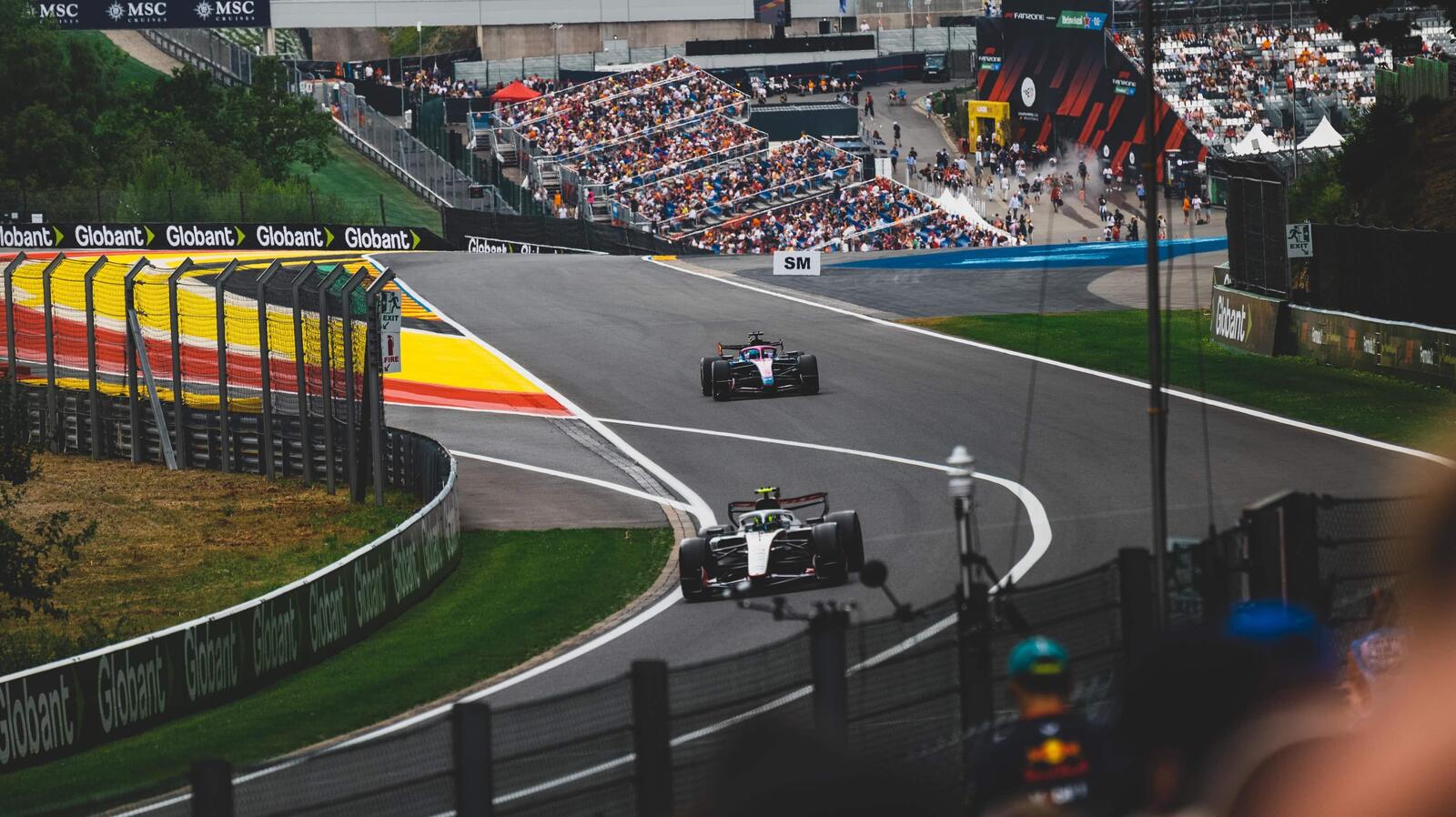
Madrid’s new Madring circuit had its final layer of asphalt down by the end of May and was ready to welcome Formula 1 cars just a few months later. Getting it ready for an actual Grand Prix, however, involves a whole lot more than the track itself.
Somebody has to install the medical centre, the race control tower, the cabling, the power and the garages, and they have to do it for a sport that only visits for a long weekend and is famously known to be fussy about how it’s welcomed. Asphalt on its own can’t time a lap, warn a driver about a crash or get the race onto your telly.
So, what does a track actually need in place before it can take its spot on the F1 calendar?
Getting A New Circuit Ready For F1
The starting point is an FIA Grade 1 circuit licence – the FIA’s approval process covers everything from the track layout and safety barriers to race control, timing rooms, garages, medical facilities and surveillance. Once construction is complete, an FIA inspector carries out a detailed safety check before the licence can be issued.
Circuit plans include the positioning of safety systems, timing facilities, medical infrastructure and surveillance equipment, so a new venue has to be designed as a working race facility instead of just adding everything once the track is finished.
Existing and new venues can face different challenges too. Permanent circuits already have most of their infrastructure in place, while street circuits have to transform roads that spend most of the year doing something else. Madring, for example, sits somewhere between the two, with its 2026 circuit built around the IFEMA Madrid exhibition complex and a mix of permanent and temporary infrastructure.
The Tech Behind A Modern Grand Prix
Once the circuit itself has been designed and approved, the infrastructure needed to run the race has to come together. F1 basically turns each venue into a temporary technology operation, with systems for timing, communications, broadcasting, data and race control all working at once.
More from Tech
- Women In Tech: Top 10 Women In Legaltech In 2026
- The Technology Bringing The Virtual World Closer To Reality
- How Technology Has Transformed F1 Cars Through The Decades
- Laifen Cuts Prices Of Swift Special And Neo Hair Dryers For This Shopping Season
- Antivirus vs The Smart Home: Can It Protect IoT Devices?
- Building It Twice: How Digital Twins Are Changing Construction And Management
- What Role Does Tech Play In Solving Criminal Investigations?
- How Does The FIA Police Race Technology To Keep F1 Competition Fair?
1. The Track
The FIA’s circuit requirements cover how the track is laid out and how the different areas of the venue connect, including the pit lane, paddock, garages, race control and spectator areas. These plans also have to account for how teams, officials and emergency services will move around the circuit during a race weekend.
The track is more than a strip of asphalt with a few corners thrown in for dramatic effect; its shape affects where cars can safely slow down, where barriers need to go and how emergency crews can reach an incident.
2. Safety Technology
F1 circuits use tested safety barriers, debris fencing, energy-absorbing systems and trackside signaling to protect drivers, marshals and spectators. The FIA’s requirements also cover medical facilities, emergency access, firefighting equipment and intervention vehicles.
Trackside light panels can give drivers warnings without relying solely on physical flags, while surveillance cameras help officials see what is happening around the circuit. The medical centre, ambulances and helicopter facilities also have to be planned into the circuit’s infrastructure.
3. Timing and Race Control
Electronic timing loops are installed around the circuit to identify cars and record when they pass each point, with transponders allowing the system to match the data to individual cars. The FIA also has specific guidelines for circuit timing systems, while race control brings together the information officials need to manage the session.
The race-control operation needs reliable communications with marshals and officials around the track too. If a car stops, debris lands on the racing line or conditions suddenly change, the information has to reach the people making decisions quickly.
4. Data and Connectivity
Modern F1 produces a crazy amount of data, so a new circuit needs somewhere for all of it to go.
Cars send information back to their teams during sessions, while the rest of the circuit network carries data between garages, race control, broadcasters and other parts of the operation. That means reliable fibre and communications infrastructure need to be planned alongside the physical circuit.
There’s a huge amount of infrastructure behind that data, with F1’s Event Technical Centre alone, using 750 pieces of equipment and 58 kilometres of fibre optic cable across 375 square metres, according to TechFinitive.
So yeah, there’s technically a very good reason for F1 to care about its internet connection. “Sorry, the Wi-Fi’s down” would be quite an embarrassing explanation for why the timing screens have stopped working.
5. Broadcasting and Media
The race also has to make it from the circuit to millions of screens around the world.
F1’s broadcast operation uses cameras positioned around the circuit and on the cars, with footage and audio sent from the venue to its production operation in Biggin Hill. Autosport reported that 90 onboard cameras are fitted across the 20-car grid, with up to 24 able to operate simultaneously.
That means a new venue needs the infrastructure to handle much more than the cars themselves. Camera positions, broadcast connectivity, data feeds, timing information and media facilities all have to be ready before the first lights go out.
6. Power and Digital Venue Systems
F1 has previously worked with Aggreko on centralised power systems supplying areas including the garages, motorhomes, Pit Wall, Timing Room, Event Technical Centre and international TV compound. Backup power is also important because a failure can’t just be allowed to take out critical race systems.
Modern venues need connectivity for teams, media and spectators, alongside digital ticketing, access control and other systems used to manage a large crowd.
For one weekend, an F1 circuit is also a temporary workplace, media centre and entertainment venue with thousands of people trying to use the same systems at once.
7. Paddock and Team Infrastructure
Garages need power, connectivity and space for the equipment used by engineers and mechanics, while the pit lane and paddock need their own communications and operational systems. Race control, the FIA, medical teams and F1’s technical operation also need dedicated facilities.
The paddock also has to support the people behind the cars, from engineers and mechanics to officials, broadcasters and other race personnel. That means the circuit needs enough connected workspace to keep all of these operations running side by side throughout the weekend.
The garages, race-control facilities, media areas and technical systems all have to be ready for the same three-day window, with very little room for something to go wrong.
More Than A Race Track
By the time the cars arrive, the circuit needs to be ready for teams, officials, broadcasters and thousands of spectators, all using the same venue in very different ways, with the power running, data moving and race control keeping track of what is happening around the circuit.
All of those systems have to come together around the track before a new venue can take its place on the F1 calendar – making the finished circuit the result of a lot more than the racing surface itself.


