


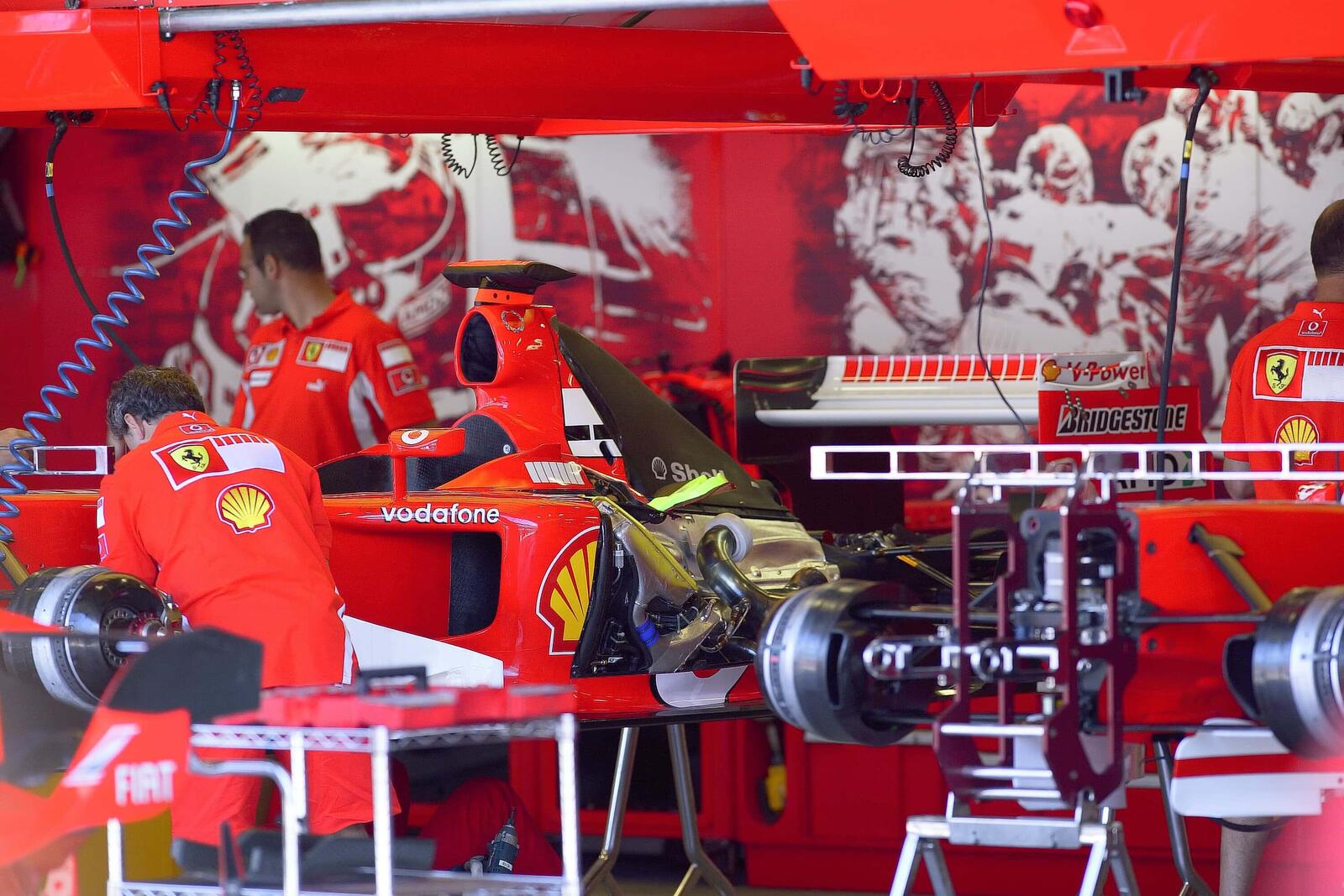
Every inch of an F1 car seems to have a price tag, and the value of a logo depends partly on how often a camera points at it. For a really long time, companies paid for branding that travelled around the world on the side of a racing car, hoping some of the glamour would rub off on their sales figures.
Technology companies now want something a sticker can’t offer: a working role inside the sport’s engineering and operations. F1 combines global exposure with demanding computing challenges and an audience of more than 800 million fans. A partnership can therefore become a product demonstration as well as an advertisement, stretching its value well past traditional sponsorship.
From Sticker Space To Server Rooms
Some deals are still mainly about visibility, but others put a sponsor’s products to work. Lenovo became an Official Partner of F1 in 2022 before being upgraded to Global Partner in 2025. It has helped transform the sport’s Media and Technology Centre at Biggin Hill, which now handles most race-weekend processing. In January 2026, F1 and Lenovo also introduced its Neptune liquid cooling technology at the facility, which Lenovo says can improve energy efficiency by up to 40%.
Mercedes signed a multi-year partnership with Microsoft in January 2026, bringing Azure cloud computing and enterprise AI into the team’s operations. The technology supports simulation workloads, performance analysis and race strategy modelling. Each Mercedes car carries more than 400 sensors, generating over 1.1 million data points per second, so there is certainly no shortage of information to process.
Intel joined McLaren in May 2026 as its Official Compute Partner. Its processors support computational fluid dynamics, aerodynamic analysis, vehicle-dynamics simulations and race strategy analytics. Intel CEO Lip-Bu Tan described F1 and IndyCar as “some of the ultimate proving grounds for high-performance computing”. Apparently, even computer chips enjoy a competitive environment.
More from Tech
- Women In Tech: Top 8 Women In Biotech In 2026
- Designed for Every Mind, Or Just the Average User? How Technology Is Rethinking Cognitive Accessibility
- Top Agtech Startups In Ireland To Watch In 2027
- The Convenience Paradox: Is Technology Giving Us Time Back?
- The Supersonic Comeback: Can Modern Aviation Solve Concorde’s Biggest Problems?
- Are We Taking Noise Cancellation Too Far? Why Open-Ear Audio Technology Offers An Alternative
- Apple’s First Foldable Is Cracking For Some Owners – What Does It Show About Launching New Hardware To Stay Competitive?
- Beyond Roblox: Are Digital Platforms Addressing Online Grooming?
Why A Chip Company Wants To Hang Around The Paddock
A technology company gets more than a logo and a few photographs beside a racing car. F1 provides a platform to demonstrate products in demanding environments, build relationships with potential customers and associate its brand with precision and performance.
There can be benefits beyond motorsport, too. Lenovo’s Neptune cooling technology, for example, is designed for high-performance computing environments where managing heat and energy consumption is essential. Its deployment at F1 gives the company a high-profile example of the technology working in a demanding broadcast and computing operation.
With Mercedes and Microsoft’s announcement putting F1’s global fanbase at more than 800 million, the sport also offers considerable brand exposure. That audience includes everyday fans, business decision-makers and potential customers, giving partnerships a commercial reach that extends beyond the circuit.
Racing Beyond The F1 Calendar
On 28 October 2026, the FIA announced AWS as its Official AI and Cloud Computing Partner. AWS already provides computing infrastructure for the aerodynamic simulations, which help engineers test airflow around future racing cars without having to build physical components. The new partnership will expand the use of AI and cloud technology across motorsport, from grassroots participation to F1.
Formula E shows another example through Fortescue Zero, its Official PIT BOOST partner. The system delivers a 10% energy increase through a 30-second, 600kW charging boost during selected races. Fortescue has also announced plans to enter the championship as a team for the 2026/27 season after acquiring the Penske Formula E operation.
The company says engineering developed through its motorsport involvement is being applied to heavy industry, including its mining operations. It’s an example of a racing partnership becoming part of a bigger technology and business strategy.
Meanwhile, Bosch has extended its Premium and Technical Partner agreements with the FIA World Endurance Championship and the 24 Hours of Le Mans through 2027. Its involvement demonstrates exactly how one company can combine technical participation with brand visibility across endurance racing.
Is The Gold Rush Worth The Digging?
Motorsport partnerships aren’t cheap. Major F1 sponsorship deals can involve investments worth millions, depending on the team, level of involvement and rights included. That is a substantial commitment, especially when brand exposure doesn’t automatically translate into sales.
Technical partnerships bring another level of responsibility as a company supplying computing infrastructure or engineering components needs to deliver products that work under demanding conditions. A logo can survive a disappointing race weekend, but a technology supplier has way more to prove.
Smaller businesses may find opportunities in specialist racing series, individual teams or supplier relationships instead of competing for expensive championship-level deals. These arrangements can offer a more focused way to demonstrate products and build industry connections.
The Value After The Chequered Flag
Motorsport gives technology businesses visibility, demanding environments in which to demonstrate their products and access to potential customers. As racing relies more now (than it did back in the days) on computing, data, AI and energy efficiency, the opportunities for collaboration continue to expand.
The companies that benefit most won’t really be those with the biggest logos – they’ll be the ones that can turn a racing partnership into something commercially useful long after the cars have been packed into their freight crates and sent off to the next Grand Prix.


