



An AI tool can now write a reply to a tricky email in about the time it takes the kettle to boil, which should leave a whole afternoon free for staring out of the window. Instead, the tea goes cold while three more emails arrive, each one politely assuming the first was answered in record time.
That’s the convenience paradox: making a task easier doesn’t always leave us with more free time, because every minute saved seems to make room for another task.
The Inbox Gets The First Slice
A saved hour has a lot in common with a £20 note found in an old coat. It feels like a gift for roughly as long as it takes to decide what to buy (easy, extra large iced-latte for me please), after which it’s gone and nobody quite remembers where (except I do). The inbox is often the first place that time disappears. Rich Pleeth, CEO and co-founder of Finmile, says, “I think convenience can quietly become a higher expectation.” When replies take seconds, people start expecting them in seconds too, so the time saved on writing each message gets swallowed by a longer queue of messages to answer.
Pleeth uses a delayed delivery as an example. An update for the customer can be generated in moments, but somebody still has to track down the parcel, agree on the next step and check that it happened. As he puts it, “Saving time on the message is useful; finishing the job is what gives the team breathing room.”
Engineering teams face a similar problem on a bigger scale. Nicolas Sartor, Staff Software Engineer at InStride, explains that “A software engineering task that previously took several hours can be automated to take less than 20 minutes.” Finishing early doesn’t necessarily mean an early finish, because, as Sartor puts it, “Work doesn’t get shorter.” Teams can instead be expected to add more features, take on extra projects or work at a higher velocity. He argues that if a company only benefits from productivity software when output increases, employees never get the chance to work less.
More from Tech
- The Supersonic Comeback: Can Modern Aviation Solve Concorde’s Biggest Problems?
- Are We Taking Noise Cancellation Too Far? Why Open-Ear Audio Technology Offers An Alternative
- Apple’s First Foldable Is Cracking For Some Owners – What Does It Show About Launching New Hardware To Stay Competitive?
- Beyond Roblox: Are Digital Platforms Addressing Online Grooming?
- Satellite Data Is Becoming A Business Tool – What Can Companies See From Space?
- Why FinOps Alone Cannot Control Modern Data Platform Costs
- How Technology Is Used To Engineer Faster Running Shoes
- Teach Anything Visually: Build Explainer Clips With Text-to-Video
Founders Look At A Free Hour And See A Launch
For founders, a spare hour can look quite like the beginning of another project. With AI making it easier to handle more tasks with fewer people, there’s always another idea to pursue.
Rhett Ullmann, founder of Ullmann Miami, runs an agency where each AI agent handles a specific job, from press applications to deal outreach. The hours saved went into new deals and launches. “Convenience didn’t hand me free time. It handed me more work, and I took it.” His advice for anyone in the same position is simple: “Decide what they’re for, or your inbox decides for you.”
Anastasia Lander, co-founder of Landerlander, is bootstrapping a startup and handing as many processes as possible to AI while using vibe coding to develop Heroika, her B2B product. The help is immense, she says, but it raises expectations of what one person or a small team can deliver. “I do have bouts of burnout and sometimes feel I’ve worked all day but haven’t achieved much.” She’s deliberately trying to protect the time she saves rather than automatically giving it to another task: “It’s very tempting to dedicate saved time to the next task, but I deliberately try to protect it as free time.”
Alan Henderson, founder of Dilemma Esports & Entertainment, started his company at 17 and says he grew it to more than 122 000 followers and 23 million digital experiences without a budget. Better tools made distribution easier, but they came with a trade-off. “Every tool that made distribution easier did not shrink my workload; it expanded what a tiny team was expected to produce, in more places, faster.”
His response was to decide what not to publish and what not to chase. Ullmann chose to put his saved hours into new opportunities, Lander describes the toll that extra expectations can take and Henderson saw how quickly a small team’s workload could expand. The tools gave them more capacity, but that didn’t automatically mean more room to breathe.
Is Being Busy Even The Problem?
Dipesh Patel, a licensed psychotherapist and certified financial therapist, takes a more nuanced view. Some people use the time they save on other areas of their lives, while others put it towards work. What matters to Patel is whether people feel they’re gaining more control over their time. “Either way, the important thing to notice here is if it’s leading to a greater sense of agency,” he says.
Patel compares the convenience paradox with lifestyle creep, where someone earns more money but feels compelled to keep upgrading their standard of living. As he explains, “The convenience paradox is really just another cognitive distortion, just like lifestyle creep where an individual is making more money but feels like they have to keep upgrading their standard of living.”
A pay rise can quickly become the new normal, just as a faster workday can leave you with even more to get through. Building a business or getting more done isn’t the problem; it’s when taking on more stops being a choice.
Busy On Purpose Versus Busy Because Everyone Expects It
Mark Khoury, founder and CEO of PrepSavvy, offers a different perspective. He points to Elon Musk’s suggestion that AI could make work optional, with people growing vegetables in their backyards, alongside Pieter Levels, who runs several internet ventures using automated systems while choosing where he lives and setting his own schedule.
Khoury is pursuing a similar idea with his AI test-prep platform. He wants to build a business that keeps him busy while giving him more freedom than traditional employment could offer. As he explains, “That’s the paradigm that I’m pursuing with PrepSavvy: a venture that keeps me busy full-time, building systems of automation that create compounding value, but with the goal to give me more freedom than traditional employment could ever achieve.”
Sylvain Piquet, co-founder and general manager of Five Lives, raises a different concern: what happens when people have no clear intention for the time they’ve saved? “Technology is meant to save us time, but what do we actually do with that time?” he asks.
Piquet worries that people fill their newly available time almost immediately, leaving little room to relax without work, gadgets or distractions. He describes this as “a major problem for our overall well-being” and explains that the more we rely on technology to manage our lives, the easier it becomes to treat every spare minute as an opportunity to take on more work.
His perspective also shows that technology can serve a different purpose. Five Lives develops mobile apps for brain health, including support for people experiencing memory difficulties. Its work aims to help people maintain their autonomy and independence while supporting their loved ones. Rather than using technology to squeeze another task into the day, the goal is to improve quality of life and give families more time together.
Who Gets To Spend The Fifty Minutes Left Over?
A task that takes ten minutes instead of an hour is a proper improvement. But if those fifty minutes immediately become another meeting, another deadline or another project, the only thing that’s changed is how much work fits into the day.
Some of these experts are happy to use that time to build something bigger – others are trying to stop work from swallowing every available hour. Neither approach needs to look the same and perhaps that’s the point.
Our Experts:
- Rich Pleeth: CEO and co-founder of Finmile
- Nicolas Sartor: Staff Software Engineer at InStride
- Rhett Ullmann: Founder of Ullmann Miami
- Anastasia Lander: Co-founder of Landerlander
- Alan Henderson: Founder of Dilemma Esports & Entertainment
- Dipesh Patel: Licensed psychotherapist and certified financial therapist
- Mark Khoury: Founder and CEO of PrepSavvy
- Sylvain Piquet: Co-founder and general manager of Five Lives
Rhett Ullmann, Founder of Ullmann Miami

“Convenience didn’t hand me free time. It handed me more work, and I took it. My agency runs on AI agents, and each one owns a single job, from press applications to deal outreach. The hours they saved went into new deals and launches.”
“That’s the paradox for founders. When tech cuts the cost of starting something, you start more things. I spend my days on the calls and sign-offs that need me. The trap is thinking the saved hours will sit there waiting. They won’t. Decide what they’re for, or your inbox decides for you.”
Sylvain Piquet, Co-Founder and General Manager of Five Lives

“Technology is meant to save us time, but what do we actually do with that time?”
“I see this as a major problem for our overall well-being. Constant efficiency can lead to 24/7 background busyness becoming the norm, leaving us with no time to relax without gadgets and distractions.”
“The more we rely on technology to manage our lives, the easier it becomes to treat every spare minute as an opportunity to get something done and take on an extra workload.”
“And yet technology can be used for the greater good, it can be used to boost people’s confidence, energy, alertness and ultimately get them back in control.”
Anastasia Lander, Co-Founder of Landerlander

“The convenience paradox is that every task made quicker can become a reason to fit more into the day. I see this in my own work: as a small business cofounder who’s bootstrapping a startup, I’m handing hand as many processes as possible to AI, and I’m using vibe coding to develop Heroika, our own B2B product. That does provide immense help but also raises expectations about what one person or a small team can deliver.”
“I do have bouts of burnout and sometimes feel I’ve worked all day but haven’t achieved much. So careful planning and utmost attention to what exactly we’re trying to optimise and why is paramount. It’s very tempting to dedicate saved time to the next task, but I deliberately try to protect it as free time.”
Alan Henderson, Founder of Dilemma Esports & Entertainment
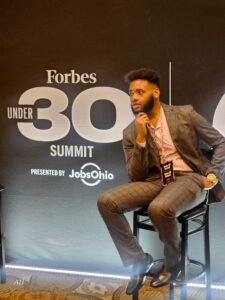
“I founded Dilemma Esports & Entertainment at 17 and built it to 122,000+ followers and 23M+ digital experiences with no budget. Every tool that made distribution easier did not shrink my workload; it expanded what a tiny team was expected to produce, in more places, faster. Convenience removed friction, then filled the gap with more output.”
“That is the paradox founders live with: easier tools do not create free time unless you protect it on purpose. We had to decide what not to publish, what not to chase, and when a system – not another app – would do the work.”
Dipesh Patel, Licensed Psychotherapist and Certified Financial Therapist

“People can go either way with the convenience factor, for some people they might use more free time on the other areas of their lives and for others they might allocate more towards their work. Either way, the important thing to notice here is if it’s leading to a greater sense of agency. If it’s not, then re-evaluating how your time is being spent can absolutely be helpful.”
“The convenience paradox is really just another cognitive distortion, just like lifestyle creep where an individual is making more money but feels like they have to keep upgrading their standard of living.”
“However, I will say that many times people might realise that they are engaging in activities that are taking up too much of their time that they can use in other ways. It’s one of the reasons why social media has popularised many ‘hacks’ that can help with day to day life.”
Mark Khoury, Founder and CEO of PrepSavvy

“I’m Mark Khoury, a data scientist and solo founder of PrepSavvy AI, an AI test-prep platform, and former co-founding member and Chief Analytics Officer at Fresha. Years working with behavioural data have given me a deep interest in how technology changes work.”
“Does convenience give us time back? Elon Musk says AI will make work optional, like growing vegetables in your back garden. Pieter Levels offers another possibility. He manages several internet ventures because automated systems do much of the work. He’s busy, but lives in countries he likes, sets his own schedule, and has plenty of time for his health.”
“That’s the paradigm that I’m pursuing with PrepSavvy: a venture that keeps me busy full-time, building systems of automation that create compounding value, but with the goal to give me more freedom than traditional employment could ever achieve.”
Rich Pleeth, CEO and Co-Founder of Finmile

“I think convenience can quietly become a higher expectation. If replying takes seconds, people start expecting replies in seconds, and the time saved disappears into a bigger inbox.”
“Take a delayed delivery. Generating an update faster helps, but someone may still need to find the parcel, agree the next step and check it happened. Saving time on the message is useful; finishing the job is what gives the team breathing room.”
“As a founder, I’d want to know where the saved time goes. If every improvement immediately becomes another target, people can end up doing more while feeling no less busy. Keeping some space for thinking, unexpected problems or simply finishing on time takes a deliberate management decision. The software won’t make it for us.”
Nicolas Sartor, Staff Software Engineer at InStride

“It is a misconception that using productivity technology would allow people to work faster and give them more free time. Productivity software does simplify tasks, but expectations increase. A software engineering task that previously took several hours can be automated to take less than 20 minutes.”
“Work doesn’t get shorter. A task that previously take hours may end up requiring only minutes, and people may expect a team to add more features to a project, take on additional projects, or work at a higher velocity.”
“The problem lies in a company’s benefits realisation strategy. If a company only realises benefits when work increases, then employees can never work less, and the purpose of productivity software is defeated.”
“Productivity shouldn’t be solely measured by the amount of work completed. Productivity should be measured by the amount of time employees spend doing work that requires negative interactions, like constant interruptions.”


