


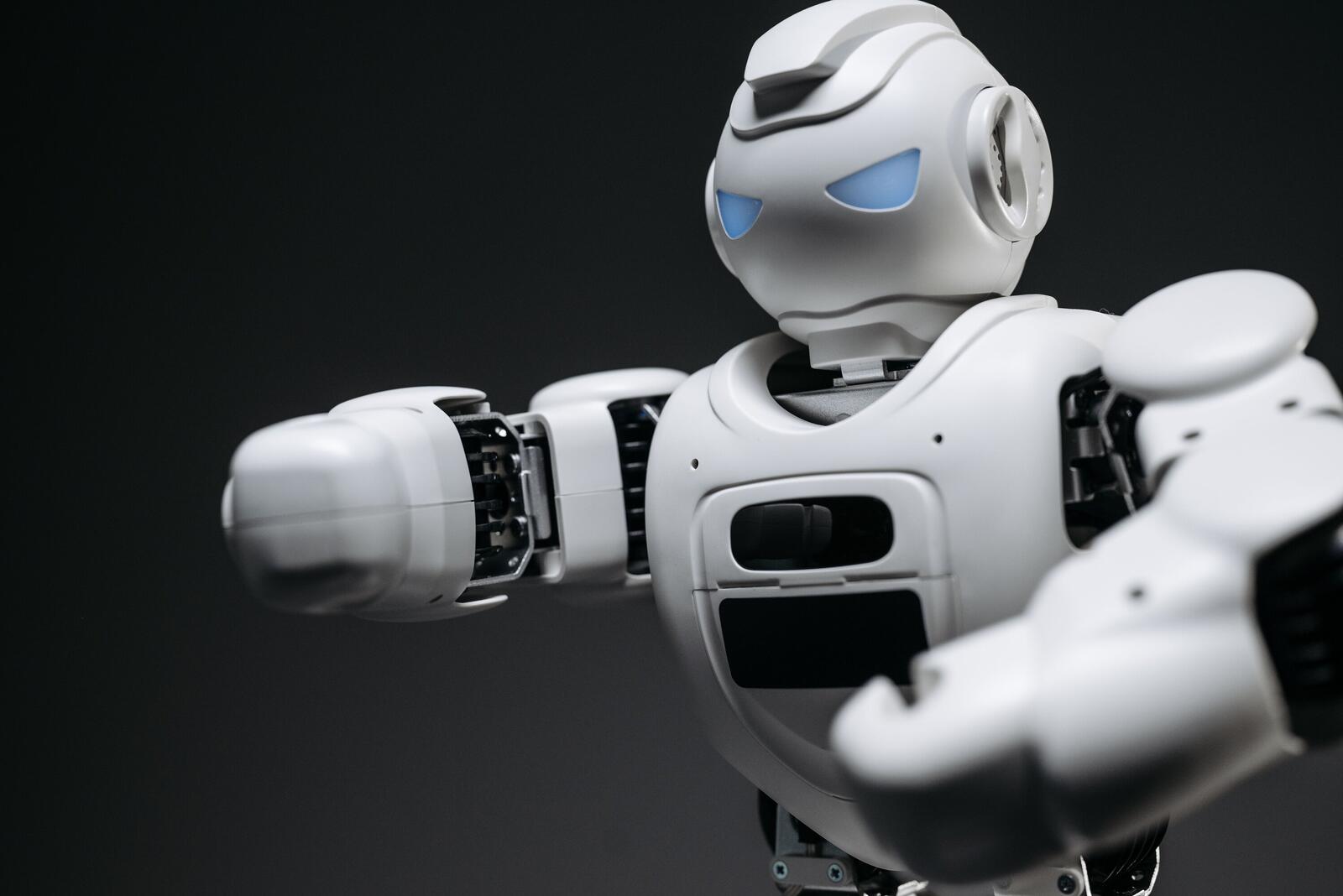
A chatbot can write a sonnet about a boiled egg in seconds, but it probably can’t pick one up without cracking it. That gap between understanding information and interacting with the physical world is what embodied AI is trying to close. Instead of simply generating text or images, these systems use cameras, sensors and AI models to understand their surroundings and carry out physical tasks.
China has become a major centre for this area of robotics, with startups developing everything from tactile sensors and robotic hands to humanoids and the software that controls them. Some are already testing their machines in factories, pharmacies and other workplaces, while others are focused on improving the technology that could make robots more capable.
China’s Robotics Industry
China has the world’s largest installed base of industrial robots, according to a report published by the Mercator Institute for China Studies (MERICS) in April 2026. Its established manufacturing and electric vehicle supply chains also give robotics companies access to components, production facilities and engineering expertise.
That doesn’t mean the technology is ready to take over every workplace. Many humanoid robots are still being tested in controlled environments or developed for specific tasks. Precision, dexterity, reliability and cost remain major challenges, especially when machines have to deal with unfamiliar objects or surroundings.
What Is Embodied AI?
Embodied AI gives artificial intelligence a physical form. A robot uses sensors and AI models to interpret its surroundings, understand instructions and decide how to move or interact with objects.
One approach is a vision-language-action (VLA) model which connects what a robot sees with the instructions it receives and the actions it needs to perform. Picking up a cup, for
example, requires more than recognising it. The robot needs to judge where to grip it, how much pressure to apply and how to move it without dropping it.
More from Startups
- Founder Of The Week: Alex de Vigan
- Startup of the Week: Jiva.ai
- Top Deep Tech Startups In Singapore To Watch In 2027
- Could Currency Volatility Change Where UK Startups Choose To Expand?
- Yale University: Successful Alumni That Founded Startups
- Why Denmark Is Becoming A Hotspot For Entrepreneurs
- Founder Of The Year 2026: Vote For Your Favourite Founder!
- Startup Of The Year 2026: Vote For Your Favourite Startup!
1. PaXini
PaXini develops robotic hands and humanoid systems designed to give robots a more capable sense of touch. One of its products, the DexH13, combines tactile sensing with an onboard AI camera, allowing it to identify objects and respond to physical contact while handling them. The hand has four fingers, 16 degrees of freedom and 1 140 tactile sensing units, alongside an 8MP camera.
PaXini’s work is aimed at improving the precision of robotic manipulation, especially in tasks where robots need to handle objects rather than simply move around an environment.
2. AgiBot
Founded in Shanghai in 2023, AgiBot has quickly become one of China’s more prominent embodied AI companies, developing humanoid robots and other robotic systems for industrial and commercial settings.
In June 2026, the company announced that its 15 000th robot had rolled off the production line. AgiBot has also reported deployments in manufacturing, including a factory trial in which its robots carried out quality-inspection tasks on a tablet production line.
3. Galbot
Galbot is developing robots designed to carry out practical tasks in commercial environments, including retail and healthcare. One of its notable deployments has been a robotic pharmacy assistant in Beijing, where the system can receive orders, sort medicines, package items, restock shelves and check inventory.
The pharmacy can stock up to 5 000 pharmaceutical products. Chen Jiang, General Manager of Beijing Nepstar Chainstore Co., Ltd., said the robot can process up to 370 orders a day at peak and could reduce labour input per store by more than 50%.
4. Galaxea
Galaxea is working on mobile robots that can move through everyday environments and carry out tasks using two robotic arms. Its R1 Lite platform was used to collect the company’s Open-World Dataset, which includes demonstrations gathered across 11 physical locations, including homes, offices, retail spaces and catering environments.
The company has also developed G0, a dual-system vision-language-action model that uses one system to interpret instructions and plan tasks, then another to carry out more precise movements.
5. LimX Dynamics
LimX Dynamics develops humanoid robots and multi-form robotic platforms for research, development and real-world applications. Its TRON 2 system can be configured with bipedal legs, wheeled-bipedal legs or dual arms, giving developers different ways to test mobility and manipulation.
The company also makes Oli, a full-size humanoid designed for research and development, with programming tools and an SDK for developers. LimX’s work covers both the physical design of robots and the software that allows them to perceive, plan and act.
6. Spirit AI
Founded in Hangzhou in January 2024, Spirit AI focuses on developing the AI models that allow robots to understand instructions and act in the physical world.
Its Spirit-v1.5 model is a vision-language-action system, meaning it uses visual information and written instructions to generate actions for a robot to perform. The model ranked first on RoboChallenge’s Table30 benchmark in January 2026.
7. Noetix Robotics
Noetix Robotics was founded in Beijing in 2023 and develops humanoid robots for research, education and consumer-facing uses. Its smaller Bumi model attracted attention for its price, launching at less than 10 000 yuan and being marketed for family and educational use.
The company reported that more than 200 Bumi units were sold in the first three hours of presales, followed by 500 in the first two days.
8. DEEP Robotics
Founded in Hangzhou in 2017, DEEP Robotics specialises in quadruped robots designed to operate in environments that can be difficult or unsafe for people to inspect.
Its systems are used in areas such as power infrastructure, industrial facilities and tunnels, where robots can carry out inspections and gather information from hard-to-reach locations. The company has also deployed quadruped robots in underground tunnels during preparations for the 19th Asian Games, officially branded Hangzhou 2022 but held in 2023.
China’s Next Generation Of Robotics
China’s robotics startups are developing different parts of the technology, from tactile sensors and robotic bodies to the AI models that help machines understand instructions. Some are already testing their products in workplaces, while others are still building the foundations for more capable systems.
However, there are still practical challenges to overcome as robots still need to handle unfamiliar situations, repeat tasks reliably and operate safely without constant human supervision. Battery life, maintenance and manufacturing costs will also matter just as much as the impressive movements shown in demonstration videos.


