


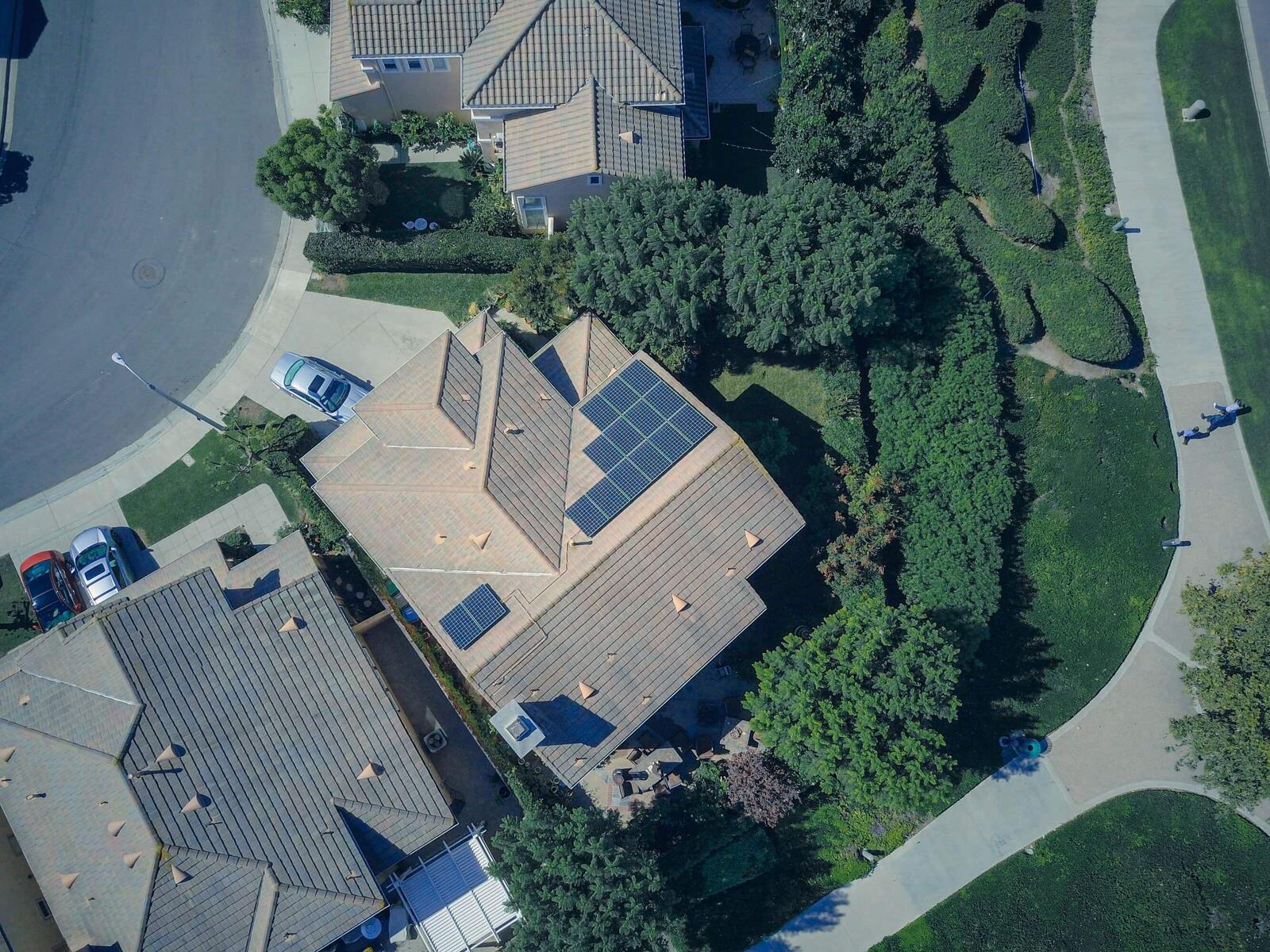
The house with the busiest roof on the street might be doing more than keeping the rain out. Its solar panels generate electricity during the day, a battery in the garage stores surplus energy and software decides whether that electricity should be saved for later or sent back to the grid.
The building is becoming less of an electricity customer and more of a small energy company, complete with a rooftop power plant, a storage vault and an energy manager. The technical term is “Prosumer”, describing a household that both produces and consumes electricity. The technology behind it ranges from solar panels and home batteries to electric cars and networks that can connect thousands of homes.
Giving The Roof A Job As The Power Plant
Solar panels use photovoltaic cells made from semiconductor materials to convert sunlight directly into electricity. When light strikes the cells, it creates an electrical current. This comes out as direct current (DC), which needs to be converted into alternating current (AC) before most household appliances and the electricity grid can use it.
That’s where an inverter comes in. According to the Whole Building Design Guide, DC-to-AC conversion efficiencies for photovoltaic inverters are typically at least 98%. The equipment also monitors the grid’s frequency and synchronises the electricity it produces with the wider network.
Electricity used directly from the panels is electricity the household doesn’t need to buy from its supplier. Where local regulations and utility arrangements allow it, surplus generation can also be exported to the grid.
There is one important limitation during power cuts. Standard grid-connected inverters automatically stop supplying electricity when the grid goes down, unless the installation has suitable backup and islanding capabilities to operate independently.
The roof isn’t just keeping the rain out any more; it’s generating something the household can actually use.
The Energy Vault: Banking Sunshine For Later
Solar panels generate electricity during daylight hours, but household demand doesn’t always follow the same schedule. A home might produce more electricity than it needs in the afternoon, only to start drawing heavily from the grid once everyone returns in the evening.
Home battery storage gives that surplus somewhere to go. Many residential systems use lithium-ion batteries, with the American Public Power Association identifying 10 to 13.5 kWh as a typical base capacity range for residential systems. The amount of electricity available will depend on the battery’s usable capacity and what the household is running.
Stored electricity can be used after sunset or during a power cut, provided the system has suitable backup functionality. Batteries can also charge from the grid when electricity prices are lower and discharge when prices rise, where the household’s tariff and system controls make this possible.
Think of it as a savings account where the household banks spare electricity instead of money. Whether that investment pays off depends on installation costs, electricity tariffs and how much energy the home actually uses.
More from Tech
- When Banks Go Offline, What Happens To Your Money?
- AI Models Rarely Agree: What Does This Say About AI Accuracy?
- The Paradox Of Progress: Is Our Pursuit Of Technological Efficiency Making The World More Vulnerable?
- Pokémon Go Was Supposed To Help You Catch Pokémon – Now Its Data Is Helping Robots Navigate The World
- COP31 Wants Electricity To Power 35% Of Global Energy Use By 2035 – What Needs To Change
- Is F1 Going Backwards To Move Forwards? The Technology Behind Its Proposed V8 Return
- Your Next Building Could Store Electricity In Its Concrete
- How Technology Is Making Used Car Buying Safer
The House Gets An Energy Manager
With solar panels, a battery and perhaps an electric car all connected to the same property, something needs to coordinate when electricity is generated, stored and used. That’s the job of a Home Energy Management System (HEMS).
These systems monitor household electricity generation and consumption through connected devices, smart meters and sensors. They can then coordinate flexible appliances, schedule certain activities for periods of higher solar generation and manage when a battery charges or discharges.
Researchers at the US National Renewable Energy Laboratory have demonstrated systems that combine home batteries, solar inverters and connected appliances with automated energy management. Their research included scheduling appliances according to household preferences and electricity demand-response requirements.
That could mean a dishwasher running during the afternoon when rooftop solar is producing plenty of electricity, rather than drawing power during an expensive evening period.
Your Car Could Moonlight As A Power Bank
Charging an electric car at home can draw more power than any other individual household load, according to the International Energy Agency (IEA). But the same battery that makes an EV hungry for electricity could eventually help supply it.
Bidirectional charging allows electricity to travel back out of an electric vehicle’s battery. There are two relevant applications: vehicle-to-home (V2H), which sends electricity into a property, and vehicle-to-grid (V2G), which sends it into the wider electricity network.
With V2H, an electric car could provide backup electricity during an outage or supply stored energy to a household in the evening. V2G takes this further by allowing participating vehicles to support the grid.
An IEA report published in May 2026 examined research by RWTH Aachen University comparing the flexibility of electric vehicles, home battery storage and heat pumps in an average German household. Its findings showed that V2G-enabled vehicles offered the greatest hourly energy flexibility among the technologies studied.
There’s still a compatibility problem, though. The IEA counted 22 EV models with commercially available V2G capabilities, representing less than 1.5% of all EV models. The technology also requires compatible chargers, communication systems and suitable electricity market arrangements.
Virtual Power Plants: When A Street Becomes A Power Company
One house is a small power station; thousands connected together can function as a much larger energy network. This is the idea behind a Virtual Power Plant (VPP), where software coordinates rooftop solar, batteries, electric vehicles and connected appliances to help balance electricity supply and demand.
A 2025 Berkeley Lab report identified 180 VPP programmes across the US. National Grid’s ConnectedSolutions programme, for example, was launched in under four months and has reached up to 250 MW of peak-shaving capacity across Massachusetts and New York.
Puerto Rico offers another example. During a severe grid stress event in summer 2025, around 70 000 customer-owned batteries were dispatched, supplying approximately 48 MW to the grid. LUMA Energy said this helped address a generation shortfall of nearly 50 MW and avoid multiple load-shedding events.
South Africa is also developing its own model. In August 2026, Plentify announced a partnership with Deye to coordinate more than 160 000 existing residential batteries into a virtual power plant, representing approximately 2.7 GWh of controllable capacity. Plentify CEO Jon Kornik says many of these batteries now sit idle for much of the day as load shedding has receded, creating an opportunity to put that stored electricity to work.
Not Every Home Is Ready To Run A Power Company
A shaded roof or a flat in a building someone else owns can make installing solar panels difficult from the outset. Even when a property is suitable, the cost of panels, batteries, inverters and installation can be substantial.
Grid connection rules and export tariffs also vary between countries and utilities. A battery’s financial benefits depend on its price, usable capacity, household consumption and the electricity tariffs available.
Bidirectional charging faces its own compatibility hurdles. The IEA’s 2026 report found that commercially available V2G models remain limited, with current offerings often tied to specific combinations of vehicles, chargers and electricity tariffs.
Virtual power plants also don’t replace conventional electricity infrastructure. They rely on connected devices, reliable communications and enough stored energy or flexible demand to respond when the grid needs support. A battery can only supply the electricity it has available, so prolonged periods of poor solar generation still require other sources of power.
Power Stations Moving Closer To The Front Door
Traditional electricity networks were built around large power stations generating electricity and sending it out to homes and businesses. Solar panels, batteries, smart energy systems and bidirectional charging are allowing more of that generation and storage to happen at the point where electricity is actually used.
That doesn’t mean every household will disconnect from the grid. Instead, homes could become interconnected energy resources, generating electricity individually while contributing to a much larger network.


