


My washing machine has more settings than I’ve ever managed to work out, and I still don’t know what half of them actually do. It feels like a fitting place to start when thinking about how connected our homes have become. What used to be a dial and a plug is now an app, a Wi-Fi connection and, in my case, a fair amount of confusion.
And it’s not just washing machines, it’s also smart speakers, TVs, doorbells, thermostats, security cameras and even kitchen appliances can now collect information or connect to other devices. The appeal is quite obvious, it controls the lights from your phone, checks who’s at the door when you’re not home or lets a thermostat adjust itself. But what happens when convenience starts to mean that our homes know quite a lot about us?
When Can A Smart Home Actually Know?
The UK’s Information Commissioner’s Office (ICO) says smart products naturally collect more personal information than ordinary products because they need that information to provide their connected features. That can include everything from voice data and location information to information about how a device is being used.
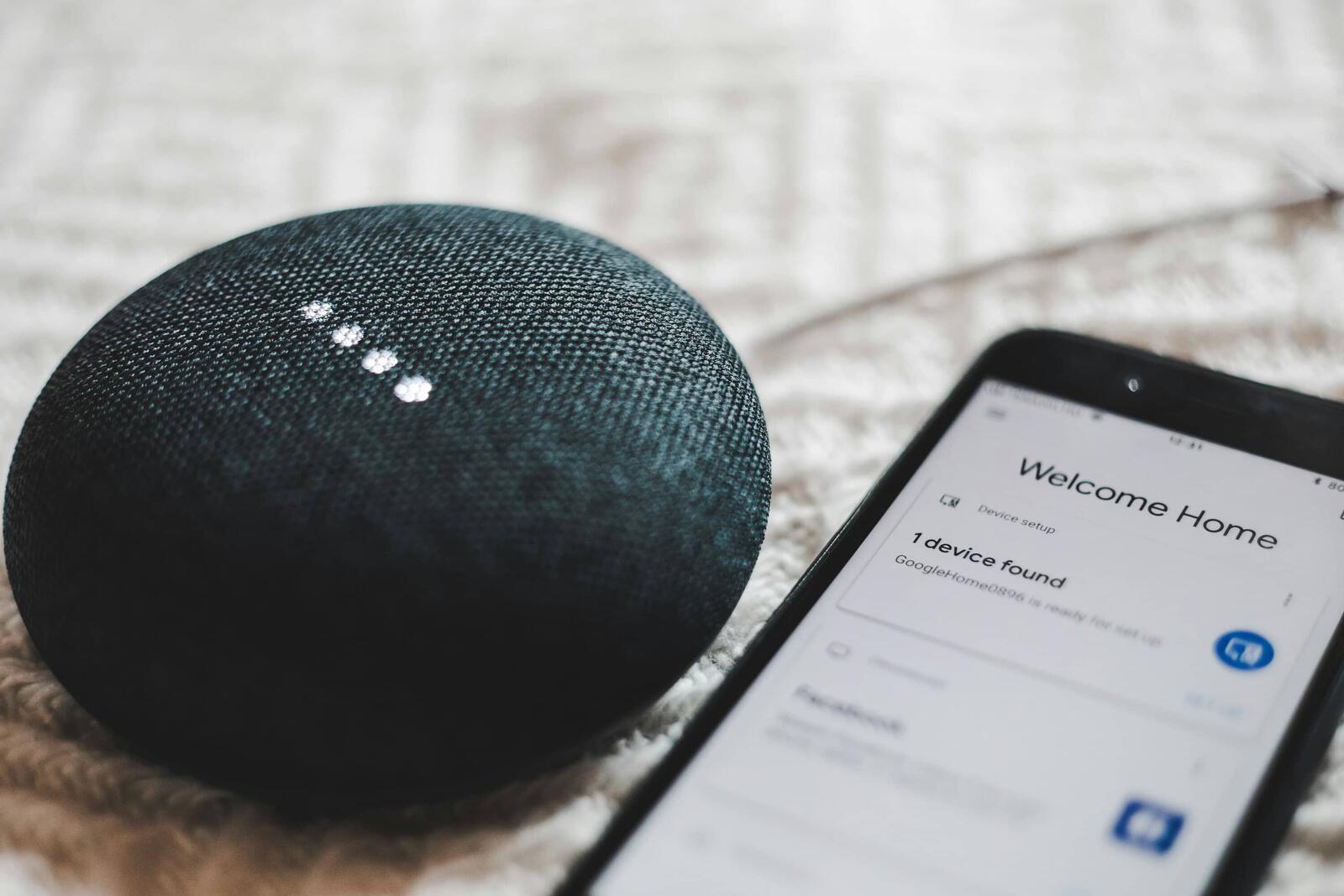
A smart speaker, for example, can process voice commands, while a smart TV can collect information about how it is being used. A motion sensor can detect when someone enters a room, and a smart doorbell can capture people approaching the house. None of these things necessarily feels invasive on its own, but I’m sure if you put enough of them together they can reveal quite a lot about what happens inside a home.
More from Tech
- Women In Tech: Top 10 Women In ClimateTech In 2026
- Could Five-Minute Charging Change How We Think About EVs?
- The Tech You’d Never Think Had Anything To Do With F1
- 10 Technologies Transforming The F1 Fan Experience
- What Are The Biggest Technology Trends In Singapore?
- Can Single-Video Learning Solve The Biggest Obstacle In Commercial Robotics?
- Women In Tech: Top 8 Women In FinTech In 2026
- Ring Ring, The VoIP Future For Call Centres Is Calling
When Does Convenience Become Too Much?
There’s nothing wrong with wanting your house to do some of the boring work for you, like, being able to control heating remotely can be useful, and a doorbell that lets you see who’s outside when you’re away can be genuinely reassuring.
The problem is that every device can come with another app, another account, another set of permissions and another thing that needs updating. At some point, the “smart” home can start requiring more attention than the ordinary version ever did.
But now, what happens when the technology becomes more problematic than helpful? A normal light switch doesn’t need a software update, and a washing machine doesn’t normally need you to remember a password before it will start. My washing machine remains a pretty good reminder that adding technology doesn’t automatically make something easier.
Cameras Could Make Privacy Harder
Smart doorbells are designed to protect homes, but they can also capture people who aren’t using the device themselves. The ICO specifically warns that home CCTV and smart doorbells can record images and voices of people outside the owner’s property, and recommends positioning cameras so they capture as little of someone else’s property or public space as possible.
A 2021 English County Court case found that some of the defendant’s camera use collected data outside his property, while also finding that the video collection from the Ring doorbell itself could be justified in the circumstances. The court treated the audio collection differently, which shows just how much the details of a camera’s operation matter.
So it’s not just whether cameras are good or bad, it’s whether we’re comfortable with how much of everyday life they can capture, including the lives of people who never agreed to install one.
Maybe Some Things Are Better Left Offline
Pew Research Center found in 2019 that 54% of US smart-speaker owners were very or somewhat concerned about how much personal data their devices collected. Two-thirds also said they wouldn’t want their speaker to personalise responses more if doing so meant collecting more personal information.
According to Ring they are rolling out its TAKE (Throw Away the Key Encryption) encryption system, which it says will become the default once it reaches all customers. Under TAKE, Ring says encryption keys for video are kept for up to 24 hours to support enabled features before being deleted, after which only the customer retains the keys. End-to-end encryption remains available for people who want better control but are willing to lose some cloud-based features.
That doesn’t mean people are suddenly going to unplug every smart device in the house, but it does mean that privacy is becoming part of the conversation about what makes a smart home useful in the first place.
How Smart Do We Really Want Our Homes To Be?
Smart-home technology is unlikely to disappear, and there are a lot of good reasons to use it, but this doesn’t mean that we have to connect everything just because we can.
A camera by the front door might be worth it, a smart thermostat might save time and energy and a washing machine that needs three apps and a software update before I can figure out how to wash a T-shirt? I’m still undecided.


